
Security & Anti-Shatter Safety Film for Buildings in Saudi Arabia
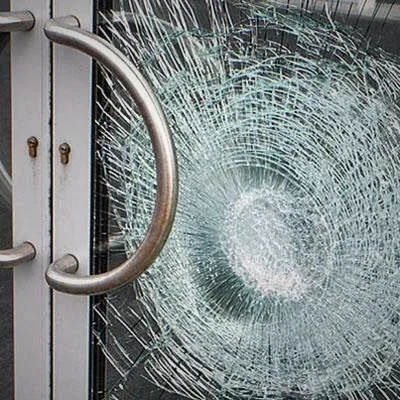
Anti-shatter safety film is a tough polyester layer bonded to glass that holds it together when broken, so it stays in place instead of flying as sharp shards. It comes in 4-15 mil (~100-375 micron) thicknesses, costs 70-120 SAR/m² at AzelCore with a 10-year warranty, and suits schools, hospitals, and glass facades.
In an environment like Jeddah — where glass facades face sudden sandstorms, sharp heat swings, and the risk of accidental or deliberate breakage — the question is no longer "do I need to protect my building's glass?" but "which kind of protection fits my building?". Most people know window films for thermal insulation and privacy, but a less famous and far more safety-critical category is security and anti-shatter film. These films are not installed to cool a building or darken its windows; they serve one essential purpose: when glass breaks for any reason — impact, vandalism, a nearby blast, or seismic movement — the fragments stay bonded to the film instead of flying loose and injuring people inside. In this practical guide we explain how the technology works, how it differs from ordinary insulation film, the available thicknesses in microns, real Saudi-market prices, the buildings that benefit most, and how it fits Saudi Building Code requirements. Every figure here is based on actual pricing and practice at AzelCore in Jeddah, as an authorized dealer for Johnson and 3M, with no marketing exaggeration.
Table of Contents:
- What is anti-shatter safety film and how does it work?
- Safety film vs. ordinary thermal insulation film
- Thicknesses and specs: from 4 mil to 15 mil (in microns)
- Table: film types, prices, and best-fit buildings
- Buildings that need it most: schools, hospitals, mosques, retail facades
- Safety film, the Saudi Building Code (SBC), and SASO specs
- Does safety film also insulate heat? Combination builds
- Correct installation, warranty, and how to choose a supplier
| Film Type | Thickness (mil / micron) | Approx. Price (SAR/m²) | Warranty | Best-Fit Buildings |
|---|---|---|---|---|
| Basic Clear (Anti-Shatter) | 4 mil (~100 micron) | 70-90 | 10 years | Offices, schools, interior windows |
| Mid Security | 7-8 mil (~175-200 micron) | 90-110 | 10 years | Storefronts, shops, showrooms |
| Heavy (Intrusion-Resistant) | 12-15 mil (~300-375 micron) | 100-120 | 10 years | Sensitive facilities, banks, warehouses |
| Dual (Safety + Thermal) | Build-dependent | 100-120 | 10 years | Sun-exposed facades, towers, villas |
What is anti-shatter safety film and how does it work?
Safety film is made of high-strength polyester (PET) layers combined with a powerful pressure-sensitive adhesive, applied to the interior surface of the glass. The idea is simple and ingenious: ordinary glass, when broken, turns into hundreds of sharp shards that fly fast and cause serious injuries.
When the glass is covered with a tough safety film, the adhesive grips the fragments and holds them together as a single unit even after a complete break, so the glass cracks but does not scatter. This converts a moment of imminent danger into mere material damage that can be replaced later.
These films differ fundamentally from thin decorative tint films; they are much thicker and engineered to absorb and distribute impact energy. Depending on thickness and installation type, protection ranges from basic anti-shatter performance, to resistance against intrusion and vandalism (security grade), up to films designed to reduce blast-wave effects in sensitive facilities.
The goal is always the same: keep the glass in its frame as long as possible to protect lives and property.
Safety film vs. ordinary thermal insulation film
This is a point many people confuse, and the difference is fundamental. Thermal insulation film (such as nano-ceramic or reflective films) is primarily there to block infrared and ultraviolet radiation and reduce heat gain, and it is often relatively thin because its performance is measured by heat-rejection percentage, not impact resistance.
Safety film, by contrast, is measured by its ability to hold glass together under stress, so it is far thicker and depends on polyester tensile strength and adhesive bond. In practice: if you install a thin solar tint and strike the glass hard, the film may tear and shards fly; whereas a safety film keeps the mass intact.
The good news is that the market now offers dual-function films (Safety + Solar) that combine anti-shatter and heat rejection in a single layer — the optimal choice for facades exposed to Jeddah's sun. At AzelCore we always clarify with the client which goal comes first — safety, cooling, or both — because choosing the wrong film means paying money without actually getting the protection you need.
Thicknesses and specs: from 4 mil to 15 mil (in microns)
Safety film thickness is measured in "mil," where one mil ≈ 25.4 microns (one-thousandth of an inch). The thicker the film, the greater its resistance to penetration and impact — but cost and installation difficulty rise too.
In practice the tiers run as follows: the basic anti-shatter grade starts at 4 mil (~100 microns) and suits interior windows, offices, and shops where the main risk is accidental breakage. The mid grade of 7-8 mil (~175-200 microns) offers higher protection against forced entry and vandalism and suits ground-level storefronts and entrances.
The heavy grade of 12-15 mil (~300-375 microns) is reserved for intrusion resistance and sensitive facilities. Because film alone is not enough in extreme cases, it is sometimes complemented by a perimeter attachment system that bonds the film edge to the window frame using a structural batten bar or structural silicone, preventing the entire glass pane from leaving its frame on impact.
Selecting the right thickness is an engineering decision based on the existing glass type (single, double, tempered) and the expected threat level — it should never be left to guesswork.
Buildings that need it most: schools, hospitals, mosques, retail facades
In some facilities safety is the priority before any other consideration. Schools and kindergartens top the list; having large numbers of children behind big glass windows makes anti-shatter a necessity, not a luxury, turning any accidental break from a potential injury event into merely cracked glass intact in its frame.
Hospitals and clinics need safety film to protect patients, operating rooms, and sensitive corridors, with the added benefit that the film blocks 99% of UV rays and reduces fading of medical furnishings. Mosques with wide glass facades and domes, where worshippers gather, warrant extra protection.
For retail facades, shops, and car showrooms the motive is twofold: theft protection by delaying forced entry (security-filmed glass resists breaking for several extra seconds — enough to trigger an alarm and deter a burglar) and protection of displayed goods. Even villas and residential towers in Jeddah benefit from film on facades exposed to sandstorms and strong winds.
The general rule: any glass facade with people permanently behind it is a candidate for safety film.
Safety film, the Saudi Building Code (SBC), and SASO specs
It is important to set expectations precisely here, without exaggerated claims. The Saudi Building Code (SBC) regulates structural-safety and energy-efficiency aspects of buildings; SBC 601 addresses energy efficiency, thermal insulation, and the U-Value of building envelopes, while SBC 602 addresses waterproofing and moisture protection.
Safety film itself falls within the building-and-glazing safety system and serves as a complement that helps a facility raise its overall safety level. The thermal side of some dual films (Safety + Solar) may contribute to improving envelope performance in line with the energy-efficiency goals supported by the Saudi Energy Efficiency Center (SEEC) and Vision 2030.
The film materials themselves fall under the Saudi Standards, Metrology and Quality Organization (SASO) specifications for tinting materials and window films. Our practical advice: for any public facility or building subject to specific requirements, refer to the competent authority and the project's engineering consultant to determine the exact requirement, because we supply the approved product and installation but we do not issue regulatory rulings on behalf of official bodies.
Does safety film also insulate heat? Combination builds
The question is reasonable, especially in a city with Jeddah's heat, and the answer depends on film type. Clear safety film focuses on anti-shatter and blocks up to 99% of UV rays, but it offers little heat rejection because it is optically clear.
For those who want to combine safety and cooling, there are two options: first, dual film (Safety + Solar) that merges an anti-shatter layer with heat-rejection technology in one product — the cleanest and most common solution for facades. Second, a layered build where a thermal film thick enough to also serve a safety role is chosen.
In practice, if your first priority is safety and second is cooling, we steer you toward a reliable dual film from Johnson or 3M. But if your top priority is high heat rejection (such as 96-97% of infrared as in advanced nano-ceramic technologies), the better path may be a high-performance thermal film with a separate safety layer.
There is no one-size-fits-all answer; the decision depends on facade orientation, glass type, budget, and threat level — which is exactly what we assess on site before quoting.
Correct installation, warranty, and how to choose a supplier
Safety film is not a product for amateur installation, because its performance is directly tied to application quality. Thick film requires meticulous glass cleaning, professional cutting, and complete removal of air and water from beneath the layer to ensure the adhesive bonds across the full area; any bubble or unbonded edge weakens the film's ability to hold the glass on impact.
The film alone may also be insufficient for large facades without a perimeter attachment system bonding its edge to the frame — an engineering decision a qualified technician makes. When choosing a supplier, ask for three clear things: first, that they are an authorized dealer for a trusted brand like Johnson (founded 1961) or 3M (founded 1902) to guarantee product authenticity and valid manufacturer warranty.
Second, an electronic tax invoice and a written warranty certificate stating the film type and thickness. Third, a free on-site survey that determines your glass type and actual requirements.
At AzelCore in Jeddah we provide safety films at 70-120 SAR per square meter with a 10-year warranty, install them with certified technicians, and tell you honestly what the film does and does not provide — because safety is an issue that tolerates no exaggeration or false promises.
Frequently Asked Questions
Does safety film make glass bulletproof or fully blast-proof?
No. Safety film prevents shard scatter and increases the glass's resistance to breakage and intrusion and delays it, but it is not bulletproof glass and does not guarantee full blast resistance. It is a protective layer that reduces risk and buys time; for high-threat facilities it is used with a perimeter attachment system and suitable glass under engineering consultation.
How much does safety film cost per square meter in Jeddah?
At AzelCore, safety film ranges from 70 to 120 SAR per square meter with a 10-year warranty. The final price depends on the chosen thickness (4 to 15 mil), glass type, project area, and whether the film is clear or dual-function (safety + thermal insulation).
What is the difference between safety film and thermal tint film?
Thermal tint film focuses on blocking heat and radiation and is relatively thin, whereas safety film is much thicker and engineered to hold glass together and prevent shattering on breakage. Dual films combine both functions, but a thin thermal film alone does not provide reliable safety protection.
What thickness is suitable for a school or a retail shop?
For schools and offices where the main risk is accidental breakage, the basic 4 mil grade (~100 microns) is often enough. For ground-level storefronts and shops exposed to break-in attempts, 7-8 mil or more is preferable. Exact selection follows a survey of the glass type and threat level.
Can safety film be applied to existing double-glazed or tempered glass?
Yes in most cases, but the existing glass type affects film choice and installation method. Double-glazed and tempered glass have specific thermal and mechanical considerations, so an on-site survey is done first to select the appropriate film and avoid any unwanted thermal stress.
Is safety film compliant with the Saudi Building Code (SBC)?
Safety film complements the building's safety system; SBC 601 and 602 address energy efficiency and waterproofing, and film materials fall under SASO specifications. For any public-facility project, refer to the competent authority and engineering consultant to determine the exact requirement; we supply the approved product and installation without issuing official regulatory rulings.
How long is the safety film warranty and what does it cover?
We provide a warranty of up to 10 years on safety film, typically covering manufacturing defects such as cracking, peeling, or loss of adhesion under normal-use conditions. A written warranty certificate and an electronic tax invoice stating the film type and thickness are issued as an official reference.
⚠️ Warning: Safety film reduces the risk of glass scatter and delays forced entry, but it is not a substitute for bulletproof glass or an integrated security system, and it does not guarantee full blast resistance. For high-threat facilities, it must be combined with a perimeter attachment system and suitable glass per certified engineering consultation and Civil Defense requirements. The figures and thicknesses here are indicative; the final choice is determined after an on-site survey.
Sources & References
Related Services
- Building & Facade Glass Insulation — Safety and Thermal Films ←
- Authorized Johnson Dealer — Genuine Safety & Insulation Films with Factory Warranty ←
- Authorized 3M Dealer — High-Performance Safety & Anti-Shatter Films ←
- Building Glass Insulation & Safety Cost Calculator ←
- Gallery of Glass Facade Insulation & Safety Projects ←
- Glass Compliance Guide with Saudi Building Code SBC 601/602 ←
- Tower Glass Facade & Curtain-Wall Insulation ←
- Window Films for Mosques, Hospitals & Schools ←