
Glass Insulation for Mosques, Hospitals & Schools — Certified Solutions for Institutions & Tenders
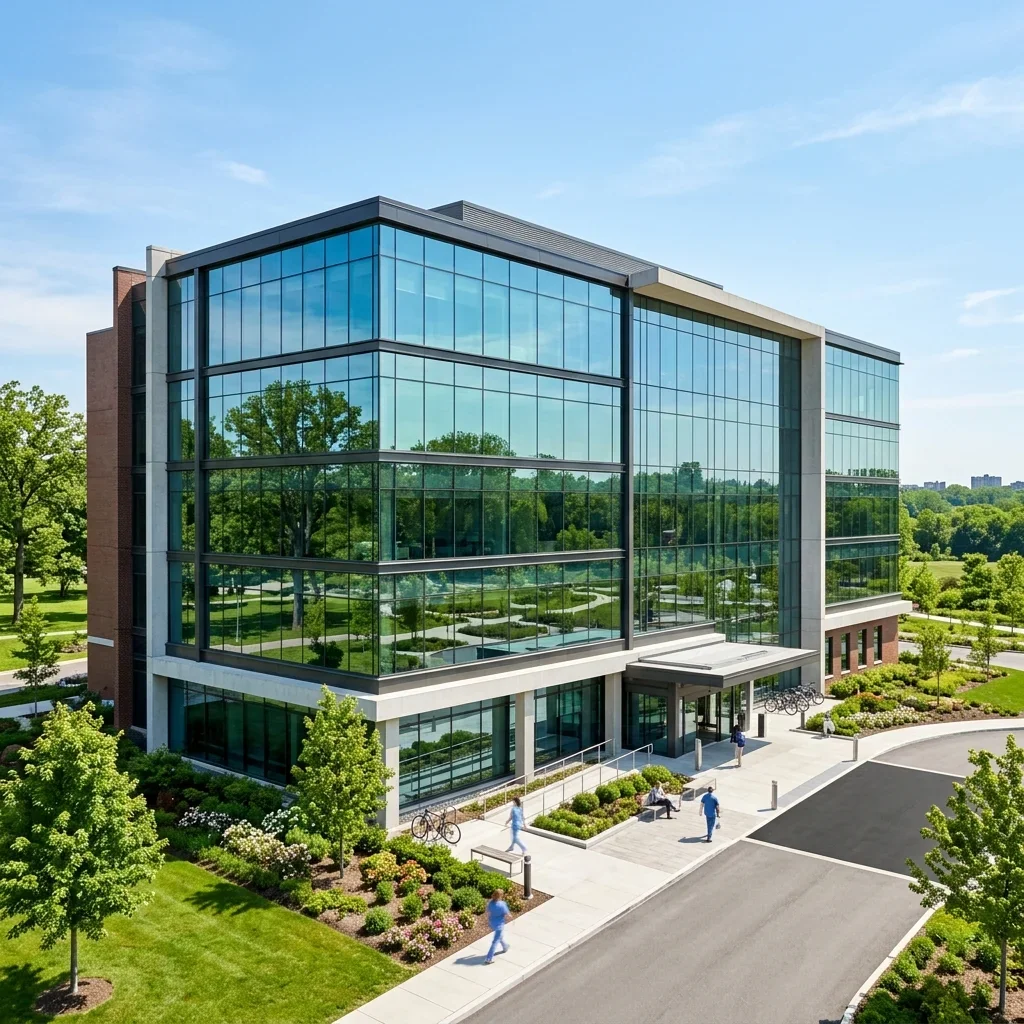
Glass insulation for mosques, hospitals and schools in Jeddah uses nano-ceramic film (SAR 150–200/m², 15-yr warranty) or safety film (SAR 70–120/m²) by need. It cuts energy use 33–42% and blocks 99% of UV, while complying with Saudi Building Code SBC 601/602 and government tender requirements.
Sensitive institutions in Jeddah — from mosques receiving worshippers five times a day, to hospitals running around the clock, to schools housing thousands of students — face a dual challenge: Jeddah's stifling heat, where sun-exposed interior surfaces exceeded 77°C in our thermal study, alongside strict requirements for safety, energy efficiency and regulatory compliance. Glass insulation for these facilities is not a luxury; it is an engineering, operational and financial decision. The large glass windows in prayer halls, corridors and classrooms are the primary source of heat gain and rising cooling loads — and a security weak point should the glass shatter. In this guide we explain how sensitive institutions in Jeddah choose the right glass insulation solutions — compliant with Saudi Building Code SBC 601/602, meeting government tender conditions, and delivering a documented 33–42% energy saving per the AzelCore thermal study. We speak in real numbers and transparent prices, not inflated promises, because institutional decisions are built on data, not slogans.
Table of Contents:
- Why Sensitive Institutions Need Different Insulation Than Ordinary Buildings
- Mosque Glass Insulation: Worshipper Comfort and Energy Saving
- Hospital Glass Insulation: Safety, UV and Privacy
- School Glass Insulation: Student Protection and Safety Film
- Price and Type Table by Facility Type
- Regulatory Compliance: SBC 601/602 Building Code and Tenders
- Energy Saving: What the AzelCore Study Numbers Show
- How Institutional Projects Are Run: From Survey to Handover
| Facility Type | Recommended Film | Price (SAR/m²) | Warranty | Primary Benefit |
|---|---|---|---|---|
| Mosques (prayer halls) | Clear Nano-Ceramic | 150–200 | Up to 15 yrs | Cooling without darkening + 33–42% energy saving |
| Mosques (glare façades) | Reflective | 80–150 | Up to 10 yrs | Glare reduction + added privacy |
| Hospitals (rooms & corridors) | Clear Nano-Ceramic | 150–200 | Up to 15 yrs | 99% UV blocking + clear visibility |
| Hospitals (façades/sections) | Safety + Privacy | 70–120 / 60–100 | Up to 10 yrs | Glass safety + visual privacy |
| Schools (classrooms) | Nano-Ceramic + Safety | 150–200 / 70–120 | Up to 15 / 10 yrs | Thermal comfort + student protection |
| Single classroom estimate | Per glass area | 2,000–5,000 (total) | — | Phased by priority |
Why Sensitive Institutions Need Different Insulation Than Ordinary Buildings
A sensitive facility is not an ordinary villa or office, and the difference is fundamental across three dimensions. First is occupancy: a mosque fills and empties five times a day, a hospital never stops operating day or night, and a school is packed with children during peak heat hours.
This means cooling loads are high and continuous, and any reduction in window heat gain reflects directly on a large electricity bill. Second is safety: in hospitals and schools especially, shattered glass is a direct risk to life, which is why safety film matters no less than thermal insulation — it holds glass fragments together on impact and reduces injury risk.
Third is compliance and tenders: these facilities are often owned by government bodies, endowments (awqaf) or major operating companies, and are procured through tenders requiring compliance with the Saudi Building Code and technical specifications approved by the Saudi Standards, Metrology and Quality Organization. So choosing a "good film" is not enough; you need a documented solution with a written warranty, a tax invoice and clear technical specs per window.
At AzelCore Jeddah we treat this category with a methodology different from residential projects, beginning at the technical survey and ending with a complete handover file.
Mosque Glass Insulation: Worshipper Comfort and Energy Saving
Prayer halls in Jeddah are often spacious with high ceilings and large glass windows facing direct sun, making them the hardest spaces to cool. When a worshipper arrives at Dhuhr or Asr, the heat already transmitted through the glass has raised the room temperature, and the AC keeps running at full capacity to offset the continuous heat gain.
Clear nano-ceramic film (SAR 150–200/m², warranty up to 15 years) is the optimal choice here, because it blocks up to 96–97% of the infrared rays responsible for heat without darkening the hall or altering its spiritual character, while blocking 99% of the UV rays that damage carpets, Qurans and wooden décor. An added benefit of nano-ceramic is that it is metal-free, so it does not interfere with communication networks or the mosque's wireless audio systems.
Financially, the 33–42% energy saving per our thermal study means a tangible reduction in the electricity bill — which matters to mosque endowments and operations committees seeking to rationalize spending. If some mosque façades are exposed to outside view or glare, we may recommend reflective film (SAR 80–150/m²) for added privacy and glare reduction, depending on the architecture.
Each case is studied individually based on façade orientation, glass area and sun-exposure hours.
Hospital Glass Insulation: Safety, UV and Privacy
A hospital is an environment that tolerates no compromise, and glass insulation there serves three parallel goals. First, thermal comfort and energy: patient rooms, corridors and labs need stable cooling, and heat gain through windows disrupts precise HVAC systems.
Clear nano-ceramic film preserves visibility for medical staff while reducing heat and blocking 99% of UV — important for protecting light-sensitive medications and reducing UV exposure for patients who may be more vulnerable. Second, structural safety: in high-density areas or large glass façades, safety film (SAR 70–120/m²) adds a protective layer that holds glass together on breakage and reduces the risk of flying shards toward patients and visitors.
Third, privacy: examination rooms and women's sections need visual privacy, where privacy film (SAR 60–100/m²) prevents outside viewing without fully blocking light. It is important to state honestly: window film is not a medical device and does not treat any illness; its benefit is limited to UV blocking, heat control, privacy and protection from glass shards.
For any guidance on public health and skin protection from UV, refer to authorities such as the World Health Organization and official bodies. Our role is to provide a documented engineering solution that meets healthcare facility specifications and tender requirements.
School Glass Insulation: Student Protection and Safety Film
Schools combine the need for thermal comfort with an urgent need for safety, because the primary user is a child. Sun-exposed classrooms heat up quickly, distracting students and increasing their fatigue, while raising cooling loads in a school that may contain dozens of classrooms.
Clear nano-ceramic film provides a cooler, more stable learning environment without darkening the classroom or compromising the natural light needed for reading, while blocking 99% of the UV that students are exposed to for long hours near windows. But the most important element in schools is safety film (SAR 70–120/m²): glass in an environment full of student movement and activity is prone to accidental breakage, and safety film holds the shards together and prevents them from scattering, greatly reducing injury risk.
In many school-development tenders, safety film is an explicit requirement, not an option. Some schools also use privacy film (SAR 60–100/m²) for street-facing windows to protect students' privacy.
Budget-wise, a single classroom with its windows may fall within an estimate close to a three-room apartment (SAR 2,000–5,000) depending on glass area, while a full school needs a custom quote built on a precise per-façade take-off. We offer schools phased solutions: starting with the most sun-exposed classrooms then expanding, to suit school budgets and development phases.
Regulatory Compliance: SBC 601/602 Building Code and Tenders
When dealing with a government, endowment or operating-company facility, regulatory compliance becomes an essential condition no less important than the film quality itself. The Saudi Building Code in its energy-efficiency parts (SBC 601 for building energy efficiency, SBC 602 for residential buildings) sets requirements for the building envelope's performance, including the glazing's thermal performance.
These requirements also intersect with the internationally adopted ASHRAE 90.1 specification, the Saudi Energy Efficiency Center (SEEC) program, and Vision 2030 goals for rationalizing electricity consumption. Choosing a film with documented thermal performance helps the facility meet thermal-envelope requirements without fully replacing the glazing — an economical solution compared to re-glazing.
In tenders, the following are usually required: the film's technical data sheet (with IR/UV blocking and visible-light transmission percentages), an authorized-dealer certificate, a written warranty, and a tax invoice. As the Johnson and 3M authorized dealer at AzelCore, we provide original products with documented factory specs from heritage brands (Johnson since 1961, 3M since 1902), with a technical file that makes it easy for project managers and consultants to verify compliance.
We note honestly that the exact numeric spec required varies per tender, so we always recommend referring to the project's official conditions document and to the Saudi Building Code text issued by the Saudi Building Code National Committee before adopting any solution.
Energy Saving: What the AzelCore Study Numbers Show
We avoid inflated promises and speak with numbers from our field study. AzelCore conducted a thermal study using a FLIR T530 thermal camera per the ISO 13837:2021 methodology, on a sample of 530 measurements across 10 Jeddah districts during 2024–2026, published under the Creative Commons CC BY-NC 4.0 license.
Results showed the sun-exposed interior surface temperature without film reached about 77°C, dropping to about 40°C after nano-ceramic installation — a surface difference of roughly 37 degrees. The films recorded 96–97% IR blocking and 99% UV blocking.
At the energy-consumption level, savings range between 33% and 42% per the study. However, the payback period varies by facility type, size and operating hours; in commercial and high-occupancy buildings it typically ranges from about one and a half to three years — not a single fixed number.
Continuously occupied facilities such as hospitals may benefit relatively faster due to round-the-clock AC operation. We always advise institutions to request an estimate based on the actual electricity bill, glass area and orientation, rather than relying on a generic percentage.
Our savings calculator is available as a starting point, followed by a precise calculation after the on-site survey.
How Institutional Projects Are Run: From Survey to Handover
Institutional projects differ radically from installing film in a villa and require a clear phased methodology. The process begins with an on-site technical survey where we take off every glass façade by orientation, area and sun-exposure hours, and measure the original glass transparency.
Based on that, we provide a detailed technical and financial proposal specifying the film type per area (nano-ceramic for heat, safety for protection, privacy where needed) with specs, warranty and price per square meter. After the proposal is approved, we schedule execution at times that do not disrupt the facility's operation — a hospital requires work without disturbing patients, a school is best done during holidays or off-hours, and a mosque is scheduled between prayers or in low-occupancy hours.
During execution we adhere to the cleanliness and safety standards required in sensitive environments. At handover we deliver a complete file including: the authorized-dealer certificate, technical data sheets, the written warranty (up to 15 years for nano-ceramic), and the tax invoice — the very file project managers and tender dossiers require.
This documented methodology is what distinguishes dealing with an authorized dealer from a general retail shop, and it is your guarantee that what was installed matches exactly what was contracted. For institutions in Jeddah, the AzelCore team is ready to conduct the survey and prepare the technical proposal suited to your facility's nature and tender requirements.
Frequently Asked Questions
What is the most suitable film for mosque glass insulation?
Clear nano-ceramic (SAR 150–200/m², warranty up to 15 years) is usually most suitable, as it blocks 96–97% of IR and 99% of UV without darkening the prayer hall, and is metal-free so it does not interfere with wireless audio systems. Reflective film may be added on façades exposed to glare or outside view, depending on the design.
Is window film in hospitals a medical device or does it treat illness?
No. Window film is not a medical device and does not treat any illness. Its benefit is limited to blocking 99% of UV, controlling heat, providing privacy, and holding glass together on breakage via safety film. For any health guidance on UV skin protection, refer to authorities such as the World Health Organization.
Why do schools need safety film and not just thermal insulation?
Because the school environment is full of movement and glass is prone to accidental breakage near children. Safety film (SAR 70–120/m²) holds glass fragments together on impact and prevents scattering, greatly reducing injury risk, and is often an explicit requirement in school-development tenders. It is usually combined with nano-ceramic for heat.
Does glass insulation help comply with Saudi Building Code SBC 601/602?
Choosing a film with documented thermal performance helps improve the glazing envelope's performance within the Saudi Building Code energy-efficiency requirements, without fully replacing the glass. But the exact numeric spec varies per project, so refer to the tender conditions and the official code text before adopting. We provide a complete technical file for verification.
How much does it cost to insulate a full facility's glass?
Cost is calculated per square meter: nano-ceramic SAR 150–200, reflective 80–150, clear thermal 50–100, safety 70–120, privacy 60–100. A single classroom may fall within SAR 2,000–5,000 depending on glass, while a full facility (mosque/hospital/school) requires a custom quote after an on-site survey and façade take-off.
What is the expected payback period for insulation in a facility?
Per the AzelCore study, energy savings range between 33% and 42%, but payback is not a fixed number. In commercial and high-occupancy buildings it typically ranges from about 1.5 to 3 years, and may be faster in continuously operating facilities like hospitals. The most accurate approach is an estimate based on the actual electricity bill, glass area and orientation.
Does installation disrupt the mosque, hospital or school's operation?
We schedule execution at times that do not disrupt the facility: the mosque between prayers or low-occupancy hours, the school during holidays or off-hours, and the hospital with a methodology that does not disturb patients while adhering to cleanliness and safety standards. The project is often executed in phases by priority of the most sun-exposed façades.
⚠️ Warning: Beware of offers promising a fixed savings percentage or a specific payback period without a survey. Real savings (33–42% per our study) depend on the actual electricity bill, glass area, orientation and operating hours. Also, window film is not a medical device and does not treat illness; its benefit is limited to UV/heat blocking, privacy and safety. For tenders, always verify the conditions document and the official Saudi Building Code text before adopting.
Sources & References
Related Services
- Building & Facility Glass Insulation — Nano-Ceramic, Safety & Reflective ←
- Johnson Authorized Dealer — Original Products with Factory Specs & Warranty ←
- 3M Authorized Dealer — High-Performance Film for Institutions ←
- Energy Savings Calculator — Initial Estimate for Your Facility ←
- AzelCore Thermal Report 2026 (FLIR T530, ISO 13837) ←
- Security & Anti-Shatter Safety Window Film ←
- SBC 601/602 Glass Compliance Guide ←
- Commercial Building Insulation in Jeddah ←