
Nano Ceramic vs Carbon vs 3M — Comprehensive Numbers Comparison
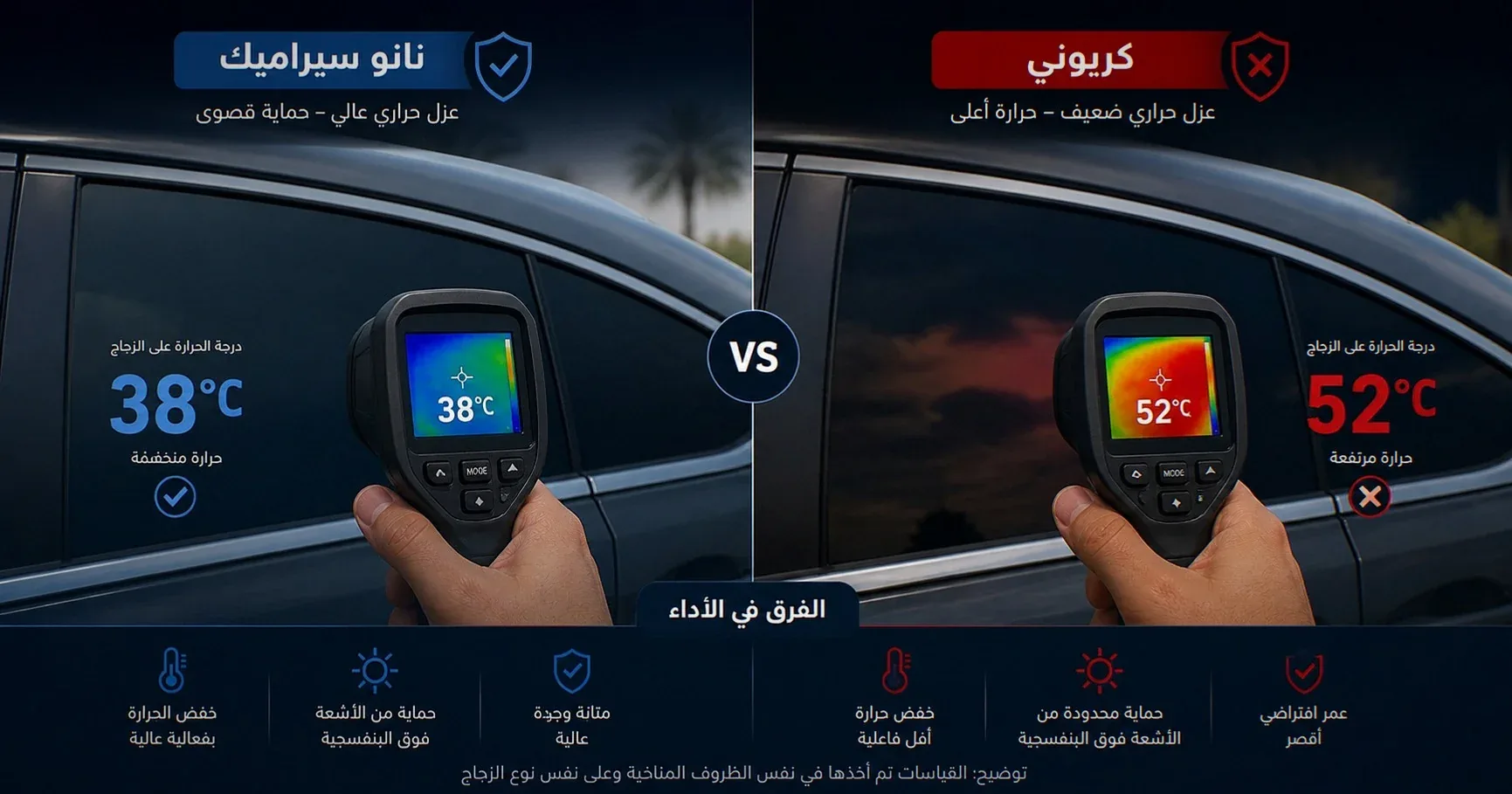
Carbon tint provides good UV protection with a stable dark color that does not fade, but its heat rejection (IR) is average. Nano-ceramic is the best choice, rejecting up to 97% of heat without needing dark shades and without interfering with signals. 3M Crystalline is the pinnacle of ceramic technology due to its 200 multi-layers offering superior total solar energy rejection (TSER) with complete transparency.
When making the decision to tint your car in a market crowded with hundreds of options and brands, you often collide with three main terms frequently echoed in car care centers: "Carbon Tint," "Nano-Ceramic," and the famous "3M" insulation. The wrong choice here could mean losing hundreds of Riyals on a product that doesn't insulate the scorching midday sun heat, or worse, a product that cracks and fades after just a few months. In this deep reference guide, we will dismantle the engineering and practical differences between these three types. We won't just scratch the surface; we will dive into terms like Infrared Rejection (IR) percentage, and Total Solar Energy Rejection (TSER), to present you with a precise scientific comparison that helps you make the best investment decision for your car and your comfort, especially in a severely harsh climate like the Saudi climate.
Table of Contents:
- TSER/IR/UV Comparison Table
- Camera Heat Test
- Lifespan
- When to Choose Each Type
- Price vs Value
| Comparison Aspect | Carbon | Nano-Ceramic | 3M Crystalline |
|---|---|---|---|
| Manufacturing Tech | Embedded carbon particles | Microscopic ceramic particles | Optical nano-tech (200 layers) |
| Heat Rejection (IR) | Average (40% - 60%) | Excellent (80% - 97%) | Superior (Up to 99%) |
| Exterior Appearance | Matte black | Deep black / Transparent | Highly transparent / Slight blue tint |
| Signal Interference | None | None | None |
| Financial Cost | Economical to Medium | High | Very High (Top Tier) |
| Lifespan | 5 to 7 years | 7 to 10 years | Lifetime (with certified warranty) |
| Fade Resistance | Excellent | Very Excellent | Absolute |
What is Carbon Film Tint?
Carbon tint represents the middle generation in the evolution of insulation films, created to address the major issues in dyed (cheap) tint and metallic tint. It is manufactured by embedding fine carbon particles within the polyester layers.
The most significant advantage of carbon is its elegant "matte black" color, which gives the car a luxurious appearance and high color stability that does not turn purple over time like inferior films do. Performance-wise, carbon blocks 99% of Ultraviolet (UV) rays and offers average performance in blocking heat-generating Infrared (IR) rays (around 40-60%).
Its main drawback is that the more heat insulation you want, the darker shade you have to choose, which may violate traffic regulations.
The Nano-Ceramic Revolution
Nano-ceramic is the current gold standard in the world of thermal insulation. Instead of carbon or metals, it uses non-heat-conducting ceramic particles manufactured with nanotechnology (thousands of times finer than a human hair).
This technology allows the film to achieve a previously impossible equation: "Massive heat insulation with high transparency." Nano-ceramic films can block 80% to 97% of infrared rays, dramatically lowering the cabin temperature and reducing the load on the car's AC. More importantly, you can install a completely transparent nano-ceramic (shade 00) on the windshield and get maximum insulation without any impairment to night vision or traffic violations.
3M Crystalline: Optical Engineering Magic
When we talk about 3M Crystalline, we are talking about a completely unique category that surpasses even traditional ceramic. These films do not rely on added particles; rather, they use the patented "Multilayer Optical Film" technology.
A 3M Crystalline film consists of over 200 ultra-thin layers, with a total thickness less than a Post-it note. These layers work together to selectively refract, reflect, and insulate thermal spectrums.
The result is a highly transparent film (allowing up to 90% of light transmission) yet it blocks Total Solar Energy (TSER) that outperforms very dark films. It is the elite choice for those seeking absolute protection without altering the appearance of the car's glass in any way.
Performance Comparison: Facing the Summer of Jeddah and Riyadh
In a harsh climate where temperatures reach 50 degrees Celsius, the true differences become clear. Carbon tint will give you a good feeling in the shade and on mild days, but under direct midday sun, heat (IR) will begin to seep into the cabin.
Nano-ceramic provides a strong shield that almost completely blocks this seepage, meaning the car's AC will reach the desired cooling level in mere minutes instead of half an hour. As for 3M Crystalline, it offers an "instant cooling" experience, where you notice the complete absence of heat sting on your skin even if the sun is perpendicular to your glass.
Signal Interference
One of the fatal flaws of older metallic films is their blocking and interference with wireless signals. Fortunately, the three types we are discussing here (Carbon, Ceramic, and 3M Crystalline) are "Non-Metallized" technologies.
This means that whichever of these three you choose, you will not face any issues or weakening in GPS signals, 5G mobile networks, satellite radio signals, or even your smart entry system and garage gate. All three technologies are completely friendly to modern electronic systems.
Durability & Longevity
Carbon is very durable against scratches and lasts a long time without fading, but over time and due to harsh UV rays, it may lose some of its slight insulating ability. Nano-ceramic is characterized by massive structural stability; the ceramic particles barely degrade, extending its lifespan to 10 years with consistent, unchanging performance.
3M Crystalline and Johnson Supreme IR products are backed by the strongest warranties in the market (ten years or lifetime) because manufacturers know the optical materials used are unaffected by time or heat.
Cost vs Return (Smart Investment)
Prices vary significantly. Carbon tint is an excellent economical choice for those on a tight budget who want an elegant look and reasonable protection for a lightly used car.
Nano-ceramic represents the "golden zone"; its cost is higher, but the savings in AC fuel consumption, protecting leather and plastic decors from cracking, and psychological and physical comfort make its return on investment immediate and tangible. 3M Crystalline is the luxury choice for those who accept no compromises and want the highest technology humans have achieved in this field, regardless of the price.
Your Final Decision: What to Choose?
If your car is for work and short trips and your budget is limited, original carbon will suffice. However, if you live in cities like Saudi Arabia and spend a long time in traffic under the scorching sun, nano-ceramic is the minimum we recommend to protect your health and your car.
And if you own a luxury vehicle, or suffer from skin or eye sensitivity to the sun, and want to install a 100% transparent film on the entire car that complies with traffic laws and magically insulates heat, do not hesitate for a moment to request the 3M Crystalline package.
Frequently Asked Questions
How do I know the installed tint is real nano-ceramic and not just carbon?
Original nano-ceramic noticeably insulates heat even if highly transparent. Certified centers provide Infrared measuring devices (IR Meter) to prove the insulation percentage to you, which should exceed 80%, and a certified electronic warranty certificate from the manufacturer is provided.
Is 3M Crystalline insulation worth its high price?
Yes, absolutely, for those seeking maximum insulation without dimming the car. The 200-layer technology offers unmatched heat rejection performance, and its lifespan is very long; it does not peel or lose its properties.
Which is better for a car parked all day in the sun, carbon or ceramic?
Ceramic. While the car will get hot in both cases when parked for long hours, ceramic prevents the damage and cracking of decors (dashboard and leather) caused by latent heat, and helps the AC cool the cabin twice as fast upon startup.
Does car washing affect the effectiveness of nano-ceramic?
No, the tint is installed on the inside, not the outside. However, it must be cleaned from the inside using soft microfiber cloths and Ammonia-Free cleaners to preserve the anti-scratch layer embedded in the film.
⚠️ Warning: Beware severely of uncertified centers that sell cheap dyed films and claim they are "Nano-Ceramic" at highly tempting prices. These films lose their color and turn purple in less than a year, and provide no real heat protection.