
Allowed VLT % by Glass Position Under Saudi MOI Tint Law 2026 — The Complete Numbers Table
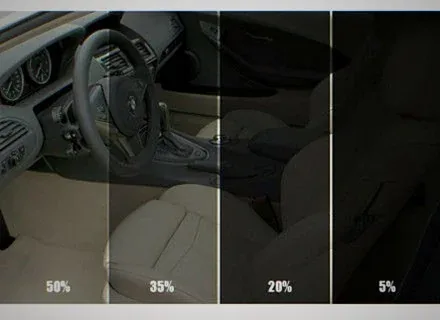
Under Saudi MOI tint law 2026: the windshield and driver/passenger side windows must stay transparent (shade 00, VLT 70%+), rear side windows are allowed up to shade 02 (VLT 30%–40%), and the large rear windshield must not be darkened. The violation fine is 500–900 SAR.
The question we get daily at AzelCore Jeddah is not "is tint allowed?" but "exactly what VLT percentage is permitted on each piece of glass?". The difference between those two questions is the difference between a car that clears periodic inspection with confidence and a car that gets impounded at a checkpoint. The Saudi traffic system does not speak loosely about "dark or light tint" — it assigns an explicit number to each glass position through the Visible Light Transmission (VLT) scale: the percentage of light the glass lets pass from outside to inside. The higher the number, the clearer the glass; the lower the number, the darker it is. In this 2026 reference guide we hand you the complete table for every window — windshield, front side, rear side, and the large rear glass — mapping the international metric (VLT %) to the local shade classification (00, 01, 02), the official fine amount, and the secret behind passing or failing the tint meter. Every number here is grounded in the General Directorate of Traffic regulations and the Saudi Standards (SASO) specifications, not estimates. The goal: leave this page knowing exactly which shade to install on which glass to get the strongest possible heat rejection without breaking a single number.
Table of Contents:
- What VLT is and why it's the only number traffic cares about
- The complete table: allowed VLT % per window 2026
- The windshield: why 70%+ is the sacred limit
- Front side windows: non-negotiable transparency
- Rear side windows: the privacy zone up to shade 02
- The inspection equation: original glass VLT + film
- Local shades (00/01/02) vs international VLT numbers
- Heat rejection at shade 00: cool without darkening
- The fine and detection: what happens on violation
What VLT Is and Why It's the Only Number Traffic Cares About
VLT stands for Visible Light Transmission — the number that describes how much light passes through the glass and film together, from outside into the cabin. Glass at VLT 70% lets 70% of light through (very clear); glass at 30% lets only 30% through (dark).
This is the metric the tint meter relies on during periodic inspection and at checkpoints, not the color your eye perceives. Many people confuse VLT with heat-blocking percentage, and this is the most dangerous misunderstanding in the tinting world.
VLT measures visible light only, whereas heat rejection is measured by other indices such as infrared (IR) rejection and the overall TSER figure. That is precisely why it is now technically possible to get a film with high VLT (clear and traffic-compliant) that simultaneously blocks an enormous amount of heat.
In AzelCore's field thermal study using a FLIR T530 camera per ISO 13837:2021 across 530 measurements in ten Jeddah districts, cabin temperature dropped from roughly 77°C with no tint to about 40°C with nano-ceramic, while blocking up to 96–97% of infrared and 99% of ultraviolet — all achievable at fully traffic-compliant VLT levels. In short: traffic reads only the VLT number, and real heat rejection does not require lowering that number at all.
The Complete Table: Allowed VLT % Per Window 2026
Here is the system distilled into one view. The large windshield: VLT must stay 70% or above (shade 00 — fully transparent), and only clear, non-reflective, non-colored insulation films are permitted.
Driver and front-passenger side windows: the same limit, 70%+ (shade 00), and any dimming that obstructs the driver's view is strictly forbidden. Rear side windows: allowed up to shade 02, i.e.
VLT around 30%–40%, the privacy zone reserved for families. The large rear windshield (behind the passengers): must not be darkened with any dark color, to preserve the central-mirror view; only a transparent film (00) is permitted, solely for heat rejection.
These figures are not recommendations but legal limits the meter measures digitally. Note this applies to private cars fitted with rear seats; vehicles strictly banned from tinting (taxis, ride-hailing, daily rentals, transport vehicles) get no shade-02 allowance at all.
Keep this table as your reference before any visit to a tint center — it protects you from the single most common failure cause: installing a shade on a piece of glass the law does not permit it on.
The Windshield: Why 70%+ Is the Sacred Limit
The large windshield is the driver's most important visual interface, so the traffic system places its strictest conditions on it. The rule is simple and uncompromising: VLT must remain at 70% or above — shade 00, fully transparent.
A clear heat-rejection film may be installed on the windshield under exactly two conditions: it must not be light-reflective like a mirror, and it must not carry any color or pattern that alters the original glass appearance. The reason is that any reduction in windshield VLT becomes a compounded hazard during night driving, in tunnels, or in dust, where the driver loses critical seconds in perceiving pedestrians and vehicles.
This is exactly where nano-ceramic technology shines: it lets you install a shade-00 film on the windshield that keeps transparency above 70% while blocking a large share of the infrared rays that heat the dashboard and steering wheel. This specific solution is what makes windshield insulation both possible and legal at once.
Dark or colored films on the windshield, by contrast, are an explicit violation detected instantly, exposing you to forced roadside removal and a fine. The golden rule: on the windshield, transparency is not a cosmetic choice but a safety obligation the meter measures digitally.
Front Side Windows: Non-Negotiable Transparency
The driver and front-passenger windows are held to exactly the same strictness as the windshield: VLT must stay at 70% or above — shade 00, transparent. This is precisely where most drivers slip, because they assume a 'slight' dimming on the driver's window will go unnoticed.
The reality is that the front-seat windows are the first thing a security officer checks at a checkpoint, because they let him see the driver's hands and what he is holding — a core security requirement. Any film of shade 01 or darker on these windows means an immediate violation and forced on-site removal.
The security rationale here outweighs even the windshield's: direct visual contact between the officer and the driver is the first line of defense against many risks. The good news is that heat rejection on the driver's windows is achievable with the same logic as the windshield: a clear shade-00 nano-ceramic film keeps VLT above 70% while cutting the heat reaching your arm against the window and protecting your skin from the ultraviolet rays that cause skin damage on long drives.
Do not compromise here: the front windows stay transparent always, and insulation comes from film quality, not darkness.
Rear Side Windows: The Privacy Zone Up to Shade 02
Here is where families breathe easier. The Saudi traffic system understands society's need for privacy, especially to protect children and rear-seat passengers, so it permits tinting the rear side windows up to shade 02 in the local classification — a VLT roughly between 30% and 40%.
This shade offers excellent screening from prying eyes and reduces direct glare on rear passengers without turning the window into a solid black panel. But take note: shade 02 is the ceiling, not the starting point; installing a film darker than that (VLT below 30%) pushes the window into violation territory.
More importantly — and we detail this in the next section — the film's rating alone is not enough; what counts is the final percentage after it combines with the original glass's tint. This allowance applies to private cars with rear seats registered in the vehicle license; two-seaters or vehicles banned from tinting altogether get no such zone.
Our practical advice at AzelCore: on the rear windows choose a precisely calibrated shade-02 nano-ceramic film to combine the privacy you want with high heat rejection, and get a written certificate stating the final VLT per window so you are ready for periodic inspection.
The Inspection Equation: Original Glass VLT + Film
This is the section that saves your car from failure, and the secret most installers at unprofessional centers overlook. Factory glass is not 100% transparent; it usually carries a light tint of 5% to 10% by manufacture.
When you ask for a 'VLT 30%' film and install it over that glass, the inspection tint meter does not read the film alone — it reads the combined result of glass and film together. The logical outcome is that final transmission drops below 30%, failing the car instantly even though you 'theoretically' chose the permitted shade.
A professional technician treats this as an equation, not a single number: he first measures the original glass VLT with his meter, then selects the film shade that guarantees the final combined figure stays within the legal limit for that specific window. This precise step is the difference between a VLT certificate that clears inspection and an expensive surprise.
We therefore always recommend you hold a written certificate from the center stating the measured final transmission for each piece of glass after installation — not a marketing leaflet, but your practical proof before the inspection officer and security personnel that your car is within the system.
Local Shades (00/01/02) vs International VLT Numbers
Many shoppers get caught between two languages: the Saudi traffic language of shades (00, 01, 02) and the global manufacturers' language of VLT percentages (70%, 50%, 35%, 20%...). Understanding the bridge between them is essential before any purchase decision.
Shade 00 means maximum transparency and corresponds to VLT 70% and above — the mandatory shade for the windshield and front windows. Shade 02 corresponds roughly to VLT between 30% and 40% — the permitted ceiling for rear side windows.
Shade 01 sits between them and is sometimes used for intermediate cases. When a center offers you a '35%' or '20%' film, ask immediately: on which glass? A 20% may suit privacy but exceeds the shade-02 ceiling on the rear side and becomes a violation.
The practical rule: never buy a film based on an attractive VLT number alone, but on the glass it will go on and the final combined result. Original films from Johnson (such as the Supreme IR series) and 3M (such as Crystalline with its 200+ nano-layers and TSER near 90%) come in a wide range of VLT values, letting the technician pick the exact shade matching each window without sacrificing heat rejection.
Translating a shade into the correct VLT number is half the guarantee against a violation.
Heat Rejection at Shade 00: Cool Without Darkening
For decades the Saudi driver faced a dilemma: either heat rejection (illegal dark dimming) or traffic compliance (clear, hot glass). Nano-ceramic technology ended that trade-off.
These films rely on microscopic ceramic particles that reflect and scatter infrared rays — the primary culprit behind cabin heat — without needing to dim visible light, and with no metals to interfere with GPS or phone signals. This means a shade-00 film (VLT above 70%, compliant on windshield and front) can block an enormous share of heat.
In AzelCore's field measurements with a FLIR T530, cabin temperature fell from about 77°C to roughly 40°C with nano-ceramic, blocking 96–97% of infrared and 99% of ultraviolet — all within transparent VLT levels that violate no number. Practically, this means the AC reaches cool faster, fuel use drops, and skin and interior trim are protected from fading, all while clearing inspection and checkpoints with confidence.
We therefore recommend dedicating shade-00 nano-ceramic to the windshield and front windows, and a calibrated shade 02 to the rear sides. That combines the maximum insulation the law allows with family privacy in the rear, without exceeding a single percentage in the system.
The Fine and Detection: What Happens on Violation
Illegal tint is recorded under the clause 'making a modification or addition to the vehicle's structure or body,' with a fine ranging from a minimum of 500 SAR to a maximum of 900 SAR depending on the assessment. More serious than the fine, the car may be impounded if the driver refuses to remove the illegal tint immediately at the checkpoint, or if the dimming obstructs vision to the point of imminent danger.
Detection is no longer visual alone; handheld tint meters carried by security personnel measure dimness digitally and precisely, and the vehicle's plate allows verification of its type and compliance with the tinting requirements specific to its category. So there is no point in 'eyeballing' the shade or betting that the film looks light; the number alone is the judge.
The safest and most economical long-term path is correct installation from the start at a certified center that provides an electronic tax invoice and a written warranty certificate stating the final VLT per window. This certificate becomes your legal shield before the inspection officer and security personnel, proving you use an original product with untampered percentages.
Remember that the cost of removing an illegal tint and reinstalling a proper film far exceeds the cost of choosing the right shade from day one.
Frequently Asked Questions
What is the allowed car tint percentage in Saudi Arabia for each window?
Windshield and front side windows: VLT 70% or above (transparent shade 00). Rear side windows: up to shade 02, i.e. VLT between 30% and 40%. Large rear windshield: darkening prohibited; only a transparent 00 film for heat rejection is allowed.
What is the difference between VLT and heat-rejection percentage?
VLT measures the visible light passing through the glass — the only number traffic and inspection measure. Heat rejection is measured by separate indices such as infrared (IR) rejection and TSER. That is why a transparent shade-00 nano-ceramic film can block 96–97% of infrared heat without lowering VLT.
Why did my car fail inspection even though I installed the permitted 30% shade?
Because factory glass already carries a 5%–10% tint, and the meter measures the combined result of glass plus film. Adding a 30% film drops the final transmission below the limit. The technician must first measure the original glass VLT, then pick a film shade that keeps the combined final figure within the system.
How much is the illegal tint fine in Saudi Arabia in 2026?
It falls under the violation 'making a modification to the vehicle's structure or body' and ranges from 500 to 900 SAR depending on the assessment, with possible impounding if the driver refuses immediate removal at a checkpoint or if vision is dangerously obstructed.
Can I legally install heat insulation on the windshield?
Yes, provided the film is transparent shade 00 (VLT 70%+), non-reflective (no mirror effect), and bears no color or pattern that alters the original glass. Clear nano-ceramic is the ideal option because it blocks heat without lowering transmission.
What is the optimal shade for rear windows to combine privacy and insulation?
A precisely calibrated shade 02 (VLT 30%–40%) is the permitted ceiling and gives excellent family privacy. With an original nano-ceramic film you get that privacy plus high heat rejection, provided the final combined percentage is measured per window and documented in a written certificate.
Does shade 02 apply to all vehicles?
No. The shade-02 rear-window allowance applies to private cars with rear seats registered in the vehicle license. Vehicles strictly banned from tinting — taxis, ride-hailing, daily rentals, transport vehicles, and two-seater coupes — get no such allowance at all.
⚠️ Warning: Beware of confusing 'a 30% film' with 'a 30% final result.' Traffic measures the combined outcome of original glass plus film, not the film alone. Reflective (mirror) or colored (blue/red) tint on any glass is strictly prohibited and an instant violation. Legal note: figures here are guidance per General Directorate of Traffic regulations and SASO specifications and may be updated; verify with official authorities before installation.
Sources & References
Related Services
- Traffic-Compliant Nano-Ceramic Tint (Shade 00 & 02) in Jeddah ←
- Original Johnson Tint — Approved at Periodic Inspection ←
- 3M Crystalline Clear — High VLT, Traffic Compliant ←
- Tint Calculator: Estimate the Right Shade and Cost ←
- The Complete Guide to Saudi Car Tint Laws 2026 ←
- VLT Explained in the Saudi Tint Law ←
- Tint Fines & Fahas Periodic Inspection Guide ←
- Decoding IR, UV and TSER Tint Metrics ←