
IR vs UV vs TSER Decoded: The Window-Film Spec Sheet Every KSA Buyer Misreads
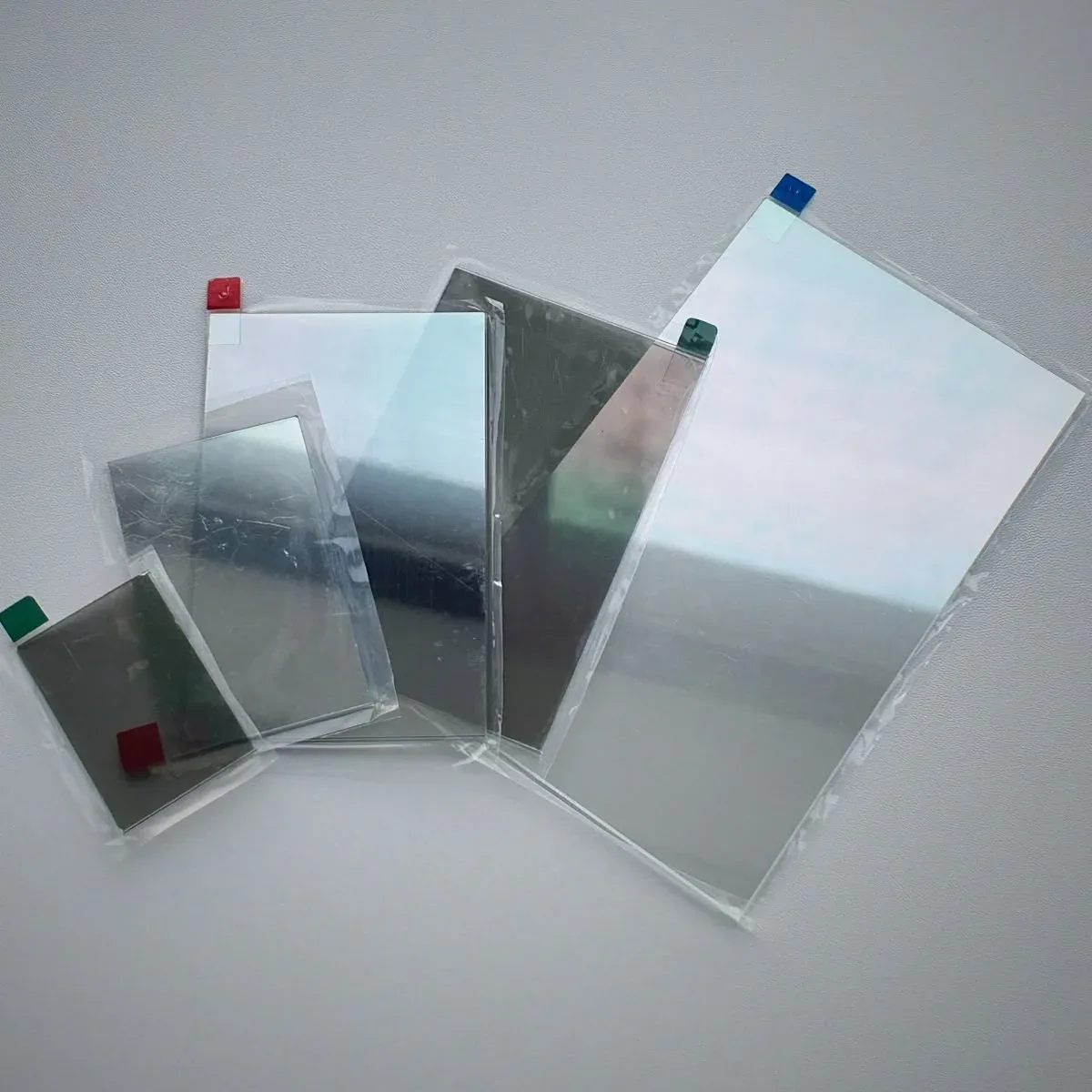
In short: UV (ultraviolet) is a health number most films block at 99%; IR (infrared) measures rejection of only part of the heat spectrum; while TSER (Total Solar Energy Rejected) is the single number that sums up total heat insulation. Focus on TSER when buying, not on the IR figure alone.
When you walk into any tint shop in Jeddah, the salesman waves three shiny numbers on the film label: "99% UV blocked," "97% IR blocked," and sometimes a smaller third number called TSER. Many buyers pick the film based on the biggest number they see, assuming "97% IR" means the car will be 97% cooler. This fallacy costs thousands of riyals a year and ends with a dark car that is still hot as an oven. The truth is these numbers measure completely different parts of the solar spectrum, and some are used deliberately to mislead the buyer. In this guide, Mohammed Al-Hadi — a certified insulation and tinting technician and authorized Johnson and 3M dealer at AzelCore in Jeddah — shows you how to read a spec sheet like the professionals do, which number actually deserves your money, and which is just marketing. We tie all of this to real thermal measurements we took with a FLIR camera across ten districts of Jeddah, so you buy based on science, not a glossy label.
Table of Contents:
- The solar spectrum first: where does the heat inside your car come from?
- UV: the health number nearly every film blocks
- IR: why is the 97% figure smaller than it looks?
- TSER: the only number that measures real insulation
- Comparison table: what the numbers on real film labels mean
- Common tricks in Jeddah showrooms: how the IR number gets abused
- How we verify the numbers in practice: FLIR camera and the AzelCore thermal report
- Tying numbers to the law: transparency (VLT) vs. insulation
- What should you actually buy? Recommendations by budget and car type
| Film Category | UV Block | IR Block (single point) | TSER (most important) | Price Range incl. install | Warranty |
|---|---|---|---|---|---|
| Dyed | ~99% | Low | Low (fades fast) | 300-600 SAR | 1 year |
| Carbon | 99% | Medium | Medium (no fade) | 600-1,500 SAR | 5 years |
| LLumar CTX Ceramic | 99% | High | High | 1,200-3,000 SAR | 7 years |
| Nano-Ceramic (Johnson Supreme IR) | 99% | 96-97% | Very high | 1,500-3,500 SAR | 10 years |
| 3M Crystalline (200+ layers) | 99% | Very high | Up to ~90% | 2,000-4,000 SAR | Lifetime |
The Solar Spectrum First: Where Does the Heat Inside Your Car Come From?
Before we understand the numbers, we must understand the enemy. The sunlight hitting your car glass is not one type but a spectrum of energy split into three main parts.
The first is ultraviolet (UV), making up only about 3% of solar energy; you do not feel it as heat, but it is responsible for skin damage and the fading of upholstery and dashboards. The second is visible light, about 44%; this is the light your eye sees, and how much passes through the glass is measured as VLT, the figure tied to traffic law.
The third and most thermally important is infrared (IR), about 53% of the energy; this is what you feel as scorching heat on your arm behind the wheel. The fallacy KSA buyers fall into is that an 'IR 97%' figure does not block 97% of the sun's total heat, only 97% of a specific portion of the IR band.
That is why two cars with the same IR number can differ greatly in coolness. The single honest number that combines all three parts — UV, visible, and IR — is TSER, which we will decode in detail.
UV: The Health Number Nearly Every Film Blocks
Ultraviolet is a very important number for your health, but ironically it is the least worth worrying about when comparing films. The reason is simple: blocking 99% of UV has become an industry standard met by nearly every reputable tint film, from premium nano-ceramic down to economy carbon.
Even the ordinary windshield in your car blocks a large share of UV-B without any film. In our AzelCore measurements, the nano-ceramic films we install consistently recorded 99% UV blocking, the same figure promised by 3M and Johnson.
So why does this number matter? Because ultraviolet is classified by the World Health Organization (WHO) as a skin carcinogen, and is the main cause of aging of the driver's left-arm skin and fading of leather seats and dashboards. But the trick is a salesman trying to sell you a 'higher priced' film on the pretext of excellent UV blocking, while this number does not practically distinguish a 600-SAR film from a 3,000-SAR one.
The real price difference comes from the film's ability to block heat (IR and TSER), not from the UV figure where almost everyone is equal. Treat 99% UV as a baseline requirement, not a competitive advantage worth a big premium.
IR: Why Is the 97% Figure Smaller Than It Looks?
Here lies the biggest deception in the tint market. When a salesman says 'this film blocks 97% of infrared,' he usually means an IR-rejection figure measured at a very narrow, specific wavelength (typically around 950 nm), not across the entire IR band.
Infrared is a wide spectrum stretching from about 780 nm to 2500 nm. A film may be a star at blocking one point in the spectrum (950 nm), so the label reads '97% IR,' while its performance is weak across the rest of the heat band.
That is why you find a film with a dazzling IR number while the car stays warm. At AzelCore, the IR figures we stand behind for original nano-ceramic films range from 96% to 97%, and we make a point of clarifying they are measured at a known reference point, not an open marketing number.
The golden rule: an IR figure is only useful if you know at which wavelength it was measured and which neutral party measured it. If the salesman cannot tell you, the number is just marketing.
Do not make IR your sole decision metric; always pair it with TSER, which measures the full picture. A film at IR 97% and TSER 50% may actually be cooler than a film at IR 99% and TSER 40%, because TSER accounts for heat from all sources.
TSER: The Only Number That Measures Real Insulation
If you should memorize one term from this article, let it be TSER, short for Total Solar Energy Rejected. This number is the only one that combines the effect of all three spectral parts — UV, visible light, and infrared — into a single figure expressing the total share of heat the film stops from entering the cabin.
A film at TSER 60% means it rejects 60% of the sun's total thermal energy, far more honest than any standalone IR number. That is why professionals use it as the core comparison metric.
A real example: the 3M Crystalline film we install at AzelCore reaches around 90% TSER in its top grades, despite being a near-transparent film that lets a large amount of visible light through — a genuine engineering feat that comes from its structure of more than 200 nano layers. Note the paradox: a nearly transparent film that outperforms cheap dark films in insulation.
The reason is that TSER does not depend on a dark color but on technology. When comparing quotes, ask for the TSER number written in the warranty certificate for each grade.
If the center refuses to write it or does not know it, that is a red flag that the film is either counterfeit or the center does not understand what it sells.
Comparison Table: What the Numbers on Real Film Labels Mean
Let us translate theory into reality. The table below compares the film categories we actually install at AzelCore in Jeddah, clarifying what each number means and how it reflects on price and performance.
Note that the price ranges include installation and warranty, and vary by car size (sedan vs. SUV vs.
luxury). Dyed film is cheap but relies only on color to block light, so its TSER is low and it fades within months under the Jeddah sun.
Carbon is better and does not fade, but does not match nano-ceramic in IR rejection. Nano-ceramic and 3M Crystalline are the peak: high heat insulation with legal transparency.
The key is to read the table horizontally — do not be dazzled by one number, look at the whole picture: how much heat it blocks (TSER), how long the warranty lasts, and how much it costs. This three-way equation determines real value, not the biggest number on the label.
All figures below are numbers we stand behind and write into the warranty certificate for our customers.
Common Tricks in Jeddah Showrooms: How the IR Number Gets Abused
From our daily work in Jeddah, we have spotted recurring patterns of deception worth knowing before you pay. Trick one: 'mixing numbers' — the salesman says '97% heat block' meaning a single-point IR figure, leaving the impression the car will be 97% cooler, while the real TSER may be only 45%.
Trick two: 'dark film = higher insulation' — a myth; a dark color blocks only visible light and violates traffic law (which requires 70% transparency for the windshield and front side windows), yet does not necessarily block IR. Trick three: 'global brand at a tempting price' — films bearing a name resembling Johnson or 3M but counterfeit, with baseless numbers printed on the label.
Trick four: the absence of a written warranty certificate detailing VLT and TSER for each window. The only defense against all of this is to ask for three things before paying: a written warranty certificate with TSER and VLT numbers, an electronic tax invoice, and proof of dealer authorization (Johnson or 3M).
At AzelCore we provide all three as standard, and you can verify the original serial. If the center does not provide them, you are buying a verbal promise with no legal or technical value under Jeddah's scorching sun.
How We Verify the Numbers in Practice: FLIR Camera and the AzelCore Thermal Report
Numbers on a label are a promise; field measurement is reality. That is why at AzelCore we conducted an extensive thermal study using a FLIR T530 thermal camera, with a methodology inspired by ISO 13837:2021 for total solar transmission, on a sample of 530 measurements across ten districts of Jeddah, during 2024 to 2026.
The results were striking and tangible: the average interior cabin temperature of an untinted car reached about 77 degrees Celsius under midday sun, while in cars fitted with original nano-ceramic it dropped to around 40 degrees Celsius — a difference of nearly 37 degrees. This huge gap is not created by a standalone IR number, but by the overall ability to reject energy (TSER) combined with 99% UV blocking and 96-97% IR blocking.
What distinguishes this methodology is that it measures the final output that actually matters to you: the temperature you will sit in, not an abstract lab figure. We published the full report under a Creative Commons license (CC BY-NC 4.0) as a transparent reference you can review.
When a salesman quotes an IR number, ask the right question: 'By how many degrees Celsius will my car cool down?' — that is the question field measurements answer, not labels.
Tying Numbers to the Law: Transparency (VLT) vs. Insulation
A fatal mistake many make: confusing the insulation number with the legal transparency number. Visible Light Transmission (VLT) is what Saudi traffic law regulates, and it has no direct link to the film's ability to block heat.
Per General Department of Traffic (MOI) and Saudi Standards (SASO) data as documented in our legal guide, the windshield and front side windows (driver and passenger) are allowed only a fully transparent shade — VLT 70% and above (shade 00) — while rear side windows are allowed a dimming shade up to 02 (about 30% transparency). A tint violation falls under 'modifying the vehicle structure' and is fined 500 to 900 SAR.
The beauty of nano-ceramic technology is that it separates the two numbers: you can install a fully transparent, legal shade-00 film on the windshield, yet it blocks 96-97% of IR with high TSER. So you get strong insulation and legal transparency at once.
This was impossible with old dyed films that forced you to choose between coolness and the law. That is why we insist the warranty certificate states two separate numbers per window: VLT (for the law and periodic inspection) and TSER (for thermal performance).
Do not accept the two being collapsed into one vague number.
What Should You Actually Buy? Recommendations by Budget and Car Type
After all this detail, here is a practical summary for the KSA buyer. If your budget is limited and you want a solution lasting a few years, carbon film (600-1,500 SAR by size, 5-year warranty) is an honest choice that does not fade and blocks UV efficiently, but do not expect high TSER from it.
If you live in Jeddah and drive daily under the sun and want the thermal difference we measured (from 77 to 40 degrees), nano-ceramic (sedan 1,500-2,200 SAR, SUV 2,200-3,000, luxury 2,500-3,500, 10-year warranty) is the ideal balance of price, performance, and 96-97% IR blocking. If you want the absolute peak — the highest TSER (around 90%) with near-full transparency and no interference with GPS or phone signals — 3M Crystalline (2,000-2,800 for sedan up to 3,000-4,000 for luxury, lifetime warranty) is the smartest long-term investment.
For Land Cruiser, Patrol, and Tahoe owners, note that the large glass area means insulation quality has a doubled impact on AC consumption. Whatever you choose, the rule is constant: compare by TSER, confirm legal VLT, and demand the written warranty and authorization.
Contact us on WhatsApp +966564612017 for a free consultation to precisely determine the best shade for your car.
Frequently Asked Questions
What is the difference between IR and TSER in car tinting?
The IR figure measures infrared rejection at only one specific wavelength (usually 950 nm), while TSER (Total Solar Energy Rejected) combines the effect of ultraviolet, visible light, and infrared into a single number expressing total heat insulation. TSER is the more honest number to compare when buying.
Does a 97% IR block figure mean my car will be 97% cooler?
No, this is the biggest fallacy in the tint market. A 97% IR figure means blocking 97% of a specific part of the infrared spectrum at a single measurement point, not 97% of the sun's total heat. The number that reflects real cooling is TSER. In AzelCore's FLIR measurements, cabin temperature dropped from about 77 to 40 degrees Celsius with original nano-ceramic.
Do all films block 99% of ultraviolet rays?
Almost, yes. Blocking 99% of UV has become an industry standard met by most reputable films from nano-ceramic down to carbon. So the UV number should not be your main differentiator; treat it as a baseline requirement, and the real difference in price and performance comes from heat rejection (IR and TSER).
Does a darker film insulate more heat?
Not necessarily. A dark color only blocks visible light (lowers VLT), but does not automatically block infrared or raise TSER. 3M Crystalline is nearly transparent yet reaches around 90% TSER, while a cheap dark film may have low TSER. Insulation depends on technology, not color, and very dark film also violates traffic law.
How do I confirm the film's label numbers are real?
Ask for three things before paying: a written warranty certificate detailing VLT and TSER for each window, an electronic tax invoice, and proof of dealer authorization (Johnson or 3M) with verifiable original serial. At AzelCore we provide all three as standard. If the center cannot write the TSER number or provide authorization, that is a red flag for counterfeit film.
What is the relationship between VLT, heat insulation, and Saudi law?
VLT (visible light transmission) is what traffic law regulates: the windshield and front side windows require full transparency (shade 00, 70% and above), rear side windows up to shade 02 (about 30%), with a fine of 500-900 SAR. Heat insulation, however, is measured by TSER and has no direct link to VLT. Nano-ceramic technology allows a film that is both legally transparent (high VLT) and strongly insulating (high TSER).
Do I need high TSER on every window of the car?
Yes, heat enters through every sun-exposed pane, and the large windshield is a major heat source even though it must remain legally transparent (shade 00). This is exactly where nano-ceramic helps: a shade 00 transparent film on the windshield with high TSER. For large-glass vehicles like Land Cruiser and Patrol, full insulation has a bigger impact on AC consumption.
What is the difference between Johnson Supreme IR and 3M Crystalline in the numbers?
Both are top tier. Johnson Supreme IR (from a company founded in 1961) blocks 96-97% IR with 99% UV and a 10-year warranty at 1,500-3,500 SAR. 3M Crystalline (from a company founded in 1902) features a 200+ nano-layer structure with TSER up to around 90% and near-full transparency, with a lifetime warranty at 2,000-4,000 SAR. The choice depends on your budget and whether you prioritize price or maximum transparency.
⚠️ Warning: Beware the salesman who says "97% heat block" meaning a single-point IR figure while the real TSER is far lower. Do not accept any film without a written warranty certificate detailing VLT and TSER for each window, a tax invoice, and proof of dealer authorization. Very dark tint on the windshield or front side windows is a traffic violation fined 500-900 SAR and can cause failure of the periodic inspection.
Sources & References
Related Services
- Nano-Ceramic Tinting with Written TSER and VLT Numbers ←
- 3M Crystalline — TSER up to ~90% and 200+ layers ←
- Johnson Supreme IR — Original 96-97% IR Rejection ←
- AzelCore Thermal Report: FLIR Measurements in Jeddah ←
- Tint Calculator: Estimate Cost by Your Car ←
- Comparison: Nano-Ceramic vs Carbon vs 3M ←
- How to Spot Fake Tint Before Paying ←
- FLIR Thermal Camera Tint Test ←