
Nano Ceramic Coating Real Longevity: Does it Really Last 5 Years in Saudi Weather?
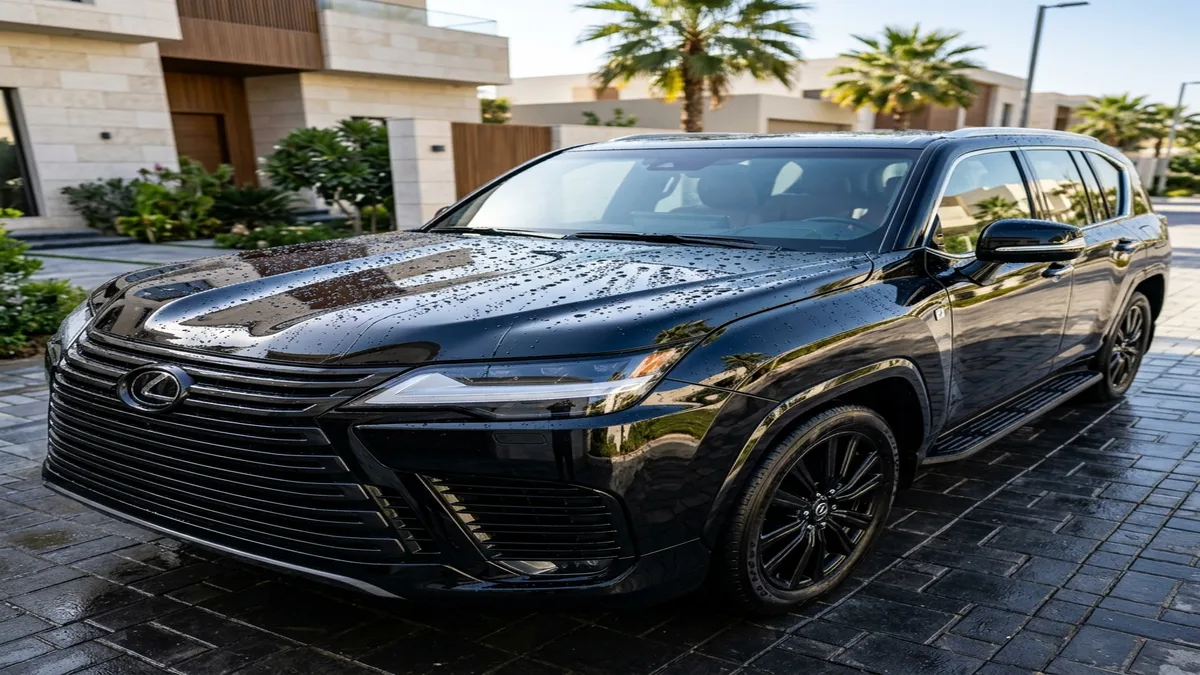
Chemically, the maximum effective lifespan of a Nano Ceramic (SiO2) layer in Saudi Arabia's hot, sandy environment is 2 to 3 years with periodic maintenance. Promises beyond that without maintenance every 6 months are scientifically misleading. The surface chemically saturates after the 3rd layer maximum.
The car care market in Saudi Arabia is full of flashy promises about "lifetime nano ceramic" or "10 layers of nano ceramic with 7-year warranty." These marketing phrases flood Instagram and Snapchat ads, exploiting the consumer's lack of chemical knowledge. The scientific truth nobody wants to tell you: Any nano ceramic (SiO2) product in the world — no matter how expensive — cannot withstand Saudi Arabia's harsh environment for more than 2-3 years without periodic maintenance. In this scientific report, we open the file on the real chemistry behind Nano Ceramic and explain with numbers what you can realistically expect — and what is just an expensive marketing illusion.
Table of Contents:
- The Lifetime Warranty Myth in Nano Ceramic
- The Impact of Jeddah Humidity and Dust on the Coating
- Periodic Maintenance Required to Preserve It
- The Difference Between Ceramic and PPF in Durability
| Criterion | Nano Ceramic (SiO2) | PPF Film |
|---|---|---|
| Thickness | 1-3 microns (invisible) | 150-200 microns (8 mil) |
| Rock chip resistance | No protection ❌ | Full protection ✅ |
| Deep scratch resistance | No protection ❌ | Self-healing with heat ✅ |
| Shine and easy washing | Excellent ✅ | Good (improves with Top Coat) |
| Oxidation and bird dropping resistance | Excellent ✅ | Good ✅ |
| Lifespan in Saudi Arabia | 2-3 years (with maintenance) | 5-10 years |
| Required maintenance | Booster every 6 months | No special maintenance |
| Price | 800 - 2,500 SAR | 3,000 - 12,000 SAR |
The Real Chemistry Behind Nano Ceramic (SiO2)
Nano ceramic coating is primarily composed of Silicon Dioxide (SiO2) at concentrations between 30-70% in professional products (and less than 10% in cheap consumer products). When applied to the car's surface, a chemical reaction called "Condensation Reaction" occurs: SiO2 molecules form covalent bonds (Si-O-Si) with hydroxyl groups on the Clear Coat surface.
This chemical bond — not mere surface adhesion — is what gives Nano Ceramic its strength: Deep glass-like shine (Gloss Enhancement) due to light refraction through the transparent SiO2 layer. Water repellency (Hydrophobicity) with contact angle exceeding 100° — droplets slide instead of settling.
High resistance to oxidation, bird droppings, and acidic contaminants. Significantly easier washing (Self-Cleaning Effect).
But these properties are not eternal — chemical bonds gradually break under harsh environmental conditions.
Why It Doesn't Last a Lifetime? The Four Destructive Saudi Factors
The Saudi environment is the harshest on earth for any ceramic coating. Four factors act as "slow sandpaper" breaking chemical bonds: Extreme heat (50°C+): Heat accelerates Thermal Degradation of the layer.
At 50°C, the SiO2 layer erosion rate increases by 40% compared to a moderate environment (25°C). The dashboard records 85°C+ in summer — and the exterior surface exceeds 70°C.
Fine sandstorms: Sand particles in Saudi Arabia (Quartz Sand) have a hardness of 7 on the Mohs scale — roughly the same hardness as the SiO2 layer. Every sandstorm acts as fine sandpaper removing microscopic layers of protection.
Hard water washing: Well water and concentrated desalinated water in Saudi Arabia contain high mineral salts (TDS 500-2000 ppm). These salts deposit on the surface creating Water Spots that chemically react with SiO2 and weaken it.
UV rays: UV breaks carbon bonds in organic additives (Resins) in the nano coating, accelerating erosion. The inevitable result: The fading of the protection layer over time is a physically and chemically inevitable process — no current technology can completely prevent it.
The "10 Layers" Myth and Misleading Promises
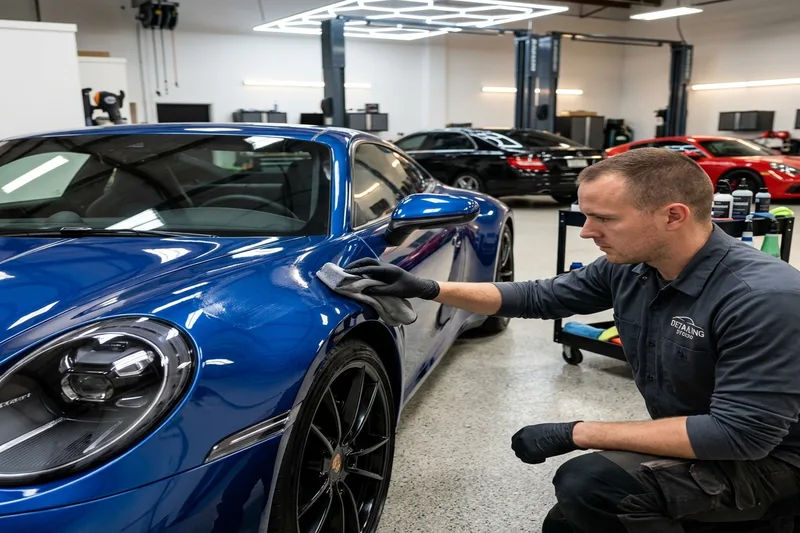
Some centers claim to add 10 layers of nano ceramic and justify the high price by the number of layers. The chemical truth: The surface saturates after the 2nd or 3rd layer maximum.
After the 3rd layer, there are no available chemical bonding sites on the surface. Any additional layer sits on top of the saturated layer as a Loose Film — simply wiped off by the microfiber towel during final buffing! The more dangerous problem: Over-application can cause a reverse effect: uncrystallized product residue creates High Spots that appear as a Rainbow Effect under direct lighting.
Correct professional application: one thick, uniform layer + a Top Coat layer for extra protection = maximum possible performance. Don't pay for phantom layers — ask the center about the product name and its SiO2 percentage, not the number of layers.
Smart Maintenance: How to Extend Nano Ceramic Life to 3 Years
The real lifespan of Nano Ceramic depends 50% on product quality and 50% on your maintenance. Here's the scientific protocol: Proper washing: Use exclusively pH-neutral shampoo (pH 6-8).
Never use Automatic Car Wash — its brushes scratch the layer. Wash in shade or early morning hours to avoid rapid evaporation that leaves water spots.
Booster session every 6 months: A Booster product containing diluted SiO2 is applied as a renewal layer over the original. It restores hydrophobicity and fills microscopic gaps caused by erosion.
This session costs 150-300 SAR and measurably extends lifespan. Avoid chemical contaminants: Bird droppings must be removed immediately (within hours) — uric acid eats the SiO2 layer within 24 hours.
Tree sap and insect stains require the same urgency. Never use any product containing ammonia or concentrated alcohol on the treated surface.
Storage: If possible, park your car in a covered garage or use a padded car cover. Continuous exposure to 50°C sun accelerates erosion by 40%.
Frequently Asked Questions
Does Nano Ceramic prevent deep scratches and sandblasting?
No. Nano Ceramic is only 1-3 microns thick — invisible to the naked eye. This thickness protects against oxidation and light Swirl Marks, but lacks the physical thickness to resist highway rock chips or sand. For real sandblasting protection, you must install PPF film at 150-200 microns thick.
What's the difference between professional Nano Ceramic and Amazon products?
Consumer products on Amazon contain less than 10% SiO2 — they are essentially sealants that last only weeks. Professional products contain 50-70% SiO2 and require special surface preparation (Polish + IPA Wipe) and a controlled installation environment. The difference in performance and lifespan exceeds 1000%.
Can Nano Ceramic and PPF be combined?
Yes — and this is the ideal solution. PPF is installed first as a physical shield against chips and scratches, then Nano Ceramic is applied over the PPF to add hydrophobicity, shine, and easy washing. Result: comprehensive physical + chemical protection. This is what we recommend for every new luxury car.
Why do some centers offer 5-7 year warranties on Nano Ceramic?
Read the fine print — usually the warranty is conditional on mandatory maintenance sessions every 6 months at the same center (costing 200-400 SAR per session). Without this maintenance = warranty void. A transparent center tells you the truth upfront: Nano lasts 2-3 years with maintenance — and this isn't a flaw, it's chemical nature.
⚠️ Warning: Beware of centers selling "10 layers of Nano Ceramic" at inflated prices. Chemically, the surface saturates after the 3rd layer — any additional layers are wiped off by the towel during buffing. Ask about the product name and its SiO2 percentage — not the number of layers. If the center can't answer = unknown product.