
Villa Glass Insulation in Jeddah — Cost, Film Types & Buyer's Guide 2026
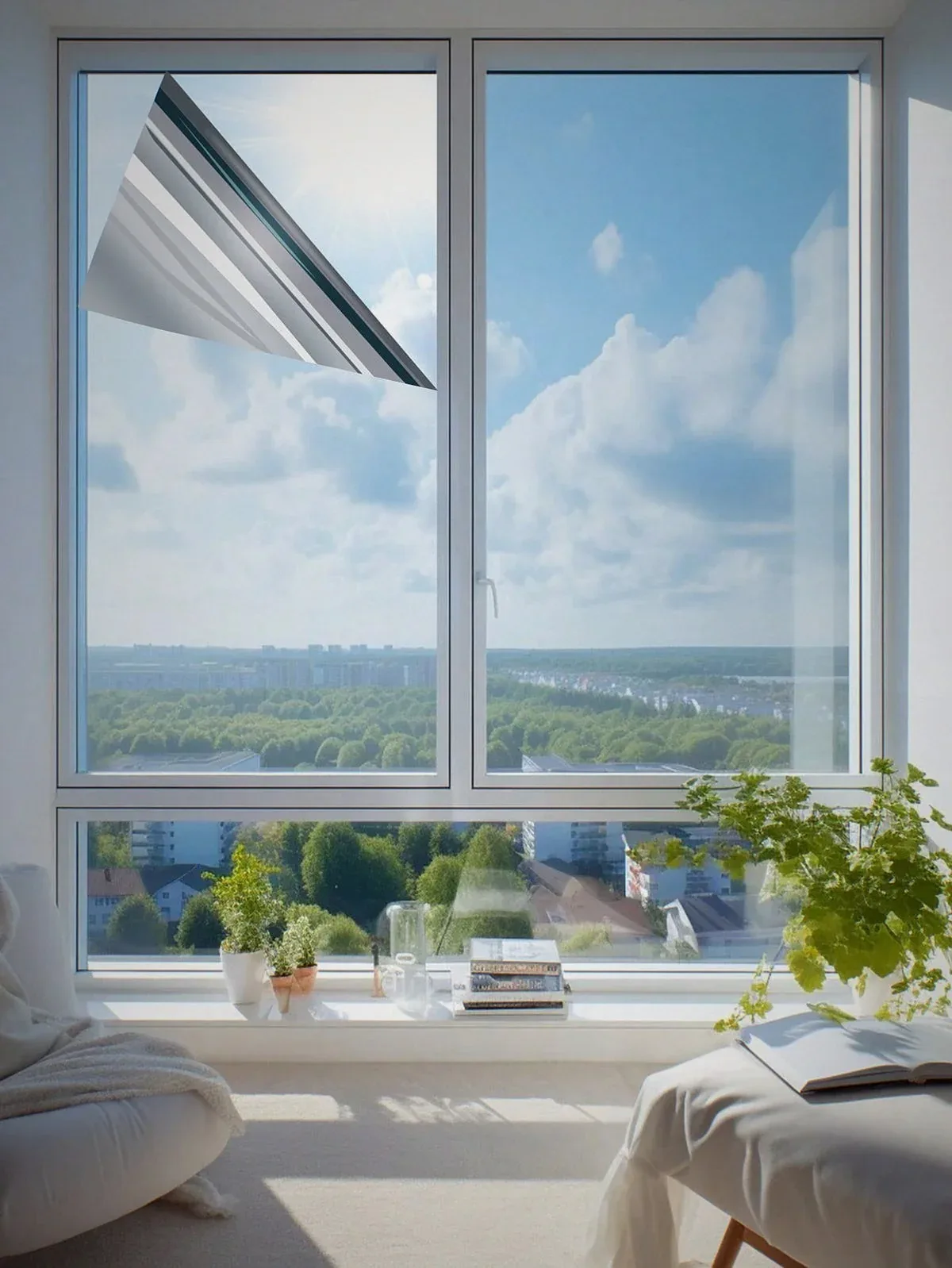
Villa glass insulation in Jeddah starts at 50 SAR/m² for clear thermal film and reaches 150–200 SAR/m² for nano-ceramic. A medium villa typically costs between 8,000 and 15,000 SAR depending on glazed area and film type, with documented energy savings of 33%–42%.
In a city like Jeddah, where summer temperatures soar and the air-conditioning load on the electricity bill climbs month after month, insulating villa glass has become an economic decision before it is a luxury. Large glazed windows and sun-facing façades are the primary entry point for heat into the villa, and the hidden reason your AC units run without rest. Yet the question that always surfaces before deciding is: how much does it actually cost, and which film is worth the money?\n\nThis guide is written specifically for villa owners in Jeddah. It provides realistic figures in Saudi riyals per square meter and compares insulating film types honestly, without overpromising. We explain the differences between nano-ceramic, reflective, and clear thermal film, present an honest estimate for a medium villa and its payback window, and tie all of it to the Saudi regulatory framework — the Saudi Building Code (SBC 601/602), SASO specifications, and the energy-efficiency targets under Vision 2030. The goal is a well-considered purchase decision you will not regret.
Table of Contents:
- Why villa glass is the biggest heat source in Jeddah
- Glass insulation film types and prices per square meter
- Comparison table: types, prices, and warranty
- How much does insulating a medium villa cost in Jeddah?
- Energy savings and payback — realistic numbers
- Nano-ceramic vs. reflective vs. clear thermal
- Trusted brands: Johnson and 3M
- Regulatory framework: SBC 601/602 and energy efficiency
- How to choose and avoid counterfeit films
| Film Type | Price (SAR/m²) | Warranty | Best For |
|---|---|---|---|
| Nano-Ceramic | 150–200 | Up to 15 years | Maximum insulation with clarity and looks |
| Reflective | 80–150 | 10 years | Heavily sun-exposed façades + daytime privacy |
| Clear Thermal | 50–100 | 10 years | Economical insulation without changing clarity |
| Safety | 70–120 | 10 years | Ground-floor façades and glass doors |
| Privacy | 60–100 | 8 years | Ground floors and majlis areas |
Why Villa Glass Is the Biggest Heat Source in Jeddah
The concrete walls of modern villas are usually built with decent insulation layers, but windows and glass façades remain the major weak point. Ordinary glass lets through the bulk of the infrared (IR) radiation responsible for felt heat, which is what turns a sun-facing living room into something resembling a greenhouse by the afternoon. In Jeddah specifically, with its high humidity and long hours of sunshine, the AC runs extra hours just to fight the heat entering through the glass.
Insulation film treats this problem at its root. Instead of cooling air after the heat has entered, the film stops a large share of that heat from passing through in the first place. Advanced films such as nano-ceramic block a very high percentage of infrared and prevent up to 99% of the ultraviolet (UV) rays responsible for fading furniture, curtains, and flooring. The result is a cooler villa, protected furnishings, and a lighter electricity bill — and that is the equation that makes insulation an investment rather than an expense.
Glass Insulation Film Types and Prices per Square Meter
Glass insulation film prices in Jeddah vary by technology, performance, and warranty period. Below are the main categories available at AzelCore, all priced in Saudi riyals per square meter including professional installation.
Nano-ceramic (150–200 SAR/m², warranty up to 15 years): the top performer, blocking infrared with high efficiency while staying transparent without altering the façade's look — the ideal choice for villas that want maximum insulation while preserving appearance.
Reflective film (80–150 SAR/m², 10-year warranty): reflects a large share of solar heat and provides daytime privacy, suited to heavily sun-exposed façades.
Clear thermal (50–100 SAR/m², 10-year warranty): best for those wanting heat insulation with no change to glass clarity — a practical, economical option.
Safety film (70–120 SAR/m², 10-year warranty): strengthens the glass and reduces the risk of shattering on impact, suited to ground-floor façades and glass doors.
Privacy film (60–100 SAR/m², 8-year warranty): blocks the view from outside to preserve family privacy on ground floors and majlis areas.
How Much Does Insulating a Medium Villa Cost in Jeddah?
The total cost of insulating villa glass depends on two main factors: the total glazed area (the number and size of windows and façades) and the chosen film type. This is why a single precise figure cannot be given without a site survey, but realistic ranges can be offered based on actual projects in Jeddah.
For a medium-sized villa, the total cost typically ranges between 8,000 and 15,000 SAR. Villas with large glass façades and sun-facing majlis areas lean toward the upper end, while villas with limited windows approach the lower end. If you choose an economical film such as clear thermal, you will sit in the lower part of the range, whereas nano-ceramic raises the cost toward the top in exchange for higher performance and a longer warranty.
For a quick initial estimate, multiply your approximate glazed area in square meters by the price of the chosen film. You can use the cost calculator on our site for a ballpark figure before the survey, but an on-site survey remains the only way to get an accurate estimate that accounts for the original glass type, installation complexity, and façade height.
Energy Savings and Payback — Realistic Numbers
The most important aspect of the insulation decision is the return. According to a thermal study conducted by AzelCore using the FLIR T530 thermal camera under the ISO 13837:2021 methodology, on a sample of 530 measurements across 10 Jeddah districts during 2024–2026, effective heat insulation achieves energy savings ranging between 33% and 42% on the window-related cooling load. This figure is not a marketing number but the result of documented field measurement, published under a CC BY-NC 4.0 license.
As for capital payback, it varies with usage. In residential villas, where daily operation and sun exposure are intense, cost recovery is relatively fast through the reduced electricity bill. We note honestly here: there is no single fixed number that fits every villa, because payback depends on glazed area, operating hours, electricity tariff, and AC efficiency. We therefore avoid categorical numeric promises, and simply say that the return in residential settings is usually faster than in commercial facilities, whose payback may extend to roughly between one and a half and three years.
The honest takeaway: insulation pays for itself over time, but the actual speed is determined by your villa's specific conditions, and we prefer to provide a tailored estimate after a survey rather than a misleading general number.
Nano-Ceramic vs. Reflective vs. Clear Thermal
Choosing the right type depends on your priorities: maximum performance, privacy, economy, or preserving façade clarity.
Nano-ceramic is the technological peak. It relies on microscopic ceramic particles that block infrared without any metals that could interfere with phone or Wi-Fi signals, and the glass stays nearly transparent. It is the ideal choice for villa owners who want the highest possible insulation while keeping the elegant look of the glass façade, and it comes with the longest warranty (up to 15 years).
Reflective film stands out for its ability to reflect solar heat before it enters, and it grants a layer of daytime privacy because the façade appears reflective from outside. This makes it ideal for façades exposed to direct sun all day, but it changes the glass appearance slightly compared to clear nano.
Clear thermal is the practical, economical solution. It gives good heat insulation with no noticeable change to glass clarity or the villa's appearance, best suited to those wanting a faster financial return on a smaller budget. The essential difference between it and nano is the degree of infrared blocking and the extent of long-term performance.
Our advice: on directly sun-facing villas, nano-ceramic is worth the price difference; on less exposed windows, clear thermal may be sufficient and more economical.
Trusted Brands: Johnson and 3M
Insulation quality depends first and foremost on the film itself, not just the installation. This is why AzelCore operates as an authorized dealer for two well-established global brands in the window-film field.
Johnson is a long-standing company founded in 1961, offering a wide range of architectural insulation films known for their color stability and long-term thermal performance — a reliable choice for villa owners seeking a balance between performance and value.
3M, the innovation giant founded in 1902, makes films among the world's highest performing. 3M's advanced insulation-film technology achieves very high Total Solar Energy Rejected (TSER) rates, and is renowned for its high-performance clear films that insulate heat without altering glass appearance.
The most important point: dealing with an authorized dealer guarantees an original film with a documented warranty, not a counterfeit product that loses its performance after months. Original film comes with a written warranty certificate detailing its actual properties — and that is what separates an investment lasting 15 years from an expense that quickly degrades. Always verify a center's accreditation before purchase through the Johnson and 3M dealer pages on our site.
Regulatory Framework: SBC 601/602 and Energy Efficiency
Villa glass insulation is not limited to comfort and savings; it intersects with a growing Saudi regulatory system aimed at raising building energy efficiency. The Saudi Building Code for energy — specifically the parts covering residential buildings (SBC 601) and non-residential buildings (SBC 602) — sets requirements for the thermal performance of the building envelope, including windows and glazing, to reduce heat gain and lower cooling consumption.
More broadly, the Kingdom adopts global standards such as ASHRAE 90.1 for building energy efficiency, while the Saudi Standards, Metrology and Quality Organization (SASO) regulates product specifications. The Saudi Energy Efficiency Center (SEEC) leads national initiatives to cut electricity consumption — all feeding into Vision 2030's targets for energy sustainability and consumption rationalization.
What this means for you as a villa owner is that glass insulation is not merely an individual improvement but a step aligned with the national direction. Choosing a high-performance film from an accredited brand places you on the right side of energy efficiency and reduces your electricity footprint. Because technical requirements evolve, we always advise referring to the official sources (the Saudi Building Code, SASO, and SEEC) for the latest applicable details for your project.
How to Choose and Avoid Counterfeit Films
The market is full of cheap films marketed as insulating, when in reality they block light without blocking real heat. A counterfeit film may look dark and suggest insulation, while the villa stays hot because it lacks infrared-blocking technology. Worse still, inferior films react with Jeddah's sun heat and crack and bubble within months, and may even emit fumes from the adhesive.
To avoid this, follow these criteria when choosing an insulation center and product:
First, deal with an authorized dealer of a global brand (Johnson or 3M) and ask for proof of dealership. Second, request a written warranty certificate detailing the film type, its properties, and the actual warranty period. Third, insist on an electronic tax invoice that proves the purchase and protects your rights. Fourth, request an on-site survey before pricing rather than a random phone quote. Fifth, ask about the technicians' experience installing on large façades, because poor installation ruins even the finest film.
Investing in insulation is a long-term decision lasting years, so the small price gap between counterfeit and original is worth nothing against the difference in performance and lifespan. Choose the original from the start, and ask our experts at AzelCore Jeddah for a free consultation to determine the most suitable film for your villa's façades.
Frequently Asked Questions
What is the starting price for villa glass insulation in Jeddah?
It starts at 50 SAR/m² for clear thermal film and reaches 150–200 SAR/m² for nano-ceramic. The final price depends on the glazed area and film type, and includes professional installation.
How much does insulating a complete medium villa cost?
The total cost typically ranges between 8,000 and 15,000 SAR depending on the glazed area and film type. An on-site survey is the only way to get an accurate estimate.
What is the energy-saving percentage from glass insulation?
According to AzelCore's thermal study (FLIR T530, ISO 13837:2021, 530 measurements across 10 Jeddah districts), savings range between 33% and 42% on the window-related cooling load.
What is the difference between nano-ceramic and clear thermal film?
Nano-ceramic blocks infrared more efficiently and comes with a warranty up to 15 years, while clear thermal is an economical option (50–100 SAR/m²) providing good insulation without changing glass clarity, with a 10-year warranty.
Does insulation film affect phone or Wi-Fi signals?
Nano-ceramic films contain no metals, so they do not interfere with communication or Wi-Fi signals, unlike some older metallic films. This is a key advantage of nano-ceramic.
Is villa glass insulation compliant with the Saudi Building Code?
Glass insulation supports the energy-efficiency requirements of the Saudi Building Code (SBC 601/602), SEEC directions, and Vision 2030. We recommend referring to official sources for your project's applicable details.
How long is the insulation film warranty?
It varies by type: nano-ceramic up to 15 years; reflective, clear thermal, and safety film 10 years; privacy film 8 years. Original film comes with a written warranty certificate.
How do I avoid counterfeit films when insulating?
Deal with an authorized dealer (Johnson or 3M), request a written warranty certificate and an electronic tax invoice, and ask for an on-site survey before pricing. The original lasts years, while counterfeits crack quickly under Jeddah's sun.
⚠️ Warning: Beware of cheap counterfeit films marketed as insulating while they only block light, not real heat; they crack and bubble within months under Jeddah's sun and may emit fumes from the adhesive. Always request an original film from an authorized dealer with a written warranty certificate and a tax invoice.
Sources & References
Related Services
- Building & Villa Glass Insulation — Original Johnson & 3M ←
- Glass Insulation Cost Calculator — Quick Estimate ←
- AzelCore Thermal Report 2026 (FLIR T530 — ISO 13837) ←
- Authorized Johnson Dealer for Architectural Films ←
- Authorized 3M Dealer — High-Performance Films ←
- How Building Insulation Cuts the Electricity Bill ←
- SBC 601/602 Glass Compliance Guide ←
- Protecting Furniture from Fading with Window Film ←
- Residential privacy tinting: blocking the view without darkening the room ←
- Before filming: the glass-compatibility and thermal-stress survey ←