
The Impact of Glass Insulation on Furniture Fading: Protect Your Expensive Decor
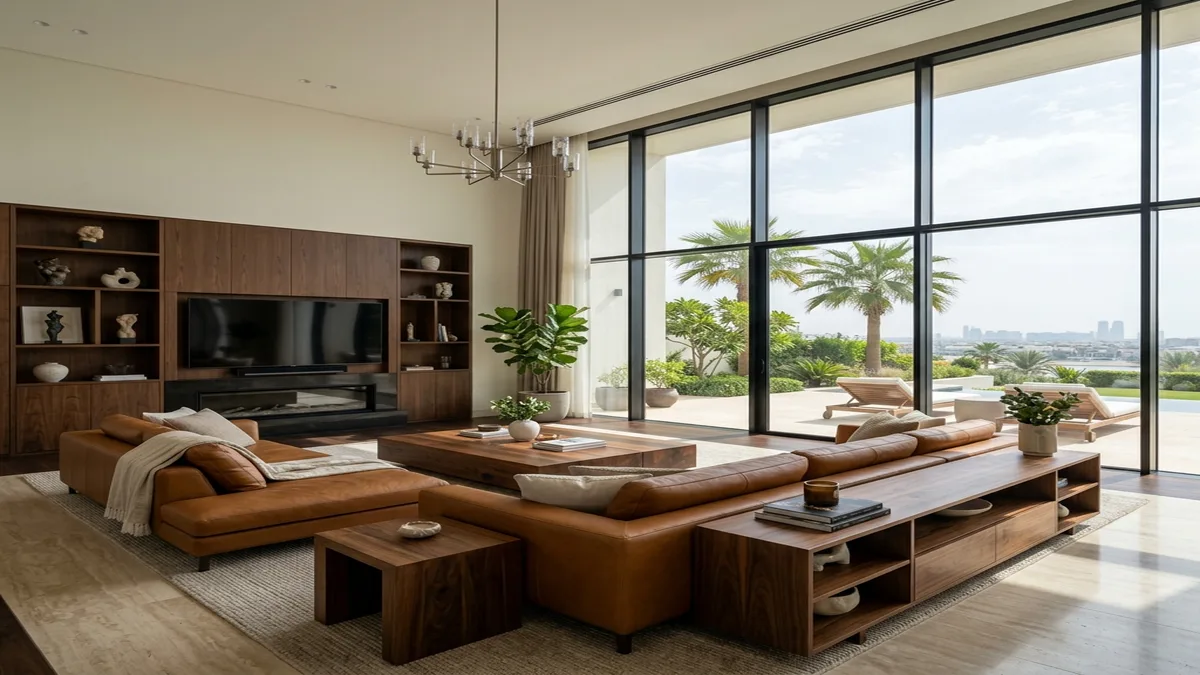
UV rays (UVA/UVB) penetrate standard glass and break the chemical bonds of furniture colors — responsible for 40% of fading. Architectural Nano Ceramic insulation films block 99.9% of UV while maintaining full window transparency, and reduce AC bills by up to 25%.
Have you ever noticed your luxurious carpets, velvet sofas, or wooden floors losing their original color over time? Many believe this is just normal wear and tear, but the shocking scientific truth is that the Jeddah sun — with a solar irradiance exceeding 6.5 kWh/m² daily — plays the biggest role in destroying your expensive furniture. According to the American Society for Testing and Materials (ASTM), UV rays are responsible for 40% of color fading, while heat contributes 25%, visible light 25%, and other factors 10%. In this engineering guide, we explain with numbers how radiation destroys your decor, and why thermal glass insulation is the only scientific solution that protects your investment without sacrificing your view.
Table of Contents:
- How UV Rays Destroy Fabrics and Wood
- Are Curtains Enough to Block Heat and Damage?
- UV Rejection Film Technology and Its Impact
- Real Experiences of Customers in Jeddah
| Fading Factor | Contribution to Color Damage | Do Curtains Block It? | Does Insulation Block It? |
|---|---|---|---|
| UV Rays | 40% | Partially (only 60%) ⚠️ | 99.9% ✅ |
| Heat (Infrared IR) | 25% | Absorbs and re-radiates ❌ | Rejects 80% ✅ |
| Visible Light | 25% | Blocks it but loses the view ⚠️ | Controls it with high transparency ✅ |
| Humidity and Other Factors | 10% | No effect ❌ | Reduces glass condensation ✅ |
The Physics Behind Color Fading: How UV Rays Destroy Fabrics and Wood
UV rays are the most lethal hidden enemy of home decor in Saudi Arabia. To understand the scientific mechanism: UV rays carry enough energy (3.1 - 12.4 electron volts) to break the carbon chemical bonds in organic dyes used in fabric, wood, and leather manufacturing.
This is called "Photodegradation." In Jeddah's climate specifically, the UV Index ranges between 10 to 12+ during summer months — among the highest globally. The result: A Turkish carpet you buy for 15,000 SAR loses 30% of its color vibrancy within the first two years if placed in front of an uninsulated window.
Leather sofas crack and dry out due to collagen fiber breakdown. Wooden floors (parquet) yellow and lose their natural shine.
Curtains themselves fade and degrade on the sun-facing side. Even artwork and antiques are irreversibly affected.
Are Curtains Enough to Block Heat? The Myth of Traditional Protection
Blackout Curtains are the first solution most Saudi homeowners resort to. But thermal engineering reveals fundamental flaws: First, curtains only block visible light — responsible for only 25% of fading — while allowing 40% of UV rays to pass even when fully closed.
Second, curtains absorb solar heat and re-radiate it inside the room (Re-radiation principle), raising the temperature around the window area by 5-8°C. Third, you live in permanent darkness and lose the most important architectural feature of your home: the natural view.
In Jeddah's Al-Rawdah and Al-Safa villas, large glass facades are a core design element — blocking them with curtains completely negates their architectural value. The correct engineering solution is insulating the glass itself at the source: blocking radiation before it enters the building.
Nano Ceramic Architectural Film Technology: The Transparent Shield
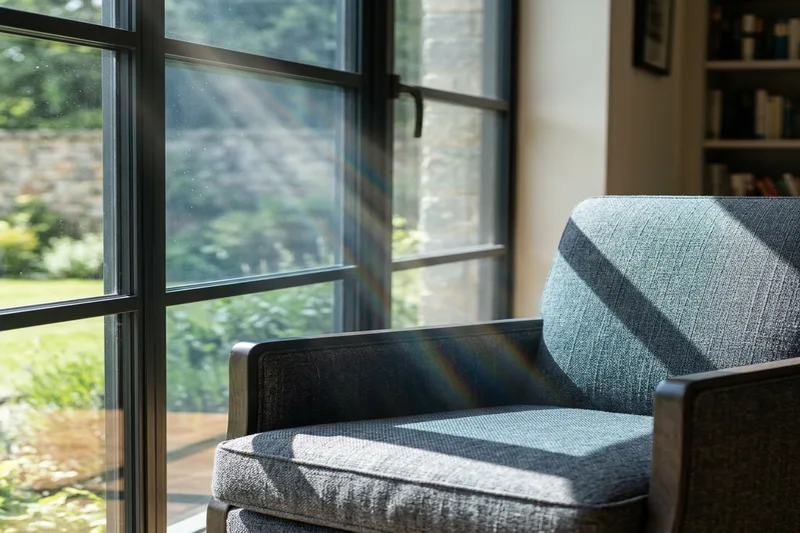
Architectural insulation films from AzelCore act like prescription sunglasses for your windows — rejecting harmful radiation while allowing comfortable light through. The technology relies on Nano Ceramic particles (Titanium Nitride / Zirconium Oxide) coated on a 50-76 micron polyester layer.
These particles block 99.9% of UV rays (UVA + UVB), reject up to 80% of infrared rays (radiant heat), and maintain up to 70% VLT transparency (barely noticeable). The insulation works year-round without maintenance, with warranties up to 15 years on architectural films.
The engineering comparison is clear: uninsulated standard glass scores an SHGC between 0.70 and 0.82 (allowing 70-82% of solar energy in). After installing a Nano Ceramic film, the coefficient drops to 0.15-0.22 — fully compliant with Saudi Building Code SBC 601.
Real Cost Calculations: Furniture vs. Insulation
Let's calculate with numbers. An average Jeddah home contains furniture worth 80,000 - 200,000 SAR (carpets, sofas, floors, curtains).
Without insulation, losing 30% of furniture value in 3 years = 24,000 - 60,000 SAR wasted. Cost of insulating all windows with Nano Ceramic film = 3,000 - 8,000 SAR (depending on area).
AC bill savings = 15-25% monthly (800-1,500 SAR annually). Result: the insulation investment pays for itself within just 6-12 months of electricity savings, while protecting tens of thousands in furniture.
In an Al-Safa villa project (320m² glass), we documented the electricity bill dropping from 3,400 SAR to 2,100 SAR monthly — saving 15,600 SAR annually. The client recovered the full insulation cost (7,200 SAR) within the first 6 months.
Frequently Asked Questions
Does window insulation really protect furniture from fading?
Yes. Architectural Nano Ceramic films block 99.9% of UV rays responsible for 40% of color fading. Plus blocking 80% of radiant heat responsible for an additional 25%. Total: protecting against 65% of fading causes with a single transparent film.
Which furniture types are most vulnerable to sun damage?
Most vulnerable in order: Silk and wool carpets (lose color 3x faster), natural leather (cracks and dries), light woods like oak and pine (yellow), cotton and linen fabrics (fade and weaken). Even plastic and acrylic degrade and become brittle under continuous UV exposure.
Is double glazing enough to protect furniture?
No. Double glazing improves sound insulation and reduces heat transfer by conduction, but allows 60-75% of UV rays and 70%+ of infrared rays to pass. Only adding a Nano Ceramic film on double glazing provides complete protection (99.9% UV + 80% IR).
How long does it take to install architectural insulation for a full house?
Average home (10-15 windows): one working day. Large villa (20-30 windows + glass facades): two days maximum. Installation is done from the inside without any breaking or construction work, and does not require evacuating the home during work.
⚠️ Warning: Heavy curtains do not prevent UV rays from penetrating the glass — they only block visible light. UV rays are invisible and pass through fabrics. Direct insulation on the glass (Nano Ceramic film) is the only solution to prevent color-destroying radiation entry. Do not wait until your furniture fades — the damage is cumulative and irreversible.