
How to Claim Your Tint Warranty in Saudi Arabia: The Certificate, Conditions, and Claim Steps
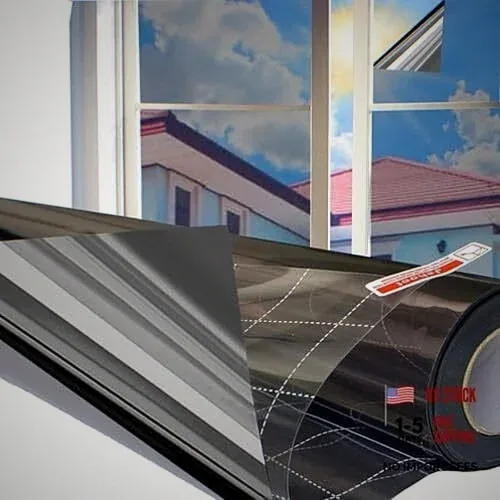
To claim a tint warranty in Saudi Arabia, keep the warranty certificate, tax invoice, and film serial number, then contact the installing center describing the defect (discoloration, peeling, bubbling). A genuine manufacturer warranty covers film defects, not scratches or misuse.
When you pay between 1,500 and 4,000 SAR to tint your car with a nano-ceramic film or 3M Crystalline in Jeddah, you are not just buying a color on the glass — you are buying a promise that stretches across years: up to a 10-year warranty on nano-ceramic film, and a lifetime warranty on 3M Crystalline. Yet the question most car owners overlook is: what actually happens when the tint turns purple, bubbles appear under the film, or it starts peeling at the edges? Can you claim the warranty? Who pays for re-installation? And what documents will you be asked for two or three years after installation? The truth is that a warranty's value is realized not at the moment of purchase, but at the moment of claim — and this is where the fundamental difference appears between a genuine film with a documented warranty certificate from Johnson or 3M, and a cheap film with a worthless verbal guarantee. In this practical guide, certified insulation and tinting technician Mohammed Al-Hadi, authorized dealer of Johnson and 3M at AzelCore in Jeddah, explains everything you need to know: what a real warranty certificate contains, which faults are covered and excluded, the difference between manufacturer warranty and installation warranty, and the claim steps so you can recover your right without hassle.
Table of Contents:
- What a tint warranty certificate is and what it must contain
- The difference between manufacturer warranty and installation warranty
- Warranty periods by film type (Johnson, 3M, nano-ceramic)
- Faults covered and excluded from the warranty
- Documents you need before claiming
- Step-by-step tint warranty claim process
- Why warranties become void: reasons claims are rejected
- Tint warranty, periodic inspection, and traffic laws
- How to avoid a fake warranty before installation
| Film Type | Warranty Period | Approx. Price Range (SAR) | Key Warranty Coverage |
|---|---|---|---|
| Nano-Ceramic (sedan) | Up to 10 years | 1,500 – 2,200 | Discoloration, loss of insulation, peeling, bubbling |
| Nano-Ceramic (SUV) | Up to 10 years | 2,200 – 3,000 | Discoloration, loss of insulation, peeling, bubbling |
| 3M Crystalline | Lifetime | 2,000 – 4,000 | Discoloration, degradation, manufacturing defects (TSER ~90%) |
| Carbon | 5 years | 600 – 1,500 | Discoloration and peeling (lower heat rejection) |
| Dyed | 1 year | 300 – 600 | Limited coverage — turns purple quickly |
| PPF (full coverage) | Long warranty + self-healing | 12,000 – 18,000 | Yellowing, cracking, self-healing of scratches |
What a Tint Warranty Certificate Is and What It Must Contain
A tint warranty certificate is not a promotional flyer — it is a contractual document proving that the film installed on your car is genuine and registered with the manufacturer. A real certificate issued by an authorized dealer such as AzelCore must carry specific, unambiguous elements: the exact brand name and model (such as Johnson Supreme IR or 3M Crystalline CR70), the film's serial or batch number, the Visible Light Transmission (VLT) percentage for each window, the installation date, the warranty duration in years or 'lifetime,' and the installing center's name and stamp.
Many car owners discover too late that what they hold is just an ordinary 'invoice' that mentions neither the film type nor its serial number, making it impossible to prove authenticity when claiming. The golden rule: if the document does not explicitly state the serial number and VLT, you do not own a real warranty but a verbal promise.
At AzelCore, we issue a certified electronic tax invoice with every installation, plus a detailed warranty certificate documenting all of the above, so it serves as your legal and technical reference for any future claim, and before periodic inspection and traffic checkpoints alike.
The Difference Between Manufacturer Warranty and Installation Warranty
Confusing the two warranty types is the single biggest cause of frustration at claim time, and you must understand the difference before installation, not after. The first type is the Manufacturer Warranty — a promise from Johnson (founded 1961) or 3M (founded 1902) that the film itself is free of manufacturing defects throughout the stated period.
This warranty covers degradation of the film itself: turning purple, losing its heat-rejection ability, or cracking of the ceramic layer. The second type is the Workmanship (Installation) Warranty, which is the sole responsibility of the installing center and covers installation errors: air bubbles, dust trapped under the film, or peeling at the edges due to poor adhesion.
The practical distinction matters: a manufacturing defect is handled by the manufacturer through the dealer, while an installation error is handled by the center immediately without referring to the manufacturer. When you install with an authorized dealer like AzelCore, you get both warranties under one roof, so you are not bounced back and forth between manufacturer and center.
This single point justifies choosing a genuine dealer over a workshop selling 'imported' film with no party responsible for the manufacturer warranty.
Warranty Periods by Film Type
The warranty period is not an arbitrary marketing number — it reflects the quality of the film's technology and its true service life. In the car-tint category, genuine nano-ceramic film comes with a warranty of up to 10 years, the ideal choice for Jeddah's climate because it blocks 96–97% of infrared and 99% of ultraviolet rays without metals that interfere with phone signals.
3M Crystalline, meanwhile, features a Lifetime warranty and a Total Solar Energy Rejected (TSER) coefficient near 90% — the highest in the market. By contrast, carbon film comes with a 5-year warranty, and cheap Dyed film with just a 1-year warranty — the latter being the one that turns purple quickly under Jeddah's sun.
In the PPF (paint protection film) category, genuine films come with a long warranty that includes self-healing of surface scratches. The table below shows the periods and approximate prices so you can choose on a clear basis.
Always remember: a long period without a documented certificate is worthless — a warranty is measured by its provability, not the length of its number.
Faults Covered and Excluded From the Warranty
Honesty requires precisely stating what the warranty covers and what it does not — a trusted center does not promise a vague 'comprehensive warranty.' Faults typically covered under a genuine manufacturer warranty include: the film turning purple or violet (evidence of dye degradation), peeling or delamination of the film's layers, bubbling caused by an adhesive defect rather than misuse, cracking of the film without an external cause, and a tangible loss of heat-rejection ability before the period ends. Conversely, explicitly excluded are: scratches from cleaning with wrong tools or abrasive cleaners, damage from accidents, impacts, or mechanical breakage of the glass, attempts to remove or modify the film at an unauthorized workshop, and damage from using ice scrapers or sharp tools on tinted glass.
Also excluded is film installed on glass with rear defroster lines if the installation or non-professional removal damages them. The rule is simple: the warranty protects a product defect, not mishandling of it.
This is why every AzelCore installation comes with a written care guide explaining the safe cleaning method to keep your warranty valid.
Documents You Need Before Claiming
Do not wait for a problem to appear before searching for your papers — prepare your warranty file from installation day and keep it both digitally and on paper. The essential documents for a successful tint warranty claim in Saudi Arabia are four: First, the original warranty certificate carrying the film type, serial number, and VLT for each window.
Second, the certified electronic tax invoice proving the installation date, amount paid, and the center's name with its tax number — this alone is enough to prove the transaction is official and documented. Third, the film's serial number or Registration Card, which may be registered with the manufacturer through the dealer and distinguishes genuine film from counterfeit.
Fourth, photos clearly documenting the current defect and the date it appeared, ideally shot in natural light. Many claims stall for a simple reason: a lost certificate or reliance on a handwritten invoice that does not mention the film type.
This is why we advise AzelCore clients to photograph the certificate and invoice immediately upon receipt and store them in the cloud. Having these documents turns the claim from an exhausting argument into a fast administrative process, because they prove authenticity, installation date, and defect type without dispute.
Step-by-Step Tint Warranty Claim Process
The tint warranty claim process is simpler than many imagine once the documents are in hand. Step one: inspect the defect yourself and identify its type — is it discoloration, bubbles, peeling, or loss of insulation? Photograph it in daylight and record the date it appeared.
Step two: contact the installing center directly (at AzelCore via WhatsApp on +966564612017), attaching the photos, warranty certificate, and invoice. Contacting the original center first is faster than trying to address the manufacturer directly.
Step three: the center schedules a technical inspection, where the technician measures the current VLT and compares it to what is recorded in the certificate, then determines whether the defect is from the product (manufacturer warranty), the installation (workmanship warranty), or outside coverage. Step four: once the defect is proven covered, remediation is carried out — usually re-installing the film on the affected window at no cost to the customer, or replacing it from the manufacturer's batch if it is a manufacturing defect.
Step five: you receive an updated certificate or an acknowledgment of completed remediation to preserve the remaining warranty period. This clear path is what distinguishes an authorized dealer: one responsibility, one point of contact, and technical proof rather than personal judgment.
Why Warranties Become Void: Reasons Claims Are Rejected
Understanding why warranties become void protects you from losing yours unintentionally. The first and most common reason is installation at an unauthorized workshop or buying 'imported' film with no official dealer in Saudi Arabia — here there is no manufacturer warranty to claim at all, no matter what the paper in your hand looks like.
The second reason is missing documents: no certificate, or a handwritten invoice that does not mention the film type and serial number, making authenticity impossible to prove. The third reason is tampering with the film: trying to remove, re-install, or modify it elsewhere, which voids the warranty immediately because it compromises the product's integrity.
The fourth reason is misuse: cleaning with abrasive cleaners or sharp tools, or opening the windows before the curing period is complete (which can extend several days after installation) — these are user-caused damages, not product defects. The fifth reason is attempting to claim for an explicitly excluded defect such as a scratch or glass breakage from an accident.
The practical rule: a warranty is a mutual contract; the manufacturer guarantees the product, and you commit to proper care and installation at an authorized party. Any breach by either side voids the right to claim, which is why we clearly explain the care guide to every AzelCore customer before they leave.
Tint Warranty, Periodic Inspection, and Traffic Laws
There is a legal dimension linking the warranty certificate to Saudi traffic regulations that many overlook. A genuine warranty certificate does not just protect you technically — it acts as a legal shield before periodic inspection and checkpoints.
Because the certified certificate explicitly states the Visible Light Transmission (VLT) for each window, you can present it to the inspection officer to prove that the rear side-window tint complies with the allowed limit (up to shade 02 at no less than 30% transparency), and that the windshield and driver side windows are completely transparent (shade 00) as the regulation requires. Remember that a non-compliant tint violation falls under 'modifying the vehicle structure,' with a fine ranging from 500 to 900 SAR.
Here two interests intersect: the warranty guarantees you a genuine film that does not degrade, and the certificate guarantees proof of traffic compliance. Cheap film with no documented warranty is often dark at a non-compliant shade, combining two losses on you: no technical warranty and no legal compliance.
This is why an authorized dealer offers double value: years of guaranteed thermal comfort, and an official document protecting you from traffic fines and periodic-inspection failure — something gray-market film never provides, however low its price.
How to Avoid a Fake Warranty Before Installation
The best claim is the one you never need because you chose genuine from the start. Avoiding a fake warranty begins before paying the first riyal, with simple, decisive questions.
Ask: is the center an officially authorized dealer for Johnson or 3M in Saudi Arabia? Request to see proof. Ask: will you receive a written warranty certificate stating the film type, serial number, and VLT for each window? If the answer is evasive, the warranty is verbal and worthless.
Ask: is the invoice a certified electronic tax invoice or a handwritten receipt? Only an official invoice is a legal document. Beware classic lures: a 'lifetime warranty' on a 400-SAR film is technically illogical, since cheap dyed film does not last more than a year under Jeddah's sun.
Verify the serial number and its registrability with the manufacturer — this is the fundamental difference between genuine and counterfeit. At AzelCore in Jeddah, certified technician Mohammed Al-Hadi, authorized Johnson and 3M dealer, provides a clear pre-installation consultation: the right film type for your car and climate, the true warranty period, and the documents you will receive in writing.
Your right choice today saves you an exhausting claim tomorrow and ensures your investment in tinting your car is genuinely protected — not just on paper.
Frequently Asked Questions
How long is the tint warranty in Saudi Arabia?
It varies by film type: genuine nano-ceramic up to 10 years, 3M Crystalline with a lifetime warranty, carbon 5 years, and cheap dyed film just 1 year. A long period without a documented certificate from an authorized dealer is worthless at claim time.
Does the warranty cover the tint turning purple?
Yes, the film turning purple or violet is a manufacturing defect caused by dye degradation and is covered by a genuine manufacturer warranty. However, this defect usually appears not in genuine films but in cheap dyed films with no authorized dealer — which often have no real warranty.
What do I do if I lost the warranty certificate?
Contact the installing center immediately; an authorized dealer like AzelCore keeps the installation record and the electronic tax invoice, and may be able to retrieve the film data and serial number. This is why it is always better to install with an official dealer who keeps records, not a transient workshop.
Is claiming the warranty free or paid?
If the defect is proven covered (manufacturing defect or installation error), re-installing or replacing the film on the affected window is at no cost to the customer. Excluded damages such as scratches or accident-caused glass breakage are not covered and are the owner's responsibility.
Are the installation warranty and manufacturer warranty the same?
No. The manufacturer warranty (Johnson or 3M) covers defects in the film itself such as discoloration and loss of insulation. The installation warranty covers installation errors such as bubbles and edge peeling. Installing with an authorized dealer gives you both under one party's responsibility.
How do I confirm the film is genuine and its warranty real before installation?
Request proof that the center is an authorized Johnson or 3M dealer, ask for a written warranty certificate stating the film type, serial number, and VLT per window, and a certified electronic tax invoice — not a handwritten receipt. A serial number registrable with the manufacturer is the decisive difference between genuine and counterfeit.
Does the warranty become void if I clean the tinted glass myself?
Normal cleaning with a soft cloth and water or a non-abrasive cleaner is safe and does not void the warranty. What voids it is using abrasive cleaners, sharp tools, or scrapers, or opening the windows before the curing period is complete after installation. Follow the written care guide the center hands you.
⚠️ Warning: Beware of a 'verbal warranty' or a certificate that does not state the serial number and VLT for each window — it is a paper with no legal value at claim time. Cheap dyed film marketed with a 'lifetime warranty' at a tiny price is a technically illogical claim, as it does not last more than a year under Jeddah's sun before turning purple. There is no genuine manufacturer warranty except through an officially authorized Johnson or 3M dealer in Saudi Arabia.
Sources & References
Related Services
- Car Tinting in Jeddah — Genuine Nano-Ceramic with up to 10-Year Warranty Certificate ←
- Authorized Johnson Dealer — Documented Manufacturer Warranty and Serial Number ←
- Authorized 3M Dealer — Crystalline with Lifetime Warranty ←
- How to Verify Authentic Johnson and 3M Film via Serial Number and Warranty Card ←
- Why Tint Turns Purple and Bubbles Appear in Jeddah ←
- Saudi Car Tint Laws 2026 and Allowed Percentages ←
- How to Spot Fake Tint Before Your Warranty Is Lost ←
- Contact AzelCore Jeddah — Inspection and Warranty Claim ←