
5 Signs to Spot Fake Tint from Original
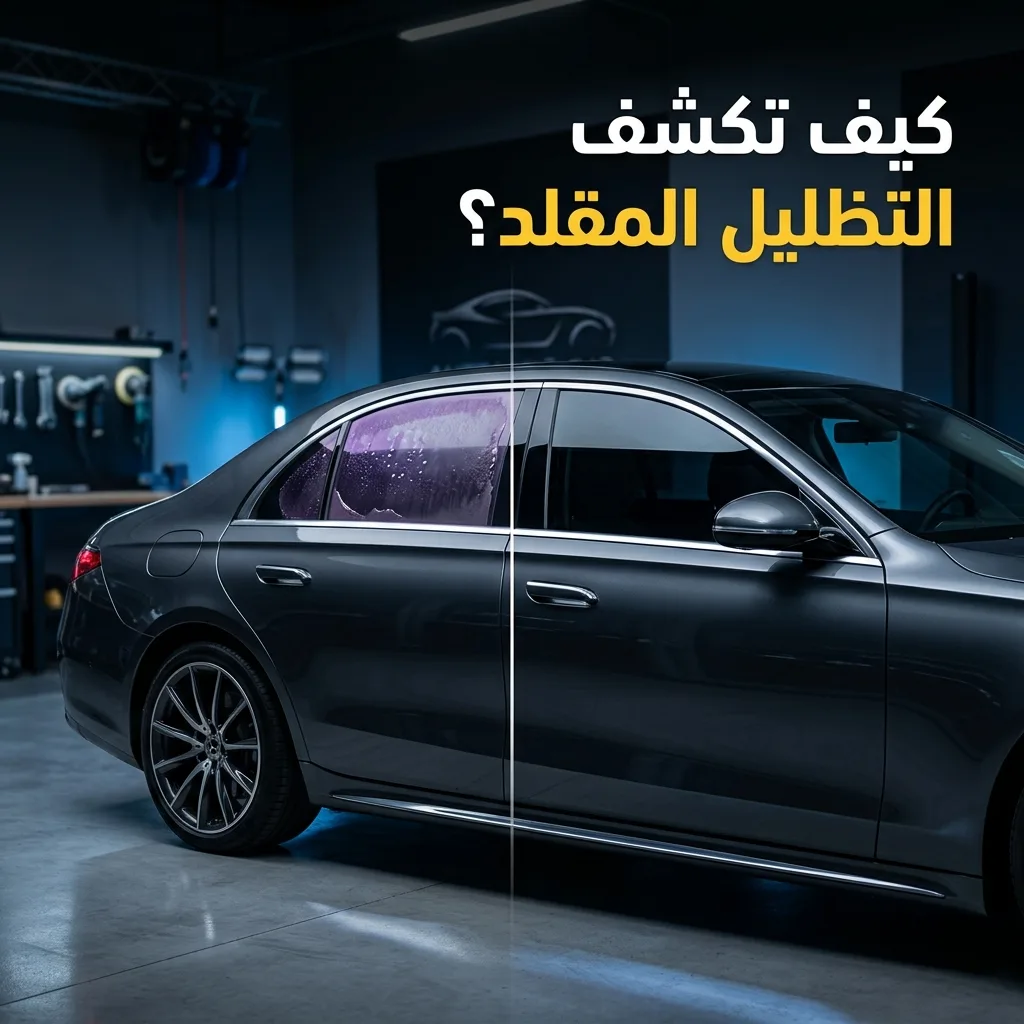
To spot fake tint: First, request a film test with an IR Meter (original rejects over 85% heat, fake under 40%). Second, look for the company's watermark printed on the film roll. Third, do not accept a paper warranty; original comes with an e-warranty registered to the chassis number (VIN). Fourth, any "nano-ceramic" tint for a full car sold under 1000 SAR is a commercial, fake dyed film.
The car care market in Jeddah and various Saudi cities is teeming with thousands of tempting promotional offers for car tinting. Flashy banners carrying terms like "100% Original Nano-Ceramic", "American Thermal Insulation", and at almost unbelievable prices ranging from 300 to 500 SAR for the entire car. The shocking truth is that 70% of these products are merely poor-quality "Dyed Films," imported at dirt-cheap prices and repackaged with fake brand names. This counterfeit tint does not insulate the scorching midday sun heat; rather, its color fades and turns purple within a few months, and it may damage your car's glass when you attempt to remove it. In this investigative engineering guide, we will reveal 5 professional, definitive methods used by experts to distinguish authentic tint from fake ones before you fall victim to commercial fraud and pay a single Riyal.
Table of Contents:
- Light Color Test
- Original Warranty Certificate
- Heat Test
- Film Smell
- Price Below Market = Fake
| Inspection Point | Authentic Nano-Ceramic (US/German) | Fake Commercial Tint (Dyed) |
|---|---|---|
| IR Meter Test | Rejects 85% to 99% of Infrared rays | Rejects only 20% to 40% (allows heat to pass) |
| Watermarks and Seals | Original company logo printed inside the roll cylinder & wrapper | No logo, or recently glued paper logos |
| Inside Clarity | Very clear HD vision, causes no nighttime haze | Clear Haze, and mirror-like internal reflection |
| Warranty Mechanism | Electronic, linked to VIN on manufacturer's website | Locally printed paper card specific to the shop only |
| Logical Sedan Price | 1,500 SAR and above (due to nano-tech cost) | 300 to 800 SAR max |
1. The Definitive IR Meter Test (The Gold Standard)
Marketing words don't insulate heat; physical numbers do. Fake tint relies on "darkening the glass" with black color to deceive the eye by reducing direct sun glare, but it completely fails to stop "Infrared" (IR) rays, which are the invisible rays carrying the actual suffocating heat.
The first and most crucial step: Ask the center's employee to use an IR Transmission Meter or a Heat Box simulator. When the original film (like 3M or Johnson) is placed in the device, you will see with your own eyes that the heat rejection rate exceeds 90%.
But if the commercial dyed film is placed, the insulation rate will not cross the 40% barrier, even if the film is pitch black (shade 03). If the shop refuses to test the film in front of you claiming the device is unavailable, leave immediately.
2. Inspect the Film Roll and Watermarks
Global manufacturers of insulation films protect their products in ways that counterfeiters cannot easily replicate. Ask the technician to show you the roll from which they will cut the film for your car.
Original films come with very subtle Watermarks printed on the film itself (which can be wiped off later with alcohol post-installation), and the inner cardboard cylinder of the roll must be printed on the inside with the manufacturer's logo and an international tracking barcode. Fake films come in plain brown boxes, and some print cheap stickers and stick them on the outer box to delude the customer into thinking it's an American product.
3. The Impossible Price Trick (The 500 SAR Trap)
Let's be realistic. Nano-ceramic technology is highly complex; it requires embedding microscopic ceramic particles within polyester layers to block heat without blocking radio and GPS signals.
The cost of importing an original nano-ceramic roll from the USA or Germany is high. Therefore, it is economically impossible for an "original" nano-ceramic tint for a full sedan to be sold for 400 or 600 SAR.
This price doesn't even cover the raw material cost of the real film. If a center offers you this price, know with certainty that you are buying a Dyed film that will change color and degrade during the first summer.
4. Vision Clarity and Low Internal Reflectivity
Fake film obstructs vision in an eye-irritating way. When driving at night in a car with commercial tint, you will notice the tinted glass has turned into a "mirror" reflecting the dashboard and interior passengers (High Internal Reflectivity), causing severe distraction and visual fatigue for the driver.
Fake films also suffer from a "Haze" phenomenon when exposed to direct sunlight. Original films like 3M Crystalline or Johnson, however, are designed with superior optical technologies that make the glass exceptionally clear (HD Clarity) from the inside out, and do not cause annoying reflections at night, thus providing completely safe driving.
5. Warranty Mechanism: Standard Paper vs Electronic Cloud
This is the ultimate test for the center. Accessory shops selling fakes offer you a "Shop Warranty"; a standard, hand-printed paper stamped with the shop's seal promising 5 or 10 years warranty.
If the shop closes its doors after a year, your right is lost. However, authorized centers selling original tint (like AzelCore) issue you an "e-Warranty" approved by the parent company.
Your car's details and chassis number (VIN) are entered into the manufacturer's online system. This warranty protects you even if the center closes, as you can visit any other dealer for the same brand worldwide for compensation.
The Catastrophic Damages of Fake Tint on Your Car
The loss is not limited to the money you paid for the fake tint. The real danger lies in the glue used in these films.
Under the Saudi sun heat that touches 50 degrees Celsius, the cheap glue hardens and petrifies on your car's glass, and may emit harmful chemical fumes breathed by your children. And when you finally decide to remove this film after it turns purple, it will require using sharp blades and strong chemicals.
In the case of the rear windshield, the removal process often leads to the tearing and destruction of the "delicate defroster lines," leaving you forced to replace the entire rear windshield at a cost reaching thousands of Riyals.
Frequently Asked Questions
A shop told me their tint is original because it's US-made, is that enough?
Not at all. There are hundreds of obscure factories in the US producing cheap dyed films. Quality is measured by the globally certified brand (like 3M, XPEL, and Johnson) and the type of technology (nano-ceramic, not dyed).
Does the appearance of small bubbles two days post-install mean the tint is fake?
Not necessarily. Original films, especially thicker ones, need a "Curing Time" ranging from 3 days to two weeks for the trapped water between the film and glass to evaporate and the bubbles to completely disappear. If they persist after a month, there is an installation or film defect.
My fake tint is very dark black and I don't see the sun, isn't this insulation?
This is called reducing visible light "Glare," not thermal insulation. Heat comes from infrared rays which easily penetrate commercial black color. You will block light but suffocate from the heat inside the car.
⚠️ Warning: Strictly avoid washing recently tinted windows with cleaners containing Ammonia, as this substance chemically reacts and destroys the protective ceramic layer in the original film, voiding the warranty. Use only a water-dampened microfiber cloth.