
Building Insulation Guide in Saudi Arabia 2026 — SBC Code, Energy Savings, Film Types & Cost
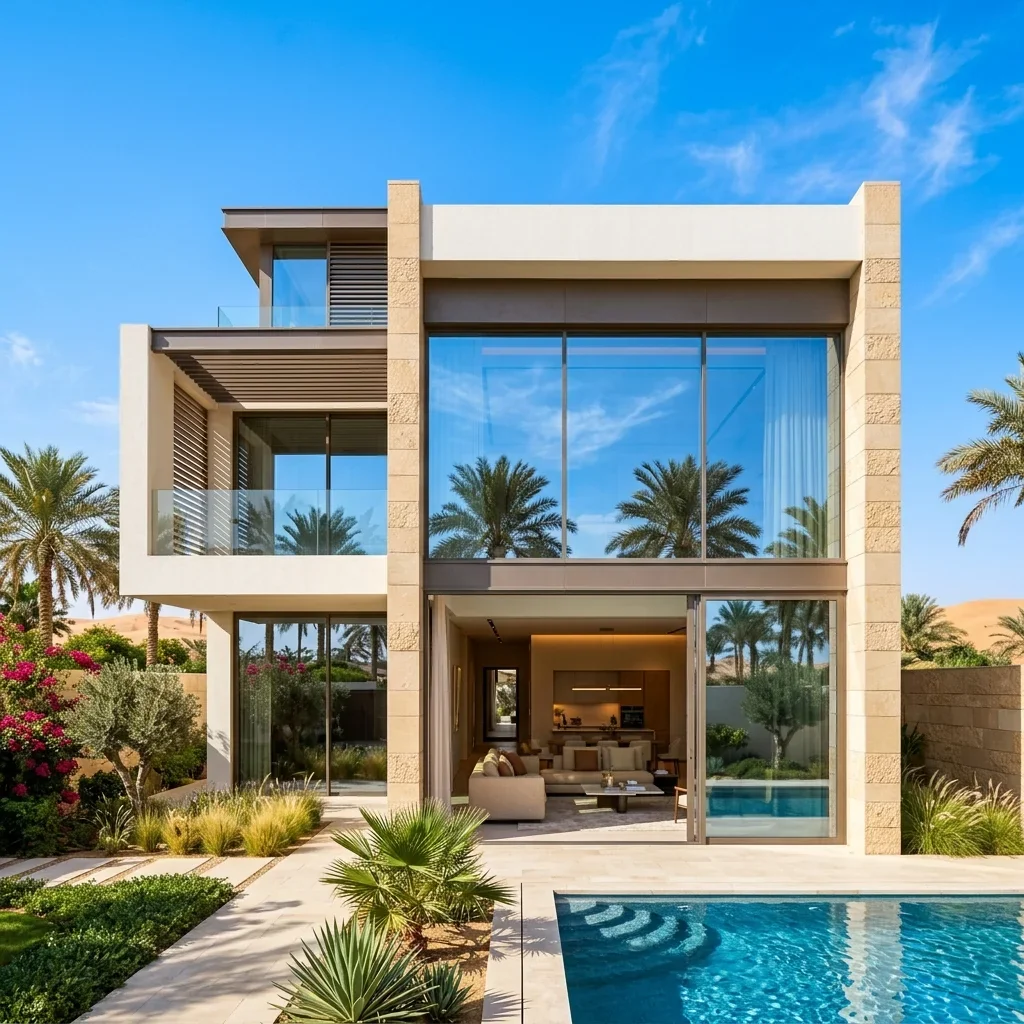
Building glass insulation in Saudi Arabia uses thermal window films (nano-ceramic or reflective) applied to glass to lower the Solar Heat Gain Coefficient (SHGC) and support compliance with Saudi Building Code SBC 601/602. Prices range from 50 to 200 SAR per square meter, with AC energy savings reaching 33-42% and a payback period of a few months to about 1.5–3 years by building type per AzelCore field data.
In Saudi Arabia, where summer temperatures exceed 45°C for more than five months a year in cities like Jeddah, Riyadh, and Dammam, glass windows become the single largest source of heat leakage in any building. According to the Saudi Energy Efficiency Center (SEEC), air conditioning consumes roughly 70% of total electricity in Saudi buildings — among the highest rates worldwide. This comprehensive national guide, prepared by Mohammed Al-Hadi (certified insulation and tinting technician, official Johnson and 3M dealer at AzelCore), explains in detail how building glass insulation works, film types and their per-square-meter prices, Saudi Building Code SBC 601/602 and ASHRAE 90.1 requirements, return on investment, safety films, and how to choose and install. Every figure is based on a real field study and actual market pricing, without exaggeration.
Table of Contents:
- The heat and energy problem: why Saudi buildings devour electricity
- How building film works: SHGC, U-value, and solar heat gain explained
- Building film types and per-square-meter prices — comparison table
- Insulating each building type: villa, tower, office, shop, mosque, hospital, warehouse
- Saudi Building Code SBC 601/602 and ASHRAE 90.1: regulatory compliance
- Energy savings and ROI: the 33-42% study and months-to-years payback by building type
- Safety and security films for glass
- How to choose the right film and what happens during installation
| Film Type | Price Range (SAR/m²) | Warranty | Best For | Key Advantage |
|---|---|---|---|---|
| Nano-Ceramic | 150 - 200 | 15 years | Upscale villas & offices | Excellent insulation + clarity + metal-free |
| Reflective | 80 - 150 | 10 years | Towers, facades & warehouses | Highest heat blocking + daytime privacy |
| Clear Thermal | 50 - 100 | 10 years | Shops & heritage buildings | Preserves original glass appearance |
| Safety | 70 - 120 | 10 years | Banks, shops & sensitive facilities | Holds glass together on breakage |
| Privacy | 60 - 100 | 8 years | Bathrooms, clinics & private offices | Blocks inward viewing |
The Heat and Energy Problem: Why Saudi Buildings Devour Electricity
Saudi Arabia sits within some of the hottest climate zones on Earth, where the effective summer season stretches from April through October, temperatures regularly exceed 45°C, and may touch 50°C in Jeddah and Riyadh. This climatic reality imposes an enormous operational burden on buildings: the Saudi Energy Efficiency Center (SEEC) indicates that air conditioning systems consume roughly 70% of total electricity in the buildings sector — an exceptional figure compared to the global average of around 40-50%.
Where does all this electrical effort go? The engineering answer lies in the building envelope, specifically in the glass windows. While concrete walls insulate heat reasonably, ordinary uninsulated glass remains the weakest point in the system; it allows massive amounts of infrared (IR) rays — responsible for felt heat — to pass through. A single mid-sized window can admit the equivalent of hundreds of watts of thermal energy per hour at midday peak, forcing AC units to run at maximum capacity nonstop.
This problem is not merely about comfort; it is a national issue directly tied to Saudi Vision 2030, which placed energy efficiency at the core of its strategic goals to reduce domestic reliance on burning fossil fuels and increase exports. The state has launched national building energy rationalization programs, led by the Saudi Energy Efficiency Center, targeting tangible reductions in building consumption. Window glass insulation represents one of the fastest, lowest-cost, and highest-return solutions within this framework, because it addresses the problem at its source: the building's primary heat entry point.
How Building Film Works: SHGC, U-Value, and Solar Heat Gain Explained
To understand how insulation film works, one must first grasp how solar energy passes through glass. Solar energy arrives in three spectrums: visible light by which we see, ultraviolet (UV) rays that fade furniture and harm skin, and infrared (IR) rays that carry most of the felt heat. Ordinary glass allows all three to pass almost freely, while thermal insulation film acts as a selective layer that reflects and absorbs heat rays while letting an appropriate amount of visible light through.
Two engineering terms govern the efficiency of any insulated window:
First, the Solar Heat Gain Coefficient (SHGC): the fraction of solar energy that passes through the glass to the interior, with a value between 0 and 1. The lower the value, the better the glass repels heat. Ordinary single-pane glass can reach around 0.80 (very poor), whereas nano-ceramic and reflective films lower this value below 0.30, and sometimes to 0.15-0.22 depending on type.
Second, the U-value: which measures how easily heat conducts through the glass due to the temperature difference between inside and outside. A lower value means better insulation. Films help improve the overall thermal performance of the window, especially Low-E films that reflect radiant heat.
Third, Total Solar Energy Rejection (TSER): the most comprehensive metric, combining reflection and absorption across the full solar spectrum. Advanced nano-ceramic films such as 3M Crystalline can reach a TSER of around 90% per the manufacturer, thanks to a structure of more than 200 nano-layers with no metal to interfere with communication or GPS signals. This delicate balance between lowering SHGC and maintaining acceptable transparency is the essence of modern building insulation technology.
Building Film Types and Per-Square-Meter Prices — Comparison Table
Building glass insulation differs from car tinting in type, thickness, and how it handles thermal stress. Each building film type has its optimal use and budget. Below is an explanation of the main types adopted in the Saudi market, followed by the full per-square-meter price table including installation and warranty.
Nano-ceramic film (150-200 SAR/m², 15-year warranty): the peak of performance and clarity. It relies on microscopic ceramic particles that reflect infrared rays without metal, so it does not affect mobile or Wi-Fi signals. Ideal for upscale villas and offices wanting excellent insulation while preserving visual clarity and natural light.
Reflective film (80-150 SAR/m², 10-year warranty): delivers the highest heat-blocking rates and reflective daytime privacy from outside. Best for towers, large glass facades, and warehouses, and is economical relative to its performance.
Clear thermal film (50-100 SAR/m², 10-year warranty): blocks heat and UV while almost fully preserving the original glass appearance, suitable for heritage buildings and shops wanting to maintain transparency.
Safety film (70-120 SAR/m², 10-year warranty): thicker and holds glass fragments together upon breakage, protecting against burglary and accidental breakage.
Privacy film (60-100 SAR/m², 8-year warranty): blocks inward viewing, suitable for bathrooms, private offices, and clinics.
As for total estimates for common projects: a 3-room apartment ranges from 2,000 to 5,000 SAR; a medium villa from 8,000 to 15,000 SAR; a shop facade from 3,000 to 8,000 SAR; and a full office floor from 10,000 to 25,000 SAR. All prices start from these values and depend on actual area, glass type, and building height. AzelCore provides original Johnson (est. 1961) and 3M (est. 1902) films with manufacturer warranties.
Insulating Each Building Type: Villa, Tower, Office, Shop, Mosque, Hospital, Warehouse
Each building type has different thermal and functional needs, and the right film choice begins with understanding the nature of use.
Residential villa: priority is thermal comfort, furniture protection, and daytime privacy while preserving natural light. Nano-ceramic is the optimal choice because it insulates heat without annoying darkening. The common estimate for a medium villa is 8,000-15,000 SAR.
Tower and glass facade: massive glass facades suffer from the Greenhouse Effect, and reflective films are best for blocking the most heat and reducing central AC loads. Installation often requires specialized teams and sometimes height-access equipment.
Office: priority is reducing screen glare and boosting employee productivity alongside energy savings. Neutral films or nano-ceramic block heat while allowing comfortable lighting. A full office floor estimate is 10,000-25,000 SAR.
Retail shop: a shop's glass storefront needs insulation that protects merchandise from fading without blocking the customers' view of displays, so clear thermal film is often most suitable. Facade estimate is 3,000-8,000 SAR.
Mosque: mosques with large windows and glass domes need effective cooling for worshippers' comfort and to reduce endowment electricity bills. Reflective or nano-ceramic films provide excellent insulation while preserving soft, spiritual lighting.
Hospital and clinic: require a stable thermal environment, patient privacy, and superior UV protection. They often combine nano-ceramic film for insulation and privacy film for sensitive rooms, with care to avoid affecting wireless medical devices (an advantage of non-metallic films).
Warehouse: large spaces and high roofs and windows make cooling costly, and economical reflective films achieve the highest savings at the lowest per-meter cost. Every project starts with a field visit and thermal assessment to determine the optimal type.
Saudi Building Code SBC 601/602 and ASHRAE 90.1: Regulatory Compliance
Within the Saudi Vision 2030 framework to promote sustainability, applying the Saudi Building Code for energy efficiency has become progressively mandatory. On the energy-efficiency side, this code splits into two main tracks: SBC 601 for energy efficiency in residential buildings, and SBC 602 for commercial and non-residential buildings. The Saudi code's technical foundations draw on adopted international standards, most notably the American ASHRAE 90.1, the global reference for building energy efficiency.
Both tracks focus primarily on the performance of the building's thermal envelope, and among their key requirements is controlling the windows' Solar Heat Gain Coefficient (SHGC) and U-value, since glass is the envelope component most influential on cooling loads in the hot Saudi climate. The goal is to limit the amount of solar heat entering the building through windows, thereby reducing AC consumption.
In practice, ordinary single-pane glass and conventional double glazing often fail to achieve the SHGC values required in hot climate zones. This is where insulation films come in: adding a nano-ceramic or high-performance reflective film to existing windows significantly lowers the SHGC value, helping the building improve its thermal performance in line with the code's direction. This is a practical solution for existing buildings whose windows cannot be fully replaced at reasonable cost.
Important note: the exact numerical values required vary by climate zone, building type, and the adopted code edition, and one should always refer to the official Saudi Building Code text via the Saudi Standards, Metrology and Quality Organization (SASO) and the relevant code authority, or consult a certified specialist, to verify the precise requirements for each project. AzelCore makes no claim of official code certification; rather, it provides a technical solution that supports improved window thermal performance.
Energy Savings and ROI: The 33-42% Study and a few months to about 1.5–3 years by building type Payback
Financial return is what turns building insulation from an "expense" into an "investment." AzelCore conducted a real field study using a FLIR T530 thermal camera and following the ISO 13837:2021 methodology, covering 530 vehicles across 10 districts in Jeddah during 2024-2026, published under a Creative Commons license (CC BY-NC 4.0). Although the primary sample was on vehicles, the infrared rejection (96-97%) and UV rejection (99%) measurements apply physically to the same film technology used in buildings.
Most important for buildings is the operational figure derived: HVAC energy savings ranging from 33% to 42% after installing high-performance insulation films on windows. This saving results directly from reducing the heat load entering through the glass, which cuts the hours AC units run at full capacity.
How does this translate into a payback period? Take a realistic example: a medium villa whose window insulation costs about 8,000-15,000 SAR, with a summer electricity bill ranging from 2,000 to 5,000 SAR monthly, most of it AC. Saving 33-42% of the AC portion means a monthly reduction that can reach hundreds of SAR or more in peak months. Based on bill size, usage intensity, and glass area, the practical payback period ranges from 7 to 18 months. Commercial buildings with large bills and large glass facades tend toward shorter payback periods, while smaller homes may approach the upper bound.
After the payback period, the monthly saving turns into net profit lasting the film's lifetime (10-15 years depending on type). Beyond electricity, insulation reduces strain on AC compressors, extending their life and lowering maintenance costs. These figures are estimates dependent on each building's conditions; therefore we always recommend a field visit and thermal assessment before promising any savings, and interested parties can use the savings calculator on the AzelCore website for a preliminary estimate of their situation.
Safety and Security Films for Glass
Beyond thermal insulation, Safety & Security Films play an important protective role, especially in ground-level glass facades, shops, banks, and sensitive facilities. These films are much thicker than ordinary thermal films and act as an adhesive layer that holds glass fragments together upon breakage; instead of dangerous sharp shards flying off, they remain stuck to the film.
The first benefit is injury protection: if a window breaks due to a storm, accident, or break-in attempt, the film greatly reduces the risk of flying glass injuring those present. The second benefit is security delay: glass covered with a resistant safety film is harder for burglars to penetrate quickly, granting precious time to activate an alarm or for security to arrive. The third benefit is resistance to accidental breakage in schools, care homes, and high-traffic areas.
At AzelCore, safety film prices range from 70 to 120 SAR per square meter with a 10-year warranty. In many cases, safety and thermal insulation properties can be combined in a single multi-function film, or integrated layers, so the facility gets both security protection and thermal savings together.
It is important to stress that safety films are not a substitute for specialized bullet-resistant glazing nor for alarm systems; rather, they are a cost-effective additional protective layer that markedly raises a building's safety level. Choosing the appropriate thickness (usually measured in mils) depends on the threat level to be addressed and is determined during the field assessment.
How to Choose the Right Film and What Happens During Installation
Choosing the right film begins by defining your priority: is the main goal maximum thermal insulation? Preserving transparency and natural light? Privacy? Or safety? Upscale villas and offices are often best suited to nano-ceramic, while towers and warehouses lean toward economical reflective films, and shops toward clear thermal film. The second step is selecting a certified provider offering original products with a documented manufacturer warranty, since the market is full of cheap counterfeit films that do not achieve the advertised insulation figures and may peel quickly under the Gulf sun.
An important technical warning: never use ordinary car tint films on building glass. Building glass differs in heat-absorption properties, dimensions, and mounting, and using an unspecialized film may cause "Thermal Stress" leading to cracking or complete shattering of the glass. A certified technician assesses the glass type (single/double, clear/tinted, tempered/ordinary) before recommending the suitable type to avoid this risk.
The installation process is done from inside the building and goes through precise stages: first measuring the windows and assessing the glass, then deep-cleaning the surface to remove any dust or grease, then precisely cutting the film to each window's dimensions, then applying it using the mounting solution and squeegee tools to expel bubbles and water, and finally finishing and inspection. For a medium villa the process takes a few hours, is completely clean, requires no breaking or mess, and residents resume their lives immediately.
After installation, the film needs a curing period that may range from a few days to weeks until the solution fully dries and reaches maximum clarity, during which light moisture or a natural haze may appear and gradually disappears. Care is simple: clean with a soft cloth and an ammonia-free glass cleaner, and avoid sharp tools. AzelCore — led by Mohammed Al-Hadi, official Johnson and 3M dealer — provides a free field visit and thermal assessment before any decision, to ensure the optimal solution for each building.
Frequently Asked Questions
How much does building glass insulation cost in Saudi Arabia?
Building insulation film prices start from 50 SAR per square meter for clear thermal film and reach 200 SAR for high-performance nano-ceramic, including installation and warranty. Total estimates: 3-room apartment 2,000-5,000 SAR, medium villa 8,000-15,000 SAR, shop facade 3,000-8,000 SAR, and a full office floor 10,000-25,000 SAR. Prices start from these values and are finalized after a field visit.
How much energy does building glass insulation save?
Per AzelCore's field study, insulating windows with high-performance films achieves AC energy savings of 33% to 42%, with a practical cost payback period of 7 to 18 months depending on bill size, glass area, and usage intensity. Commercial buildings with large facades tend toward shorter payback periods.
Is building glass insulation compliant with the Saudi Building Code (SBC)?
The Saudi Building Code SBC 601 (residential) and SBC 602 (commercial) focus on controlling the windows' Solar Heat Gain Coefficient (SHGC), based on international standards such as ASHRAE 90.1. Nano-ceramic and reflective films help significantly lower the SHGC of existing windows, supporting improved building thermal performance. To verify the exact values required for your project, refer to the official code text via SASO or a certified consultant.
What is the difference between nano-ceramic and reflective film for buildings?
Nano-ceramic offers excellent insulation with high clarity and no metal (does not affect mobile or Wi-Fi signals), best for villas and offices wanting to preserve natural light, priced 150-200 SAR/m². Reflective film delivers the highest heat blocking and reflective daytime privacy at an economical 80-150 SAR/m², ideal for towers, large glass facades, and warehouses.
Can insulation film be installed on double-glazed glass?
Yes, and it is a perfect complement. Double glazing reduces air thermal conduction but does not adequately stop thermal radiation (infrared). The film addresses this shortfall and raises window efficiency. However, the technician must first assess the glass type, because some double-glazed types require specific films to avoid thermal stress that could crack the glass.
Does building tinting need a license or violate traffic rules?
The General Directorate of Traffic's rules on Visible Light Transmission (VLT) and fines apply to vehicles only and not to buildings. Building glass insulation is not subject to traffic VLT restrictions; it is governed instead by the energy-efficiency standards of the Saudi Building Code (SBC) and SASO film specifications. You can freely choose the insulation and privacy level that suits your building.
How long does installing villa glass insulation take?
Installing insulation film for a medium villa takes just a few hours and is done entirely from inside the building with no breaking, dust, or mess. Residents resume their lives immediately, then the film goes through a curing period of a few days to weeks until it reaches maximum clarity, during which light moisture may appear and gradually disappears.
⚠️ Warning: Beware severely of using ordinary or cheap counterfeit car tint films on building glass. Building glass differs in heat-absorption properties and dimensions, and using an unspecialized film may cause \"Thermal Stress\" leading to cracking or complete shattering of the window. Always request a glass assessment from a certified technician before installation.
Sources & References
Related Services
- Building Glass Insulation Service — Thermal Assessment & Professional Installation ←
- Energy Savings & ROI Calculator for Your Building ←
- AzelCore KSA Thermal Field Report 2026 (FLIR T530) ←
- How Building Glass Insulation Saves Your Electricity Bill ←
- Commercial & Office Building Thermal Insulation in Jeddah ←
- Building Insulation & Saudi Vision 2030 Energy Efficiency ←
- ROI Calculator for Commercial Building Tint ←
- Visual privacy solutions for home and villa windows ←