
Commercial Tint ROI Calculator — When Does Your Investment Pay Back?
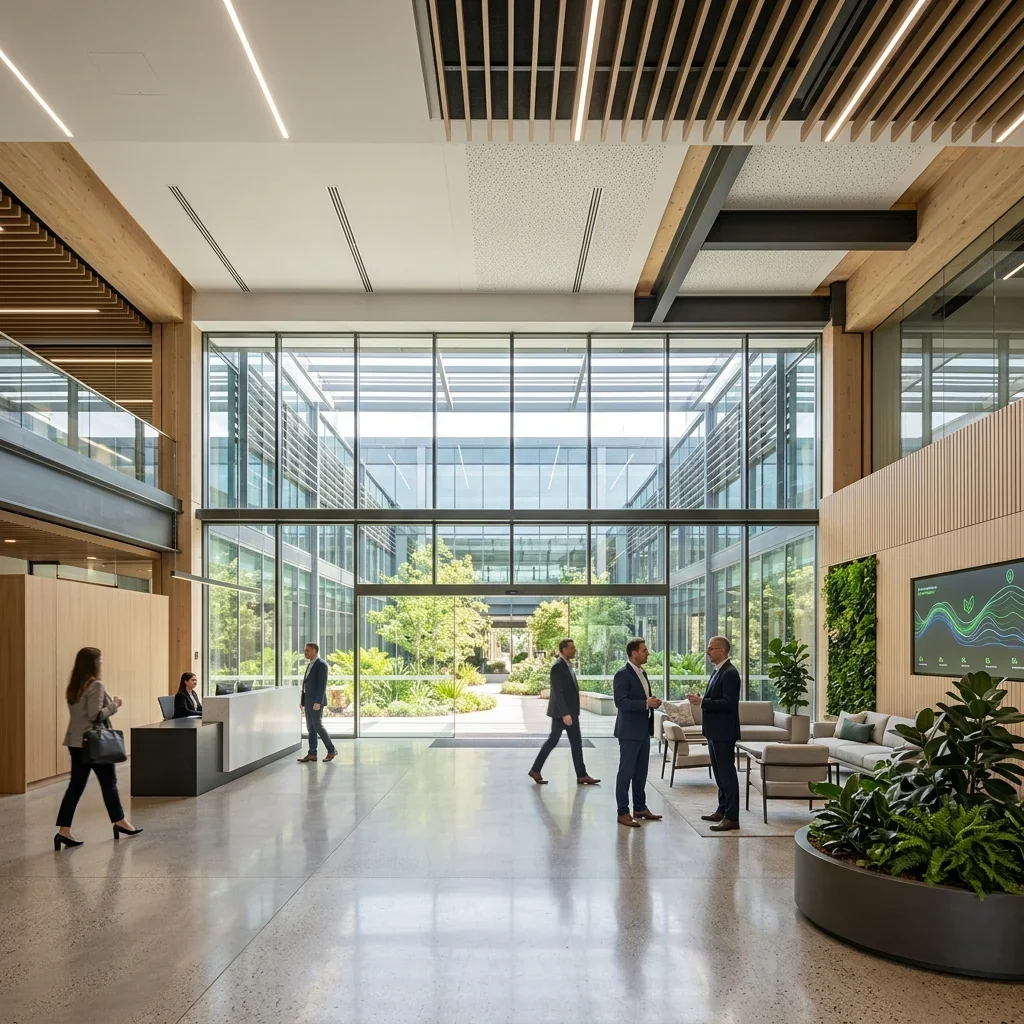
In commercial projects and corporate offices in Saudi Arabia, architectural tinting is not an "expense" but a "financial investment." By reducing the thermal load on central ACs (Chillers), reflective films can lower the monthly electricity bill by 15% to 30%. Based on commercial electricity tariffs, the Return on Investment (ROI) - the time taken to recover the installation cost from bill savings - typically ranges between 1.5 to 3 years only. After this period, every Riyal saved becomes "Net Profit" for the organization.
When a Facility Manager or CFO makes a decision to upgrade a corporate building in Saudi Arabia, the language of numbers is what settles the matter. Many owners of commercial buildings with massive Glass Facades suffer from astronomical electricity bills, especially during peak summer periods where central cooling systems consume nearly 70% of the building's total energy. Suggesting the installation of "Architectural Thermal Insulation Films" on thousands of square meters of glass might seem expensive at first glance. However, in the business world, we don't look at the initial cost (Capex), we look at the "Return on Investment" (ROI). In this integrated financial-engineering report, we will provide you with the practical formula to calculate exactly when the architectural film will pay for itself, after which it begins pumping real profits into the operating budget (Opex).
Table of Contents:
- How the Building-Insulation Payback Period Is Calculated
- Factors Affecting ROI: Area, Bill, and Film Type
- Real-World Payback Examples
- How to Use the ROI Calculator
| Financial/Engineering Metric | Commercial Building Uninsulated (Bare Glass) | Commercial Building with Nano-Reflective Film |
|---|---|---|
| Annual AC Consumption (Chiller Load) | Runs at 90-100% capacity for long hours | Load is reduced by 25-30% |
| AC Equipment Lifespan (HVAC) | Rapid wear and tear due to constant strain | Extended lifespan and reduced maintenance |
| Employee Productivity | Poor at noon (Screen glare + heat) | High (Cool, visually comfortable work environment) |
| Cost Recovery Period (ROI Period) | None (Constant financial drain) | From 18 to 36 Months (Tariff dependent) |
The Core Equation: How Do We Calculate ROI?
To calculate the Return on Investment for architectural thermal insulation, we use a simplified equation based on 3 main variables: Total Installation Cost, Current Average Cooling Bill, and the Expected Savings Percentage. The equation: (Payback Period in Months = Total Installation Cost ÷ Monthly Financial Savings Value).
For example: If the film installation cost for an admin building in Jeddah is 50,000 Riyals. And the summer cooling bill is about 10,000 Riyals/month.
Assuming the film reduced the load by 25% (a saving of 2,500 Riyals/month). Then: 50,000 ÷ 2,500 = 20 months.
This means in less than two years, the building will recover every Halala paid for the insulation!
Hidden Profits: Reducing AC Maintenance Capex
Calculating the monthly bill is only the "tip of the iceberg." The biggest hidden financial profit lies in prolonging the lifespan of central AC systems. HVAC systems running at 100% max capacity all summer suffer frequent Compressor failures, requiring expensive spare parts and operational Downtime.
Thanks to effective glass facade insulation, the AC works at 70% effort or less. This reduction in strain (Thermal Load Shedding) decreases the frequency of preventative maintenance cycles, and postpones the need to replace expensive AC units for extra years, saving tens of thousands in the annual maintenance budget.
Glare Impact on Employee Productivity
In HR language, employee comfort equals profits. In buildings with uninsulated glass facades, solar Glare hits computer screens directly, forcing employees to close curtains and turn on artificial lights (increasing lighting energy consumption).
Worse, thermal imbalance (very hot spots near windows, cold spots in the middle) causes stress and a noticeable drop in team focus and productivity. Advanced films from (3M) and (Johnson) create a (Homogeneous Thermal Distribution) across every floor, allowing comfortable natural light without glare, which reduces sick leaves and raises the organization's operational efficiency.
LEED Certification & Corporate Sustainability (ESG)
With Saudi Vision 2030, "Sustainability" has become a key metric for major corporations. Installing certified thermal insulation is a fundamental step toward achieving green building accreditations like (LEED Certification).
These certificates are not just honorary badges; they increase the Real Estate Valuation of the property, attract tenants from international corporations (who mandate eco-friendly HQs), and may even qualify the building for financing facilities with lower interest rates for green projects.
Frequently Asked Questions
Does installation halt office employees' work (Downtime)?
Absolutely not. Insulation film installation is done from the inside without any annoying odors or breaking. At "AzelCore", we can schedule installation teams to work during weekends or after official business hours, so employees return Sunday morning to find their offices cooler and more comfortable without any workflow disruption.
Do energy-saving films completely change the building's exterior facade color?
Not necessarily. We provide multiple engineering options. There are "Reflective" films that provide a modern silver or blue tint to the exterior facade. And there are "Neutral/Clear Nano-Ceramic" films that entirely preserve the original glass look and architectural design without alteration, while providing superior thermal insulation.
What is the average lifespan of a commercial insulation film?
Professional architectural films (like polyester layers infused with metals or ceramics) are engineered to be highly "long-lasting". Because they are not subject to friction, they average 10 to 15 years at full efficiency, and come with strong commercial warranties against peeling or color fading.
⚠️ Warning: The biggest financial mistake is relying on "Regular Interior Blinds / Curtains" as an alternative to thermal insulation. Blinds only block light but trap heat between them and the glass (Heat Trap). The AC will continue to work at max capacity to cool this hot air, meaning you sacrificed sunlight and didn't save a single Riyal on the electricity bill.