
Window Tinting for Retail Stores: How to Block Heat Without Blocking Window Displays
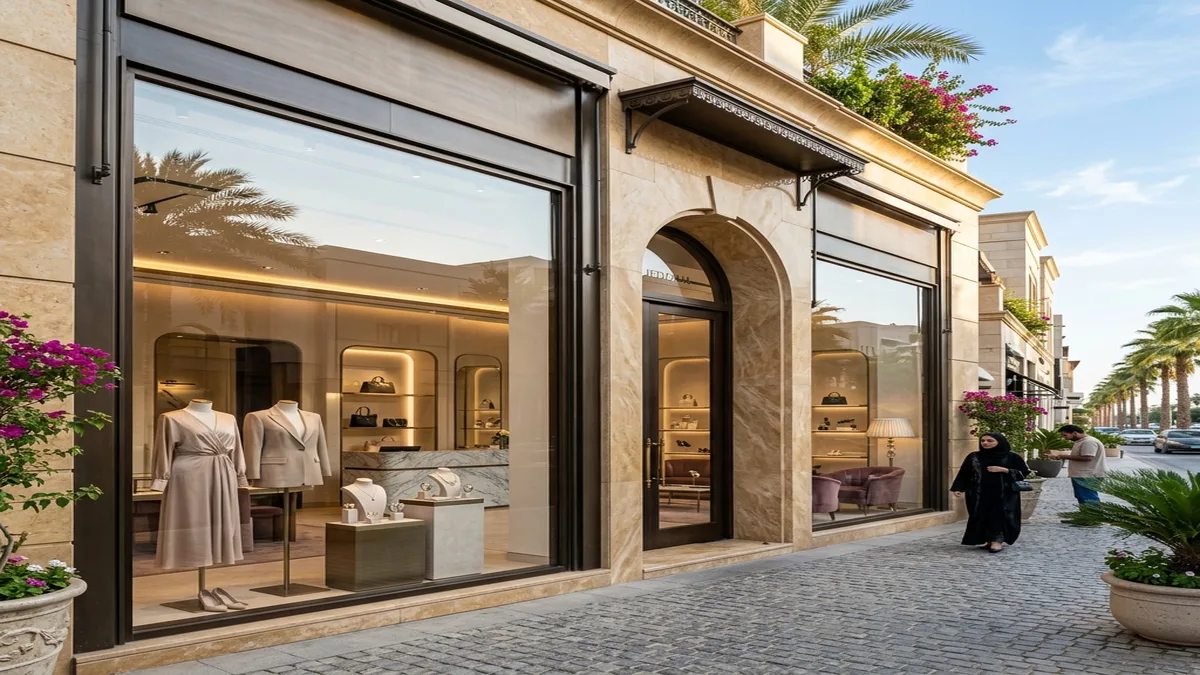
Clear Nano Ceramic films (VLT > 60%) allow perfectly clear display views matching municipality rules, while nano particles reflect over 80% of heat radiation (IR). Result: 20-35% AC bill savings + merchandise UV protection + cost recovery within 8-14 months.
If you manage a restaurant, cafe, beauty salon, or retail showroom in Saudi Arabia, you face a daily engineering and commercial dilemma: How do you display your merchandise and attract street customers while preventing scorching heat from ruining displays and exhausting AC units? In Jeddah and Riyadh, temperatures exceed 45°C for over 5 months annually, and large glass facades — despite their marketing importance — turn into "solar ovens" that spike electricity bills and destroy goods. This engineering guide explains the scientific solution that combines full transparency with professional thermal insulation, with real ROI calculations from executed projects in the Saudi market.
Table of Contents:
- The Transparency and Heat Dilemma in Window Displays
- Clear Nano Ceramic Film Technology for Buildings
- The Impact of Thermal Insulation on Showroom AC Bills
- Compliance with Municipality Requirements in Saudi Arabia
| Business Type | Facade Area | Expected Monthly Savings | Cost Recovery Period |
|---|---|---|---|
| Cafe / Restaurant | 15-25 m² | 1,200 - 2,000 SAR | 8-12 months |
| Car Showroom | 40-80 m² | 3,000 - 5,000 SAR | 6-10 months |
| Clothing / Fashion Store | 10-20 m² | 800 - 1,500 SAR | 10-14 months |
| Beauty Salon / Clinic | 8-15 m² | 600 - 1,200 SAR | 12-16 months |
| Supermarket / Large Grocery | 30-60 m² | 2,500 - 4,500 SAR | 7-11 months |
The Transparency and Heat Dilemma in Commercial Window Displays
Standard glass — even Double Glazed — allows 70-82% of solar energy through (high SHGC coefficient). This means a 20m² glass facade introduces the equivalent of 14 kilowatts of solar heat every hour during peak summer.
If you use dark tinting as a solution, you lose your showroom's most important marketing advantage: "Open View" — making the store look closed to passing customers. Marketing studies confirm that stores with transparent facades attract 40% more customers than those with opaque facades.
Clear Nano Ceramic films radically solve this dilemma: they trap invisible heat (infrared rays) without blocking visible light. A film with 65-70% VLT transparency is unnoticeable to the naked eye, yet rejects 80%+ of radiant heat.
Full Compliance with Municipality and Civil Defense Requirements
Saudi municipality regulations prohibit darkening commercial storefronts — for legitimate security and regulatory reasons. Civil Defense also requires clear exterior-to-interior visibility for safety purposes.
Clear Nano Ceramic films (VLT 60-70%) make you fully compliant with all requirements: Municipality open-facade requirements — 100% compliant. Civil Defense visibility requirements — 100% compliant.
Saudi Building Code SBC 601 for energy efficiency (SHGC ≤ 0.25) — 100% compliant. Insurance standards for glass breakage — the film holds glass shards when broken (Safety Film).
Some insurance companies even offer premium discounts for stores with certified safety films installed. Clear thermal insulation transforms you from a potential violator to a compliance model — with actual financial savings.
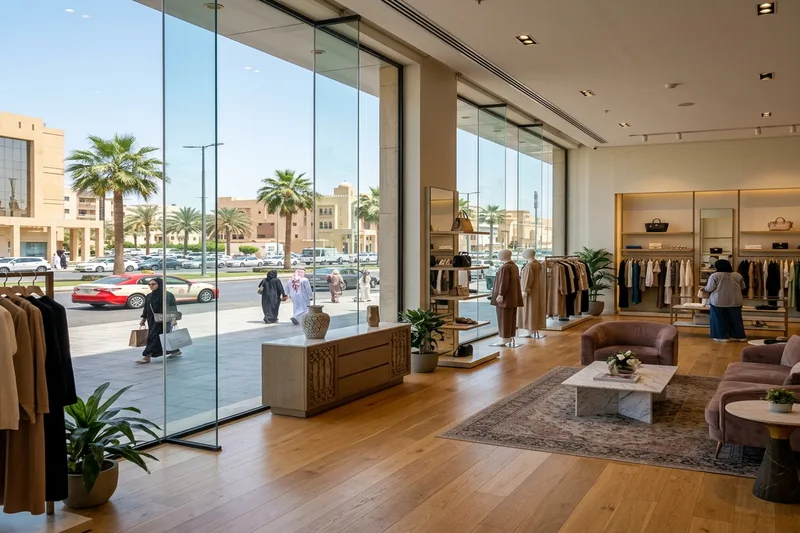
Insulation Impact on AC Bills: Real ROI Calculations
In car dealerships, cafes, and clothing stores, ACs run for over 14 hours daily for 8 months. Monthly electricity bills for a commercial store with a 30m² glass facade range between 4,000 - 8,000 SAR in summer.
Engineering studies show professional thermal insulation cuts AC energy use by 20-35%. Real examples from our projects: A cafe on Madinah Road (25m² facade): Bill dropped from 5,200 to 3,400 SAR monthly — saving 1,800 SAR/month.
A car showroom in Al-Hamra (60m² facade): 45,000 SAR annual savings. A clothing store in a mall: Recovered insulation cost in just 8 months.
The equation is clear: insulation is not a cost — it's an investment with guaranteed returns starting from the first bill after installation.
Protecting Goods and Displays from Solar Damage
UV rays don't just destroy home furniture — they cause massive commercial losses in stores: Mannequins and luxury clothes: colors fade within weeks of display in front of an uninsulated facade. Potential loss: 5,000 - 20,000 SAR monthly in damaged goods.
Food and confectionery: heat accelerates spoilage and reduces shelf life by 30-50%. Perfumes and cosmetics: UV damages chemical formulations and changes packaging colors.
Electronics and screens: direct heat reduces screen lifespan by 40%. Even the store's floors and interior decor are affected.
Nano Ceramic films block 99.9% of UV rays, protecting showroom investments and significantly reducing financial waste. In upscale chocolate shops and bakeries specifically: thermal insulation is not a luxury — it's a product safety necessity.
Frequently Asked Questions
Does clear insulation affect the glass facade appearance from outside?
No. Clear Nano Ceramic films at 65-70% VLT are unnoticeable to the naked eye. The facade maintains its original transparency and architectural appearance. Some clients don't believe the film is installed until we show them before and after temperature measurements.
Does thermal insulation for facades conflict with municipality regulations?
Quite the opposite. Clear films make you compliant with both municipality requirements (open facades) and SBC 601 building code requirements (energy efficiency) simultaneously. Clear insulation is the only solution that achieves compliance with both seemingly contradictory standards.
Can insulation be installed on curved glass or very large facades?
Yes. Nano Ceramic films are flexible and can be shaped on curved glass. For very large facades (over 3m wide), installation uses an invisible thermal butt splice technique between panels to ensure a uniform appearance without visible lines.
What's the difference between heat-absorbing and heat-reflecting insulation films?
Cheap films absorb heat and store it in the glass — which can cause Thermal Breakage, especially in tinted glass. Original Nano Ceramic films reflect heat outward instead of absorbing it, protecting the glass and preventing breakage. Always ensure the film used is reflective, not absorptive.
⚠️ Warning: Beware of cheap commercial tint films that promise transparency but rely on Heat Absorption instead of Heat Reflection. This type stores heat in the glass, potentially causing Thermal Breakage — especially in tinted or treated glass. Ensure the film used carries IWFA certification and is Reflective type, not Absorptive.