
EV Window Tint — How Much Battery Range Does It Really Add?
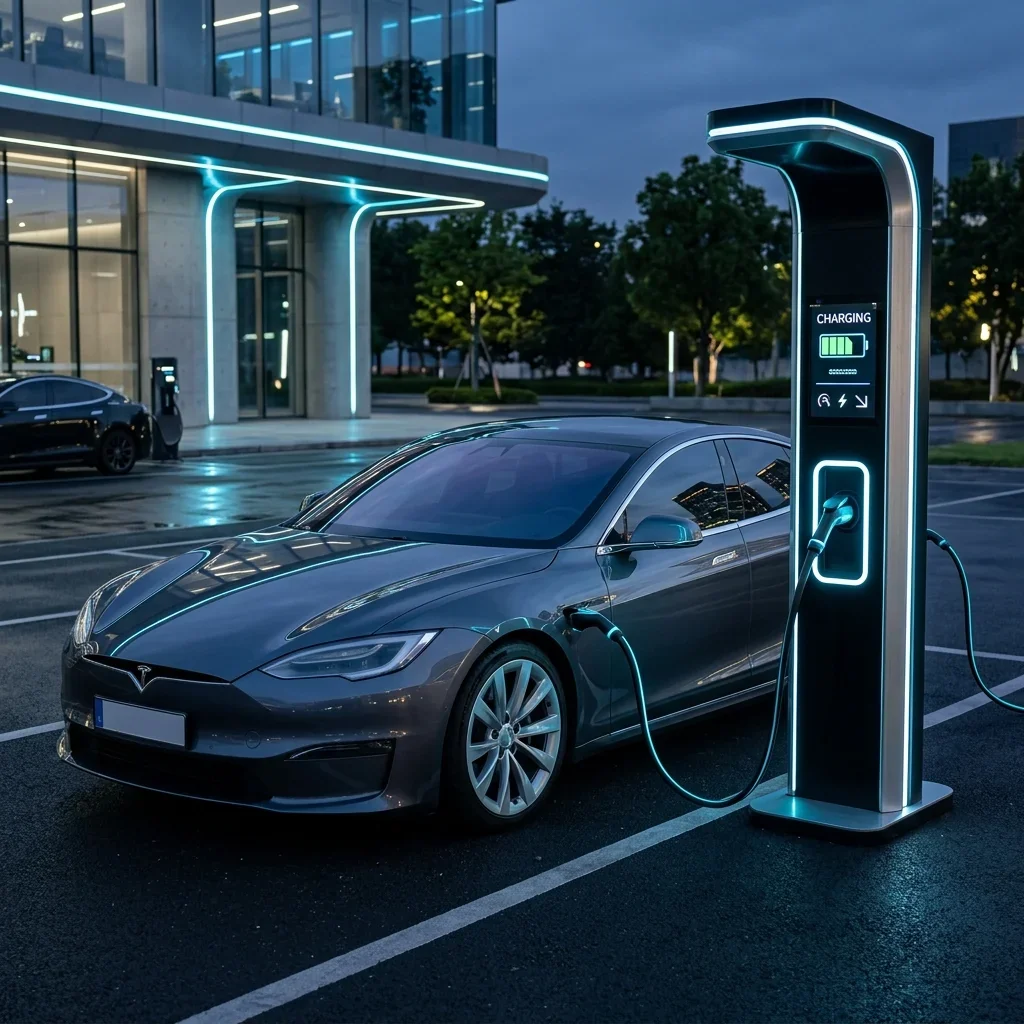
In Electric Vehicles (EVs) like Tesla and Lucid, the AC system draws its power directly from the main propulsion battery. In the Saudi summer, running the AC at maximum power to cool an uninsulated cabin reduces the driving Range by up to 25-30%. Installing original Nano-Ceramic tint lowers the cabin temperature by 30°C, relieving the AC load and recovering up to 15% of the lost battery range, in addition to not interfering with smart system signals (Autopilot/GPS).
The roads of Saudi Arabia in 2026, specifically cities like Jeddah and Riyadh, are witnessing a silent but rapid revolution in the adoption of Electric Vehicles (EVs), led by pioneering brands like Lucid, Tesla, and Porsche Taycan. With this technological shift, a unique engineering challenge arises that internal combustion engine (ICE) drivers didn't care much about: "Battery Range in Peak Summer." In gasoline cars, excess engine heat provides winter heating, and kinetic engine energy runs the AC compressor in summer. In EVs, however, every "electron" has a price! The HVAC system in your EV drains power directly from the main battery pack. If you leave it running at max capacity to combat Jeddah's scorching 48°C sun, you will watch your Range counter collapse before your eyes. In this technical article, we reveal how "Advanced Thermal Tinting" for EVs has transformed from a mere "cosmetic accessory" into a necessary "Hardware Upgrade" to increase the distance traveled on a single charge.
Table of Contents:
- How AC Drains an EV's Battery
- The Effect of Heat Rejection on Battery Efficiency and Range
- Estimated Range-Gain Figures After Tinting
- Best Film Types for Electric Vehicles
| Technical Metric (Electric Vehicle) | Without Tint (Glass Exposed to Heat) | With Nano-Ceramic Tint (97% IR Rejection) |
|---|---|---|
| AC Power Draw | Runs at max power (3-5 kW) continuously | Runs at low power (1-1.5 kW) to maintain coolness |
| Battery Range Loss | Loss of 20% to 30% of advertised range | Recovers up to 15% of range lost to heat |
| Cabin Pre-Conditioning | Takes 15 mins and severely drains power | Takes only 4 mins before entering the car |
| Battery Protection Parked (Overheating) | 80°C cabin stresses the battery thermal management system | 45°C cabin reduces idle battery drain (Vampire Drain) |
| Signal Compatibility (GPS, 5G, Autopilot) | Clear glass (No issue) | "Metal-Free" tint = 100% compatibility, no interference |
The Physical Equation: EV AC = Battery Range Enemy #1
To understand the magnitude of the problem, we must know that electric motors are highly efficient (up to 90% compared to 25% for ICE engines). This means they don't generate waste heat to use.
To cool the cabin, EVs use a high-voltage electric compressor. In severe Saudi summer conditions, running the AC requires between 3 to 5 kilowatts (kW) of power per hour! To illustrate: If your car battery capacity is 75 kWh (like a Standard Tesla Model 3), the AC alone could swallow 6% of the battery capacity for every hour of noon traffic driving.
The result? The expected range (400 km) suddenly shrinks to (280 km) causing what is known as "Range Anxiety."
How Does Tinting "Recover" Lost Kilometers?
The secret lies in the "energy required to maintain cooling." If you install an original Nano-Ceramic film (like 3M or Johnson) that rejects 97% of Infrared rays, the cabin won't heat up quickly. After initial cooling, the AC compressor slows down to consume only 1 kW per hour (instead of 4 kW).
This massive energy savings doesn't go to waste; it is routed directly to the car's wheels. Field studies prove that excellent cabin thermal insulation can save an electric vehicle between 10% to 15% in additional range during daytime summer driving.
The Massive EV Glass: Panoramic Roof = Solar Oven
Cars like Tesla, Lucid, and Air are famous for their futuristic designs incorporating massive glass areas, especially the "all-glass panoramic roof." While this design gives a wonderful sense of spaciousness, in Jeddah it acts as a "solar oven" pouring fire on passengers' heads. Even if the agency glass is dark (Factory Tinted Glass), you must realize an engineering truth: "Dark agency colored glass blocks light (glare), but it contains NO heat-rejection technology (IR)." Installing a clear insulation film on this massive glass roof is an absolute necessity to survive the Saudi summer.
Security Warning: Never Use Metallized Tint
Modern EVs are essentially "massive smartphones" relying entirely on wireless signals: (4G/5G for OTA system updates, GPS signals for Autopilot self-driving, and Bluetooth to unlock doors via phone). If you install "Metallized Tint" or cheap tint containing metallic particles to reflect heat, these metals will form a "Faraday Cage" severely blocking or weakening radio signals! This will cause map failures, inability to unlock the car with your phone, and interrupted updates.
The ONLY approved solution for EVs is 100% metal-free "Nano-Ceramic" technology, which provides phenomenal thermal insulation without any electronic interference.
Vampire Drain and Battery Protection
EVs feature an automated Battery Thermal Management System. When you leave your car parked under the sun and the cabin/battery temp reaches critical levels (over 60°C), the car automatically activates cooling pumps and fans to protect the Lithium-ion battery cells from degradation.
This self-activation while the car is parked slowly consumes the battery, known as (Vampire Drain). Thanks to good tinting keeping the cabin cooler, the car won't need to engage emergency cooling systems as frequently, preserving the State of Charge (SoC) exactly as you left it.
Frequently Asked Questions
Does tinting void Tesla and Lucid warranties?
No, installing tint does not void EV dealership warranties as long as it's done by professionals, and doesn't cause water to leak into the electronics behind the dashboard during installation. At "AzelCore", we use micro-fiber Soak Ropes to completely protect sensitive EV electronics.
Can the full glass roof of Tesla Model 3 / Y be tinted?
Yes absolutely! In fact, it is the most important procedure in Tesla cars. We install a One-Piece insulation film to guarantee a seamless agency look, blocking the glare falling directly onto passengers' heads.
Does PPF protection film affect EV radars and sensors?
The original PPF films we use are transparent to radio frequencies and absolutely do not affect Ultrasonic parking sensors or self-driving cameras integrated into the bumper and mirrors.
⚠️ Warning: Electric Vehicles contain a "Main Computer" behind the windshield or below the dashboard. Choosing a random accessory shop for installation may lead to soap water spilling onto this computer, causing an out-of-warranty "Total Loss" costing tens of thousands. Choose specialized centers that understand EV engineering.