
Car Tint, Resale Value and Insurance in Saudi Arabia: What Actually Matters
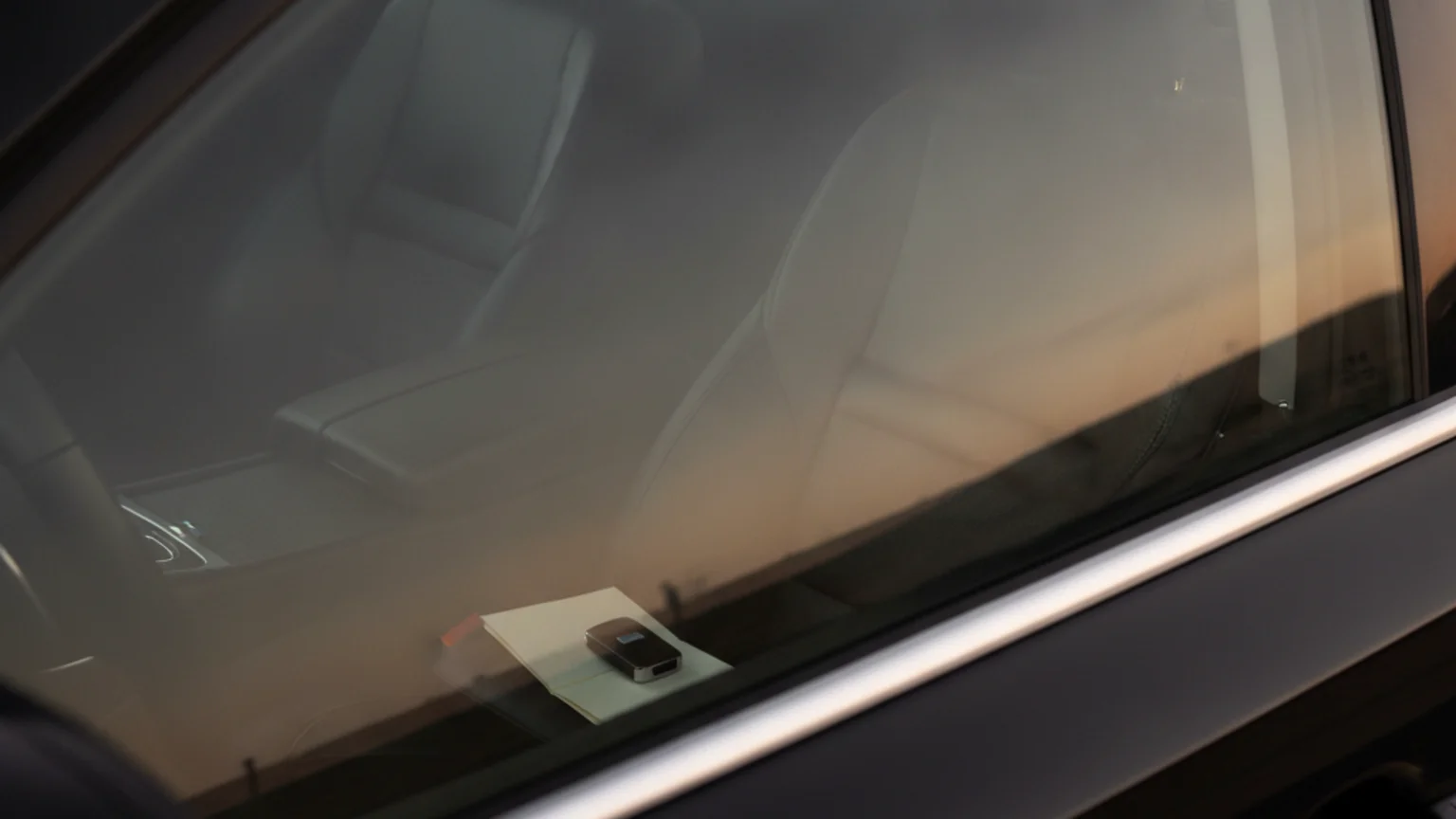
Legal, professionally installed tint raises resale value indirectly: it protects the dashboard and leather from cracking and fading, it passes periodic inspection, and it comes with an invoice and warranty certificate that reassure the buyer. Non-compliant, purple, bubbled film, or film that damaged the defroster lines becomes a negotiating card that lowers your price. The film itself is not normally an insured item and does not by itself change your premium.
When you list your car for sale in Jeddah, the buyer does not read your tint invoice. He opens the door, looks at the dashboard, runs a hand over the leather, and forms a judgement within fifteen seconds about whether this car was cared for. That snap judgement sets the tone for the entire negotiation that follows. This is where tint has its real effect. No used-car price sheet has a line item called "nano-ceramic tint," but every valuation has an unwritten line called "interior condition," another called "will it pass periodic inspection," and a third called "is there anything I will have to fix after I buy it." Window film touches all three directly. This guide breaks it down honestly and without exaggeration: how compliant film genuinely protects your car's value, when the film itself turns into a discount, how periodic inspection and ownership transfer fit in, and finally the part that is most misunderstood — insurance. We will be explicit that policy wordings differ between insurers, and that the golden rule is to read your own policy before you act.
Table of Contents:
- Why there is no "tint line item" in a used-car valuation
- The cabin interior: where the money actually goes in Jeddah's climate
- When tint turns against you: purple, bubbles, and bad cutting
- Defroster lines: the one defect that scares an experienced buyer
- Periodic inspection: the buyer inherits your problem
- The paperwork that actually raises your price: invoice, certificate, serial
- Insurance, honestly: is the film insured, and does it raise your premium?
- After a claim: who pays to re-install film on the new glass?
- PPF and paint protection: the other half of value preservation
- Thirty days before you sell: a practical tint and paperwork checklist
- Common myths to discard before they cost you money
| Tint condition at sale | Periodic inspection | Buyer impression | Negotiation effect | Cost to fix before listing |
|---|---|---|---|---|
| Compliant nano-ceramic + certificate, 10-year warranty | Passes | High confidence | No discount lever | None (original install 1,500-2,200 sedan) |
| 3M Crystalline with official certificate, lifetime warranty | Passes | Excellent, warranty verifiable | Argument in seller's favour | None (original install 2,000-2,800 sedan) |
| Intact carbon film, legal VLT, no paperwork | Passes | Neutral to good | Small discount for missing documentation | None |
| Dyed film gone purple or bubbled | May pass if VLT is legal | Strongly negative, reads as neglect | Clear discount | Removal 200-400 + re-install from 600-900 |
| Non-compliant tint on front side windows | Failure item | Buyer sees a cost he inherits | Large discount or walk-away | Removal 200-400 + carbon install 600-900 or nano-ceramic 1,500-2,200 |
| Defroster lines severed by bad removal | Functional defect on rear glass | Red flag to an experienced buyer | Discount out of proportion to the defect | Specialist repair or rear glass replacement |
| Window replaced after a claim, film never re-fitted | Passes | Colour mismatch prompts "what happened?" | Discount, and opens the accident-history file | Re-install matching film on that window |
| Front-end PPF with invoice on file | Not an inspection item | Chip-free front end | Supports price and speeds the sale | None (original install 2,500-4,500) |
Why there is no "tint line item" in a used-car valuation
The first thing to understand: tint is not an add-on that gets priced like a body kit or a sound system. Nobody will pay you an extra 2,000 SAR because you spent 2,000 SAR on film. Anyone selling a car expecting to recover the cost of the film in cash will be disappointed.
Tint's effect on price is entirely indirect, and it works through exactly three channels.
The first channel is interior condition. High-performance film cuts the heat and ultraviolet energy reaching interior surfaces, so the car arrives at year five or year seven with an uncracked dashboard and leather that has not gone chalky. That condition genuinely gets valued, because the buyer is comparing it against another car of the same model and mileage whose cabin looks tired.
The second channel is the absence of problems. A car with compliant, intact film gives the buyer no reason to open a negotiation file. A car with illegal or bubbled film hands him one ready-made.
The third channel is signalling. An invoice and warranty certificate from an authorized centre tell the buyer this owner spent money on the car properly, and that impression carries over in his mind to servicing, oil, and tyres.
Put simply: good tint does not raise your price, it prevents your price from falling. The difference between those two statements is the difference between an investment and an illusion.
The cabin interior: where the money actually goes in Jeddah's climate
The cabin is the most expensive sun-exposed surface in the car, and the hardest to repair. A cracked dashboard cannot be convincingly restored, faded leather does not come back with a dressing, and brittle door cards cannot be replaced at a sensible price on a seven-year-old car.
In our own field measurements for the "Jeddah Vehicle Thermal Rejection Study 2024-2026" — 530 vehicles, FLIR T530 thermal camera, ISO 13837:2021 methodology — we recorded cabin temperatures of roughly 77°C in an untinted vehicle versus roughly 40°C with nano-ceramic film, with 96-97% infrared rejection and 99% UV rejection.
The number that matters to a future buyer is not 77 or 40, but what the gap means cumulatively. Ultraviolet radiation is the primary agent that breaks down plastic and leather polymers and bleaches pigments; heat is the accelerator of that reaction. A car that spends years in open-air Jeddah parking with no real UV barrier ages internally far faster than a protected equivalent.
The resale consequence is simple: the tint never appears in your listing, but its result appears in your photographs. And the photographs determine how many people call you at all, and at what asking price they start.
When tint turns against you: purple, bubbles, and bad cutting
The other side of the coin is harsher. Cheap film does not stay neutral over time; it becomes a visible defect the buyer can literally point his finger at.
Cheap dyed film relies on organic dyes that degrade under ultraviolet exposure. The grey gradually loses its components and drifts toward purple or bronze. When the adhesive layer fails, bubbles appear and edges peel. In Jeddah's climate this happens faster than in a temperate one, because both heat and radiation loads are higher.
The buyer does not know dye chemistry, but he knows exactly that the car looks neglected. Worse, he draws a wider inference: "if the owner cut corners on the tint, where else did he cut corners?" That inference costs you far more than the film ever did.
Add to that pure installation defects: poor manual cutting that leaves a visible gap at the glass edge, film overhang that creeps into the window rubber, or trapped dust showing as small dark specks in daylight. These details are visible in the very first viewing.
The seller's practical maths: removing old tint costs 200-400 SAR, and re-installation starts at 600-900 SAR for carbon film on a sedan and 1,500-2,200 SAR for nano-ceramic. Compared against the discount a buyer will typically demand, fixing it before listing usually wins.
Defroster lines: the one defect that scares an experienced buyer
There is one defect that reduces price disproportionately to how small it looks: severed rear-window defroster lines.
Those lines are not embedded inside the glass; they are printed on its inner surface and are fragile against scraping. When old film is removed aggressively — with a blade, or yanked after insufficient heating — a line breaks. The result is a horizontal band where fog and moisture never clear.
An experienced Jeddah buyer recognizes that sign and knows the repair is not trivial: either an attempted repair with silver conductive paint, with cosmetically variable results, or full rear glass replacement, which is a costly item and carries the risk of later water ingress if not fitted precisely.
This is exactly why tint removal is not a job "anyone can do." The correct method uses controlled, graduated heat, steam, and adhesive-dissolving solutions, pulling the film at a shallow angle running parallel to the lines rather than across them, then cleaning residual adhesive without sharp tools.
If you plan to sell and are thinking of stripping old film yourself to save 200-400 SAR, understand that a mistake here costs several multiples of that, and shows up both in the inspection report and in the buyer's eye. This is not an area for experimentation.
Periodic inspection: the buyer inherits your problem
This is the point most sellers overlook, and practically the most consequential.
A vehicle in Saudi Arabia must pass the periodic technical inspection under the executive regulation issued by the Saudi Standards, Metrology and Quality Organization, carried out at accredited centres. Glass tint level is one of the inspected items, and it is measured with a light-transmission meter — not by eye and not by personal judgement.
The core rule that should be clear: the windshield and the front side windows are the tightly regulated ones. Factory glass itself already carries roughly 5-10% dimming before any film is applied, which is why calculating the final figure is a technical job, not guesswork. A certified installer measures the glass before and after installation and hands you the reading.
The resale impact is direct: if your tint is non-compliant, you are not just selling a car — you are selling an item that will fail inspection. The buyer will either demand a discount covering removal and re-installation, delay closing, or walk away. Worse, the violation may be caught even earlier, while you are still driving the car.
The reverse is equally true: a documented compliant installation, with a meter reading and a certificate, closes that item completely in the buyer's mind and converts it from a risk point into a reassurance point.
The paperwork that actually raises your price: invoice, certificate, serial
In the used-car market, paperwork equals money. Not because paperwork is pretty, but because it removes doubt — and doubt is what gets deducted from your price.
What should be in your file at sale time? First, the original invoice from the installation centre, bearing the centre's name and your VIN. Second, the warranty certificate from the film manufacturer, not just the shop's own promise. That distinction matters: a Johnson or 3M warranty is a traceable manufacturer warranty; a "shop warranty" disappears when the shop does. Third, the specification of the installed film — trade name, model, and the recorded visible light transmission. Fourth, the serial or batch number that lets anyone verify the roll is genuine.
This bundle does three things at sale: it proves the installation is compliant, it proves the film is authentic rather than a copy, and in many cases it makes the remaining warranty transferable or at minimum verifiable by the buyer.
Nano-ceramic films carry a 10-year warranty, 3M Crystalline carries a lifetime warranty, and LLumar CTX carries 7 years. A three-year-old car carrying a film with seven years of manufacturer warranty left is a negotiating argument in your hand, not the buyer's.
Practical advice: photograph this paperwork and store it digitally from installation day. Most sellers lose it within two years and discover its value on the day they sell.
Insurance, honestly: is the film insured, and does it raise your premium?
Let us be precise here, because this topic is full of hearsay.
The general rule: window film in itself is not an insured item under ordinary motor policies, and it does not by itself change your premium. Legal tint neither raises nor lowers what you pay. Insurance pricing is built on other factors: the driver and his record, the vehicle class and value, the coverage type, and claims history.
But there are three things you should know.
First, non-compliant modifications can complicate matters. Motor policies generally require the vehicle to be roadworthy and compliant with regulations, and any modification outside the rules can open a discussion at claim time or at inspection. This is not a claim that your claim will automatically be rejected — it is a warning that a violation adds a risk of argument you do not need.
Second, what actually protects you is documentation: the invoice, the warranty certificate, the film specification, and the recorded light-transmission reading. These are what you produce if you ever need to demonstrate the installation was legal and professionally certified.
Third, and most important, policy wordings differ between insurers. The Insurance Authority regulates the sector in the Kingdom, but the specific terms, exclusions, and endorsements belong to your policy. Do not base a decision on what someone said about their own insurer — ask yours in writing.
After a claim: who pays to re-install film on the new glass?
This is the scenario that catches most owners off guard, and it deserves its own section.
Suppose a side window is broken in an accident or by vandalism. The insurer approves glass replacement. The workshop fits new glass and that is the end of it. But the new glass comes out with no film on it.
The first consequence is visual: one window noticeably lighter than the rest, a mismatch any buyer spots from ten metres and immediately reads as "something happened to this car." The second consequence is practical: that window is back to zero heat and UV protection.
The financial point: the cost of re-installing film on replacement glass is usually the owner's, unless it was expressly agreed in advance with the insurer or covered by a specific extension in the policy. So the practical rule is: ask before you authorize the glass replacement, not after. Request a written clarification of whether re-installation is covered, and keep the answer.
One equally important technical point: if the replaced glass is urethane-bonded — the windshield or the rear screen — allow the adhesive enough time to cure before film goes on; door glass is fitted mechanically and needs no waiting period, but it must be cleaned completely of grease, silicone residue and glass fragments or bubbles will appear later. And never fit a different film type on that one window — the colour and reflectance mismatch will be obvious and will hurt your price more than bare glass would.
PPF and paint protection: the other half of value preservation
If tint protects what is inside the car, paint protection film protects what the buyer sees first: the paint.
In Jeddah three factors conspire against paint: stone chips on the highways, sharp dust that acts as a fine abrasive with every wipe, and salt-laden humidity near the coast. The usual result after a few years is a front end stippled with small chips and a hood that looks dull compared to the rest of the car.
A buyer will not measure paint thickness with a gauge, but he will bend down and look along the hood against the light. A clean, chip-free front end reads to him as a car that was not driven hard, or at minimum an owner who cared. The reverse applies: heavy chipping on the hood and bumper suggests long highway mileage regardless of what the odometer says.
Practical coverage ranges: hood only 1,500-3,000 SAR; full front-end covering hood, bumper and fenders 2,500-4,500 SAR; full-body coverage 12,000-18,000 SAR.
Here too we repeat the same honest principle: you will not recover 12,000 SAR in cash at sale. But the difference between intact original paint and paint needing a partial front-end respray is a real difference in appraisal, and in how fast the car sells. Most importantly, keeping the PPF invoice and its date documents the paint's condition at the time of installation, and makes your statement that the front end has not been resprayed since that date verifiable.
Thirty days before you sell: a practical tint and paperwork checklist
If you plan to sell, here is a practical plan ordered by return rather than by effort.
Step one: measure your actual tint level with a meter, not by eye. If it is non-compliant on the windshield or front side windows, deal with it now. Removal is 200-400 SAR, and a compliant re-install starts at 600-900 SAR for carbon or 1,500-2,200 SAR for nano-ceramic on a sedan. Fixing it costs less than letting the buyer find it.
Step two: inspect every window for bubbles, lifting edges, or a purple colour shift. A defect on one window drags attention onto all of them.
Step three: run the rear defroster and confirm every line works. Finding a broken line before the buyer does gives you options.
Step four: collect your document file in one place — tint invoice, manufacturer warranty certificate, film specification, light-transmission reading, and the PPF invoice if you have one.
Step five: check your periodic inspection status. A car with a valid inspection and compliant tint transfers ownership without friction.
Step six: if glass was ever replaced after an insurance claim and the film was never re-installed, do it now with the same film type as the other windows. Mismatched window colour is one of the fastest ways to invite awkward questions.
Step seven: clean the glass with ammonia-free cleaner only — ammonia attacks film layers.
Common myths to discard before they cost you money
Myth one: "very dark tint raises the price because the car looks sporty." In reality, non-compliant tint on the front side windows makes the car fail inspection and converts that "sporty look" into a financial obligation for the buyer. The broader pool of buyers prefers a car whose ownership can transfer today.
Myth two: "I'll strip the tint before selling so it moves faster." In Jeddah's climate the opposite is usually true. Buyers here know an untinted car means an immediate extra expense for them. Better to hand it over compliant, intact, and documented.
Myth three: "all films block UV equally, so why pay more?" The real difference between tiers is not UV alone but infrared rejection, long-term colour stability, and warranty length. Cheap film starts fine and collapses visually within a few years, and that visual collapse is exactly what shows up on sale day.
Myth four: "insurance covers the film." In most cases it does not cover it as a standalone item, and assuming otherwise leads to an unpleasant surprise after glass replacement.
Myth five: "the warranty certificate is just paper." That paper is the difference between verifiable genuine film and film of unknown origin, and it is what makes your claim about installation quality provable to the buyer.
Frequently Asked Questions
Does tint actually raise my car's resale price?
Not as a standalone line item. Nobody pays you for the film itself. It raises the price indirectly, because it preserves the dashboard and leather from cracking and fading, prevents a failure item at periodic inspection, and signals to the buyer that the car was cared for. More precisely: good tint prevents your price from dropping more than it pushes it up.
If my tint is illegal, should I remove it before selling or leave it to the buyer?
Fix it before selling. The buyer will price removal plus re-installation and usually demand more than that as a discount, or delay the deal because the car will not pass inspection. Removal costs 200-400 SAR and a compliant re-install starts at 600-900 SAR for carbon or 1,500-2,200 SAR for nano-ceramic on a sedan. The maths favours handling it yourself.
Does window tint raise my insurance premium?
The film itself does not change your premium. Pricing is based on the driver and his record, vehicle class, coverage type, and claims history. However, non-compliant modifications can complicate a claim or an inspection, since policies generally require the vehicle to be compliant and roadworthy. Because wordings differ between insurers, read your own policy or ask your insurer in writing.
A side window was replaced under my insurance claim — who pays to re-tint it?
Usually the owner pays, unless coverage was expressly agreed in advance or included as an endorsement in your policy. So ask your insurer before you authorize the glass replacement, not after, and get the answer in writing. Technically, if the glass is urethane-bonded let the adhesive cure first, and in every case clean the glass thoroughly of grease and silicone before filming, and use the same film type as the other windows so there is no colour mismatch.
The buyer noticed one rear window line that doesn't clear fog — is that a big problem?
Yes, and bigger than it looks. That is a severed defroster line, most often caused by aggressive or blade-assisted removal of old film. The fix is either silver conductive repair with variable cosmetic results, or full rear-glass replacement, which is expensive. An experienced buyer uses it as a strong negotiating card. This is why old film should only be removed with graduated heat and a pull that runs parallel to the lines.
What paperwork should I keep so it helps me on the day I sell?
Four documents: the installation centre's invoice bearing its name and your VIN; the manufacturer's warranty certificate, not just the shop's promise; the film specification with trade name, model, and recorded visible light transmission; and the serial or batch number that lets anyone verify the roll is genuine. Photograph and store them digitally on installation day. This bundle proves compliance and authenticity, and makes the remaining warranty verifiable by the buyer.
Is PPF worth it before selling, or is it wasted money?
Installing PPF right before selling usually does not pay back in cash, because you will not recover 2,500-4,500 SAR for a front end in the sale price. PPF earns its value when fitted early and left to protect the paint for years, so the car reaches sale day with a chip-free hood and bumper. If it is already fitted, keep the invoice — its date documents the paint's condition on installation day and backs up your statement that the front end has not been resprayed since.
⚠️ Warning: Before you sign off on a glass replacement under an insurance claim, ask your insurer in writing whether coverage includes re-installing the window film on the new glass. In most cases it does not, and the cost falls on the owner. Likewise: never strip old film from the rear window yourself or with a blade — severing one defroster line can cost you a full glass replacement. And finally, non-compliant tint on the windshield or front side windows is a periodic-inspection failure item, and it remains a live problem that transfers to the buyer.
Sources & References
- Executive Regulation for Periodic Technical Inspection of Vehicles - SASO ↗
- Fahes - Accredited Periodic Technical Inspection Centres in Saudi Arabia ↗
- Insurance Authority - Regulator of the Saudi Insurance Sector ↗
- International Window Film Association (IWFA) - Technical Reference on Window Film Performance ↗
- Johnson Window Films - Technical Specifications and Official Warranty ↗
- XPEL - Paint Protection Film Specifications ↗
Related Services
- Saudi Periodic Inspection and Tint Violations Guide ←
- Safe Tint Removal Without Cutting Defroster Lines ←
- Why Tint Turns Purple and Bubbles in Jeddah ←
- Verify Authentic Johnson and 3M Film by Serial and Warranty ←
- PPF Cost in Jeddah and Coverage Packages ←
- Compliant Car Tinting Service in Jeddah ←
- Jeddah Vehicle Thermal Rejection Study 2024-2026 ←
- Calculate Your Tint or PPF Cost ←