
Does Tint Affect Mobile and GPS Signals? — The Technical Truth
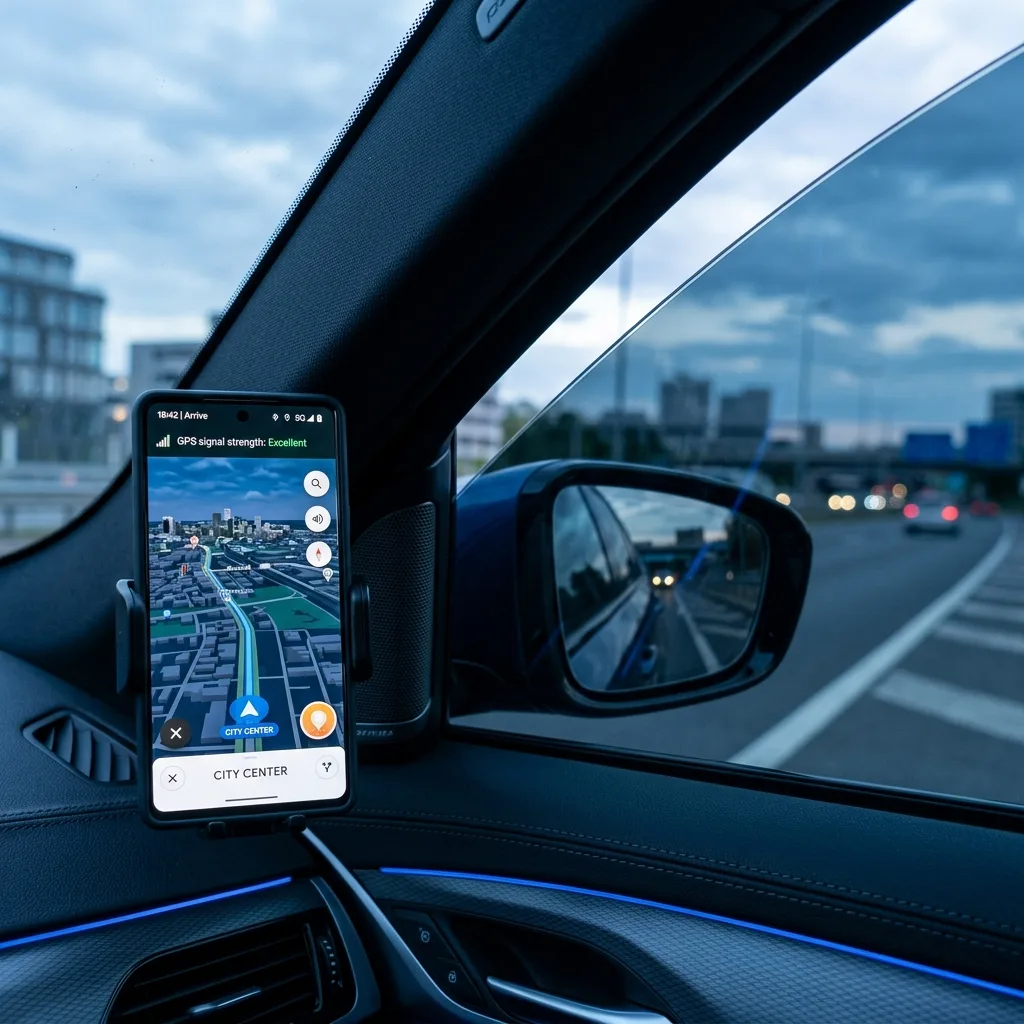
Metalized tint blocks 20-60% of mobile, GPS, and Bluetooth signals because it acts as a Faraday cage. Nano-ceramic and carbon tints do not block any signals as they are 100% metal-free. In the 5G network era, choosing a metal-free film has become a necessity.
The most common question among our customers: "Does tint weaken mobile signals?" The answer depends entirely on the film type used. Older Metalized films contain aluminum or nickel particles that literally act as a barrier to electromagnetic waves (Faraday cage principle). Meanwhile, modern nano-ceramic films block heat exceptionally without any impact on communications. Here is the full engineering explanation with numbers.
Table of Contents:
- Film Types and Their Impact
- Why Metallized Films Block Signals
- Why Nano Films Don't Block
- How to Test It Yourself
| Film Type | Metal Content | Impact on 4G/5G | Impact on GPS | Impact on Bluetooth/NFC |
|---|---|---|---|---|
| Nano-Ceramic (Johnson, 3M, XPEL) | 0% (Completely free) | None ✅ | None ✅ | None ✅ |
| Advanced Carbon | 0% | None ✅ | None ✅ | None ✅ |
| Regular Dyed | 0% | None ✅ | None ✅ | None ✅ |
| Single Metalized | 15% - 25% | 20-40% Weakness ⚠️ | Noticeable Delay ⚠️ | May be affected ⚠️ |
| Dual Metal | 30% - 50% | 40-60% Weakness ❌ | Frequent Loss ❌ | Often Doesn't Work ❌ |
Why is Nano-Ceramic Completely Transparent to Signals?
Nano-ceramic uses ceramic particles (Titanium Nitride or Zirconium Oxide) instead of metals. These particles are designed to absorb and scatter infrared rays (heat) but are completely transparent to the radio waves on which mobile networks (700MHz-6GHz), GPS (1.5GHz), Bluetooth (2.4GHz), and NFC operate.
The equation: 97% heat block + 0% signal block.
Critical Compatibility with 5G Networks in Saudi Arabia
5G mmWave networks operate at very high frequencies (24-39 GHz). These frequencies are far more sensitive to metallic barriers than 4G networks.
A metalized film blocks 60-80% of the 5G mmWave signal — meaning very slow internet speeds inside the car. With STC and Mobily expanding 5G networks in Jeddah and Riyadh, choosing a metal-free film has become a necessary technical decision, not an option.
How to Test Your Current Film Yourself
Before tinting: Enter phone settings and save the signal strength in dBm (Settings > About Phone > Network Status). After tinting: Measure again in the same location.
Acceptable difference: 0-3 dBm (normal). If it exceeds 5 dBm = film contains metals.
Second test: Place a light magnet on the film — if it sticks or you feel slight resistance = metalized film.
Frequently Asked Questions
Does carbon tint affect mobile signals?
No. Carbon is completely metal-free just like nano-ceramic. Carbon fibers do not interact with radio waves.
My car is tinted and mobile signal is weak — how can I confirm the tint is the cause?
Test the signal strength with an open window then closed in the same location. If the signal significantly improves when the window is open = your film is metalized. Solution: remove metalized and install nano-ceramic.
Why do some shops still use metalized films?
Because they are much cheaper in cost (metalized film costs the merchant 30-50 SAR per roll versus 200-400 SAR for nano-ceramic). Some shops sell it as "nano" to achieve a high profit margin.
⚠️ Warning: Some shops sell a "nano-ceramic" film that is actually a metal blend. Ask for the Datasheet and ensure the "Metallic Content" = 0%. Any metal percentage, no matter how small = signal interference.