
How to Safely Clean Tinted Car Windows: Banned Products and the Correct Wiping Method
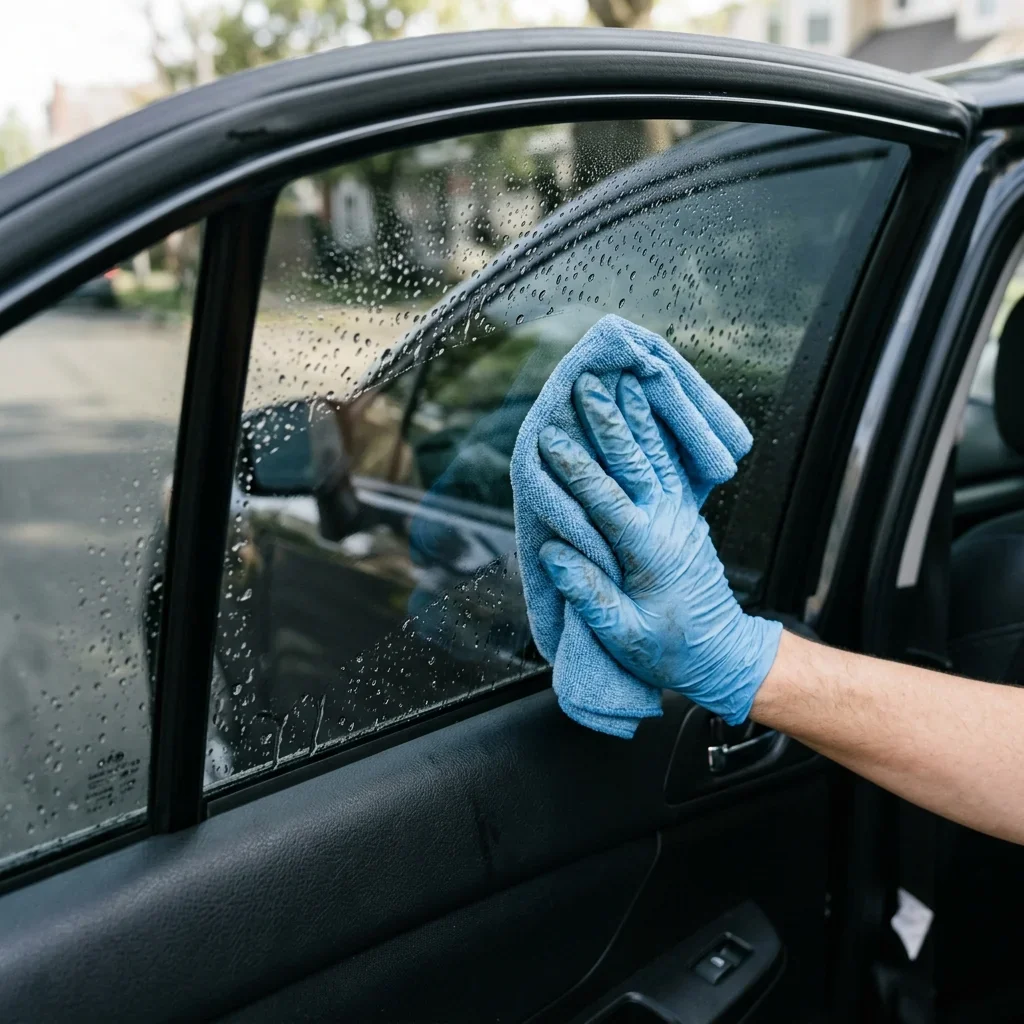
Clean tinted glass from the inside using an ammonia-free cleaner (or water with a drop of neutral dish soap) and a clean microfiber cloth, wiping gently in one direction. Avoid commercial ammonia-based glass cleaners, abrasives, paper towels, and scraping with nails. Wait 5 to 7 days after installation before the first wipe.
After paying between 1,500 and 3,500 SAR to install an original nano-ceramic tint on your car in Jeddah, the most important question becomes: how do you keep it clean and clear without damaging the film? Many car owners ruin an excellent tint within a few weeks simply by using the common blue glass cleaner found at gas stations — because it often contains ammonia, the number-one enemy of window films. Tinted glass is not ordinary glass; the thin metallic or ceramic layer sits on the inner surface of the glass, and any mistake in wiping technique or cleaner type directly affects the film's color and lifespan. In this practical guide from the AzelCore team in Jeddah, we explain in detail which products are strictly banned, what the safe alternative cleaner is, the correct step-by-step wiping method, when you must wait after installation, and how to handle power windows and rear defroster lines. The goal is simple: that your tint lasts 10 to 15 years just as it is — clear and durable — instead of turning purple or peeling prematurely.
Table of Contents:
- Why Tinted Glass Needs Different Care Than Plain Glass
- Strictly Banned Products: Ammonia, Abrasives, and Sharp Tools
- The Safe Cleaner: What to Use Instead
- The Correct Wiping Method Step by Step
- The Waiting Period After Installation: When to Start Cleaning
- Handling Power Windows and Defroster Lines
- Common Mistakes in Jeddah's Heat That Damage Tint
- Comparison Table: Safe vs. Banned Cleaners
- When to Visit a Certified Center for Inspection
| Product / Tool | Safe or Banned? | Reason |
|---|---|---|
| Ammonia-free glass cleaner | Safe ✅ | Does not react with film dyes or adhesive |
| Distilled water + drop of dish soap | Safe ✅ | Gentle, economical, leaves no calcium spots |
| Clean microfiber cloth | Safe ✅ | Soft and does not scratch the top coat |
| Blue ammonia-based glass cleaner | Banned ❌ | Turns film purple and degrades adhesive |
| Paper towels / tissues | Banned ❌ | Rough fibers leave scratches and lint |
| Rough sponge / green scrubber | Banned ❌ | Abrasive, scratches the protective coat |
| Blade / knife / fingernail | Banned ❌ | Permanent unrepairable scratch in top coat |
| Multi-purpose cleaner / chlorine | Banned ❌ | Harsh chemistry made for hard surfaces |
Why Tinted Glass Needs Different Care Than Plain Glass
The point most car owners are unaware of is that the tint film is not installed on the outer surface of the glass, but on the inner surface from inside the cabin. This means the surface your hand touches when cleaning the glass from the inside is not hard glass, but a thin polymer layer with an adhesive and a scratch-resistant coating.
When you clean the exterior glass you can treat it like ordinary glass, but the inner surface is very sensitive and requires complete gentleness. Modern films such as Johnson and 3M come with a hard top coat that resists minor scratching, but it does not resist harsh chemicals or repeated scraping with sharp tools.
Any deep scratch or chemical erosion in this layer cannot be repaired — it remains visible for the life of the film. Likewise, the film edges at the glass borders are the weakest point; repeated forceful wiping toward the edge can lift it and start peeling.
In short, cleaning tinted glass revolves around one principle: effective cleaning with the least possible friction and chemistry. Those who understand this principle keep their tint for many years without problems.
Strictly Banned Products: Ammonia, Abrasives, and Sharp Tools
At the top of the banned list are commercial glass cleaners containing ammonia — the majority of the common blue cleaners found in markets and gas stations. Ammonia reacts with the film layers and over time causes the dyes to break down and the adhesive layer to degrade, leading to the phenomenon of the tint turning a faded purple or violet — a sign that does not reverse.
Ammonia also evaporates quickly under Jeddah's heat and may leave the glass more prone to bubbling. Second, avoid any abrasive materials: rough cleaning powders, the coarse green scrubbing sponge, and the rubber squeegee with its dry edges.
Third, completely beware of sharp tools — do not scrape any spot or sticker with a blade, knife, or your nail, as any scratch in the top coat is permanent. Fourth, avoid paper towels and kitchen tissues; paper fibers are microscopically rough and leave fine scratches and lint on the surface.
Fifth, stay away from strong multi-purpose cleaners, heavy degreasers, and chlorine; these are designed for hard surfaces, not sensitive films. The golden rule: if you are not certain the product is ammonia-free and film-safe, do not use it on the tint at all.
The Safe Cleaner: What to Use Instead
The good news is that the safe alternative is simple and cheap. The first and best option is a glass cleaner explicitly labeled "Ammonia-Free," and versions made specifically for tinted glass are available in car accessory stores.
The second, economical home option is a simple mix: pure water (preferably distilled to avoid calcium spots from Jeddah's hard water) with just one or two drops of neutral dish soap. Put the mix in a clean spray bottle and shake gently.
Some technicians add a very small amount of heavily diluted white vinegar for extra shine, but if you are unsure, stick to water and dish soap as it is the safest. The single most important tool is a clean, high-quality microfiber cloth; keep two pieces: one for wiping with cleaner and another dry one for drying.
Always make sure the microfiber is completely clean and free of sand grains or dust, as a single dirty cloth can scratch the film. Do not spray cleaner heavily directly onto the glass near the edges; instead spray a small amount onto the cloth and then wipe, so liquid does not seep under the film edges.
This simple combination — ammonia-free cleaner plus microfiber — is all you need for the entire life of the tint.
The Correct Wiping Method Step by Step
The correct method comes down to five organized steps. First, clean your hands and make sure the microfiber cloth is completely clean, then remove dry dust from the glass with a light dry wipe to avoid turning the dust into an abrasive paste when liquid is added.
Second, spray a small amount of ammonia-free cleaner onto the cloth and not directly onto the glass, especially near the edges. Third, wipe gently in one steady direction (horizontal or vertical) rather than a random circular motion; one direction ensures even coverage, prevents streaking, and most importantly keeps you from pushing liquid toward the edges.
Fourth, always stay away from the film edges; wipe from the center outward gently without pressing on the edge itself or scraping beneath it. Fifth, dry immediately with a second dry microfiber cloth before the liquid dries on its own under Jeddah's heat and leaves spots.
For the exterior glass (untinted on the front sides) you can work more freely, but for the tinted rear and side glass, follow these rules. Practical tip: clean the glass in shade or early morning rather than under direct midday sun, because the heat dries the cleaner quickly and leaves calcium spots and smears.
Following these simple steps preserves the film's clarity and original color for years.
The Waiting Period After Installation: When to Start Cleaning
The most important rule right after installation is patience. When the film is installed, a thin layer of water and adhesive solution remains between the film and the glass and needs time to evaporate and dry completely.
During this period you may notice slight haze, small bubbles, or watery streaks — this is completely normal and not an installation defect, and it will disappear on its own as it dries. The practical rule in Jeddah's hot climate: wait 5 to 7 days before the first cleaning of the tinted glass from the inside, and in cooler or humid conditions it may extend to two weeks.
Most importantly during this period: do not roll down the power windows at all in the first 48 to 72 hours at least, because moving the glass before the adhesive dries can shift the film or peel its edge. Also never try to pop the small bubbles with a needle or card; manual interference creates permanent scratches and ruins the installation.
The advantage of dealing with a certified center like AzelCore is that you receive clear written post-installation instructions, and you can return for a free inspection if you notice anything abnormal after the curing period ends. Patience in the first days is what determines the quality of the final result for years to come.
Handling Power Windows and Defroster Lines
Power side windows need special care because they move up and down, and any weak film edge at the top border is exposed to friction with the rubber window channel when lowered. Therefore, after the curing period ends, lower the glass gently and not quickly, and do not lower it much if you notice any resistance.
When cleaning the side glass, keep the glass fully raised and wipe from the center toward the edges gently without pushing the cloth under the rubber channel. The rear glass carries an additional challenge: the defroster lines — the thin printed horizontal lines.
In modern cars the film is installed over these lines from the inside, so you must wipe parallel to them (horizontally) and not perpendicular, to avoid pressure that could damage the lines or lift the film edge. Never scrape over the defroster lines with any tool, as they are delicate and any break in them disables the defogging function permanently.
Use very light pressure and a soft microfiber cloth, and wipe along the line. If you notice the film edge starting to lift on any power or rear window, stop using it and do not try to re-stick it yourself; instead visit the center, as early intervention prevents the peeling from worsening.
Common Mistakes in Jeddah's Heat That Damage Tint
Jeddah's hot and humid climate adds challenges to tint care that residents of cooler regions do not face. The first mistake is cleaning under direct midday sun; the glass surface can exceed 70 degrees Celsius, which dries the cleaner instantly and leaves hard-to-remove calcium spots and streaks, and worse, stresses the adhesive layer.
Proper cleaning is done in shade or early morning. The second mistake is neglecting hard-water marks; Jeddah's water is rich in salts, and letting water droplets dry on the glass leaves stubborn white calcium spots, so immediate drying with microfiber is essential.
The third mistake is sticking labels and stickers (like the inspection sticker or a phone mount) directly onto the tinted glass from the inside; removing them later may pull off part of the film or leave adhesive residue that is hard to remove without harmful chemicals. The fourth mistake is leaving the car fully closed for hours under the sun and then spraying cold cleaner on the very hot glass; thermal shock is not ideal for the film.
The fifth and most dangerous mistake is using the blue gas-station glass cleaner assuming it is safe — always check the bottle. Avoiding these five mistakes keeps your tint in the condition it was installed, and prevents common phenomena such as turning purple, bubbling, or premature peeling that we see daily in cars that were not cared for correctly.
When to Visit a Certified Center for Inspection
Proper home care covers 95% of your needs, but there are cases where you must return to the certified center instead of attempting a self-repair. Visit the center immediately if you notice: a lifting film edge at any border, large new bubbles appearing long after the curing period ends, the start of a color shift toward purple (a sign of low-quality film or ammonia damage), or deep scratches in the top coat.
These are not problems solved by a home cleaner; they need technical assessment. At AzelCore in Jeddah we recommend a free annual tint inspection that includes measuring the Visible Light Transmission (VLT) to confirm it remains within Saudi traffic legal limits, checking the edges, and verifying the integrity of the defroster lines.
This inspection is especially important before the annual periodic inspection appointment, so you avoid any surprise at the Tint Meter. Original films from Johnson and 3M come with a long warranty (up to the life of the car in some tiers), but the warranty is only activated with proper care and regular inspection at the authorized dealer.
The bottom line: clean it yourself the right way, but leave diagnosis and repair to the experts. Contact us via WhatsApp at +966564612017 to book an inspection or consultation.
Frequently Asked Questions
Can I use regular glass cleaner on tinted glass?
No — if it contains ammonia, it is strictly banned. Most common blue glass cleaners contain ammonia that turns the film purple and degrades the adhesive. Use a cleaner labeled "Ammonia-Free" or water with a drop of dish soap.
When can I clean the glass after installing the tint?
Wait 5 to 7 days in Jeddah's hot climate before the first interior cleaning, so the adhesive fully cures. And do not roll down the power windows during the first 48 to 72 hours at least.
Why did my car tint turn purple?
Turning purple is caused either by using an ammonia cleaner or by the film being low-quality (cheap dyed film). Original nano-ceramic, Johnson, and 3M films do not turn purple. This phenomenon is irreversible and requires reinstalling a new film.
Are paper towels safe for cleaning tinted glass?
No — paper fibers are microscopically rough and leave fine scratches and lint on the film's top coat. Use only a clean microfiber cloth, keeping one piece for wiping and a dry one for drying.
How do I clean the rear glass over the defroster lines?
Wipe parallel to the defroster lines (horizontally), not perpendicular, with very light pressure and a soft microfiber cloth. Never scrape over them with any tool, as any break in the lines disables the defogging function permanently.
Should I remove the small bubbles after installation myself?
Absolutely not. Small bubbles and haze after installation are normal and disappear on their own within days as the adhesive cures. Trying to pop them with a needle or card creates permanent scratches. If large bubbles remain after two weeks, visit the center.
Can I clean the tint under the sun in Jeddah?
It is best avoided. Under midday sun, the glass surface can exceed 70 degrees Celsius, drying the cleaner instantly and leaving calcium spots and streaks. Clean in shade or early morning, and dry immediately with microfiber.
Does improper cleaning void the tint warranty?
Yes, in many cases. The warranty from authorized dealers (Johnson and 3M) requires proper care. Damage from ammonia or scraping with sharp tools is considered misuse and is not covered. So follow the correct method and have periodic inspections at the center.
⚠️ Warning: Beware of ammonia-based glass cleaners (most blue cleaners at gas stations) — they cause the tint to turn purple and permanently degrade the adhesive beyond repair. Also avoid scraping with any sharp tool or your fingernail, using paper towels, and cleaning under direct midday sun. Any damage from these practices is considered misuse and is not covered by the authorized dealer warranty.
Sources & References
Related Services
- Nano-Ceramic Car Tinting with 10-Year Warranty + Free Annual Inspection ←
- Authorized Johnson Dealer — Original Films with Long Warranty ←
- 3M Crystalline — Lifetime Warranty Against Discoloration and Peeling ←
- The Complete Car Tint Maintenance Guide ←
- Why Does Tint Turn Purple and Bubble in Jeddah? ←
- How to Spot Fake Tint Before You Buy ←
- Contact AzelCore — Free Consultation and Inspection ←